
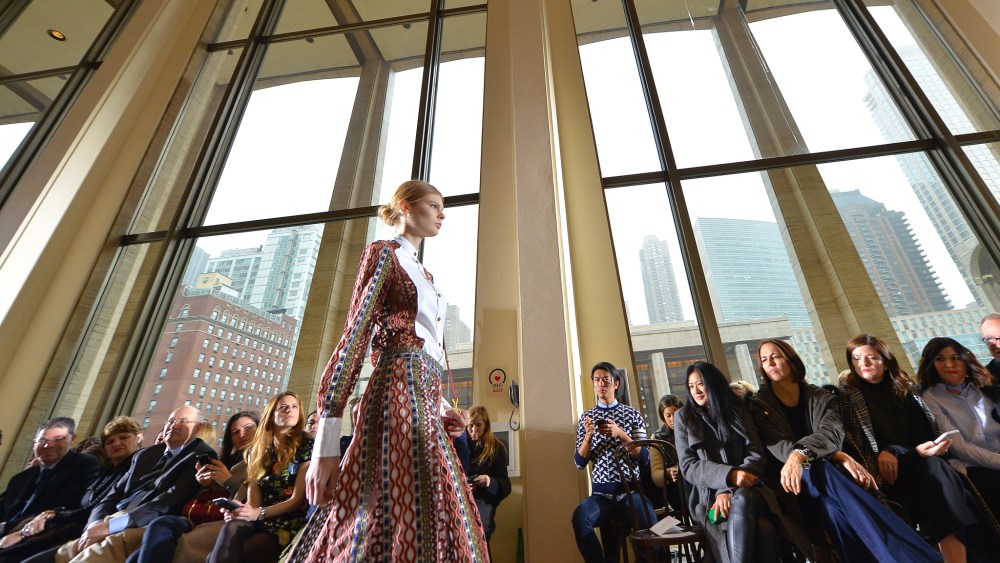
Whenever stakes of Tory Burch or Jessica Alba’s The Honest Co. hit the market, there’s a scrum of would-be investors clamoring to get in on a hot company with a well-positioned brand.
But then there’s the waiting game.
For some deep-pocketed investors, including retirement giant Fidelity and Hartford Funds, that’s led to paper losses on Tory Burch and gains on Honest — at least according to the investors’ own calculations and vantage point. Experts are quick to point out that the companies themselves, or a would-be buyer, might well see the valuation differently.
But it’s a reckoning that’s mandated by law and offers a window into the often opaque world of valuing private companies.
Related Articles
The Fidelity Growth Company Fund put $17.5 million into Tory Burch at the end of 2012, as the designer and her ex, Chris Burch, put a venomous legal battle to rest. As of the end of February, Fidelity valued that stake at $19.6 million, a 12.1 percent gain. But the fund, along with the Fidelity Series Growth Company Fund, put in another $85.4 million in May of last year, the value of which has fallen to $67.5 million, for a 20.9 percent drop.
You May Also Like
Altogether, that leaves the two Fidelity funds with a 15.3 percent drop on its $102.9 million investment in Tory Burch, as of Feb. 29. A spokeswoman for Burch declined to comment.
With $5.1 trillion under management, Fidelity covers the waterfront with its investments, most of which are focused on businesses that are already publicly traded. But Fidelity also invests in privately held companies, mostly with an eye toward getting in as the company is moving toward an IPO.
Hartford, which has $73.6 billion under management, also bought into Tory Burch, investing a total of $43 million in the company in November 2013, through three funds. The investor figured the value of its stake dropped 32.8 percent by March 31, to $28.9 million.
The investment could still pay off, and handsomely, although Hartford would have to sell the stake, or the company would have to be acquired or taken public.
But Burch, as well as her co-ceo, Ralph Lauren veteran Roger Farah, have both steadfastly claimed they were comfortable staying private for now, but investors and would-be investors have for years been trying to nudge the company toward an offering as they look for a big payday.
That would open up Tory Burch to the vicissitudes of a public stock market, pressures the company now feels from its private investors behind closed doors.
It’s hard to know exactly what kind of pressure investors currently bring to bear on Tory Burch, but the company wasn’t Fidelity’s or Hartford’s only consumer investment that saw its valuation fluctuate.
The two Fidelity growth-centric funds also invested $4.4 million in Honest, in August 2014, recording a gain of 92.3 percent to $8.6 million by the end of February. The funds put in another $4 million in August of last year, only to see that dramatic growth cool, as that investment rose 13.7 percent to $4.6 million.
Altogether, the Fidelity stake in Honest was up 54.9 percent to $13.2 million.
Hartford also invested in Honest over the same time frame and counts itself with similar results. The firm invested $1.6 million in August 2014, which, by its own calculations, grew 69.6 percent in value to $2.7 million by March 31. The investor put in another $3.4 million in August last year, but figures the value of that stake had appreciated just 0.3 percent by the end of March.
The numbers are a rough measure. That slowdown in perceived value could be tied to the investors’ initial expectations. If Hartford, for instance, expected a company’s value to double and it tripled, it would reset its estimates for later rounds, given the faster-than-anticipated growth.
One major shareholder in Honest said the change in the private company’s valuations reported by mutual funds is misleading.
“The way they mark them, it’s not really tied to the performance of any company,” the investor said. “It’s tied mostly to how stocks are trading that they deem as peers to the company. Honest Co. is doing very well, and I don’t think this is directionally reflecting what’s going on as far as their financial performance. It’s a lot of noise. Their performance has been, and continues to be, very strong from a growth perspective. They’re one of the fastest-growing companies, if not the fastest-growing company, in consumer products that is of scale.”
Both Burch and Alba are omnipresent, promoting their brands by branching out into new areas. Burch, for instance, recently launched Tory Sport, took her runway bow after her fall show and posted to social media her look for the Met Gala. And Alba is generally obsessed over, and will appear on, the upcoming season of “The Celebrity Apprentice,” demonstrating her business chops and no doubt pitching her own brand ethos.
But just how these companies have actually performed behind the celebrity glow is harder to discern.
Honest has faced a string of lawsuits and complaints that its products don’t live up to their billing — claims that cut to the heart of the company’s brand promise.
That negative publicity could have fed into Fidelity’s calculations that the value of its stake in the ultrahot Honest rose just 13.7 percent from August through February, or Hartford’s perceived 0.3 percent gain.
The suits do not seem to have dented the company’s sales, though.
Honest told WWD: “The first quarter of 2016 was the strongest quarter ever for The Honest Company, and we just had our strongest month to date in April 2016. Our customers’ love for our products and trust for our brand, as evidenced by this exceptional revenue performance, are the fundamental measures of our growth and the strength of our business.”
Fidelity, which is compelled by law to adjust the value on its holdings each day and file quarterly with the Securities and Exchange Commission, takes into account a variety of factors, including a multiple of enterprise value and earnings before interest, taxes, depreciation and amortization and views on sales, projected royalties and how competitors in the market have fared.
The ultimate formula that such investors use, though, is a trade secret.
A Fidelity spokesman said, “We have a rigorous and thorough valuation process for mutual fund holdings. Pre-IPO investments are a small but important part of what we do.”
Investors who take stakes in private companies are often rewarded handsomely if the firm stages an IPO, selling shares to the broader investing public. They can also cash out when new investors come along.
The final word on the investment, though, comes not from their accountants, but from the market, when the shares are ultimately sold.
Just when that will happen remains an open question.
The Honest Co. was seen barreling toward an IPO, but lately that plan seems to be in flux. The company, which was said to have hired Morgan Stanley and Goldman Sachs & Co. to explore an offering is now looking into a potential sale, given the market. The final path might well be determined by which option provides a higher valuation.