
Under Armour’s rebound continued in the third quarter as sales in brick-and-mortar locations and in North America recovered, prompting the company to again raise projections for the full year.
“In the third quarter, higher-than-expected demand for the Under Armour brand and outstanding execution from our global team allowed us to drive strong top- and bottom-line results,” Patrik Frisk, Under Armour’s chief executive officer, said on the earnings conference call Tuesday morning.
Before the market opened, the Baltimore-based company reported net income of $113.4 million, or 24 cents a share, up from $38.9 million, or 9 cents a share, last year. Revenue for the period was up 8 percent to $1.5 billion compared to the prior year, with wholesale revenue increasing 10 percent to $911 million and direct-to-consumer revenue up 12 percent to $604 million. The d-to-c results were marked by a strong performance in owned and operated stores that offset a 4 percent decline in e-commerce sales, which now represent 33 percent of the total direct-to-consumer business. However, compared to 2019, the company said, e-commerce sales were up more than 50 percent.
Related Articles
In North America, the brand’s largest market, sales rose 8 percent over 2020 to $1 billion and 2 percent over 2019. Frisk pointed out that compared to 2019, North American sales saw a “significant increase” in direct-to-consumer sales as well as lower markdowns and promotional activity leading to “meaningfully higher quality and more productive dollars…than just two years ago.”
You May Also Like
Internationally, overall revenue increased 18 percent to $510 million, with the Asia-Pacific region up 19 percent, Europe, Middle East and Africa up 15 percent and Latin America up 27 percent. Frisk said traffic continues to be a concern in China, but Under Armour still has faith in the region, where it will soon open its 1,000th store. Compared to 2019, Frisk said, third-quarter sales in the APAC region were up 37 percent, which indicates “solid progress.” In the EMEA, particularly the U.K. and Germany, sales were driven by strong wholesale relationships as well as a “solid direct-to-consumer performance.” Compared to 2019, sales in the region were up 50 percent, he noted.
By category, apparel revenue increased 14 percent to $1.1 billion and footwear revenue increased 10 percent to $330 million while accessories revenue decreased 13 percent to $126 million as sales of face masks declined versus last year.
Shares closed up Tuesday by nearly 14 percent, to $21.68.
In the third quarter, Frisk said the company “realized success on both sides of the temperature spectrum,” with strong sell-throughs of its Iso-Chill apparel product, which provides cooling properties, as well as men’s and kids fleece as athletes prepare for the cooler months ahead.
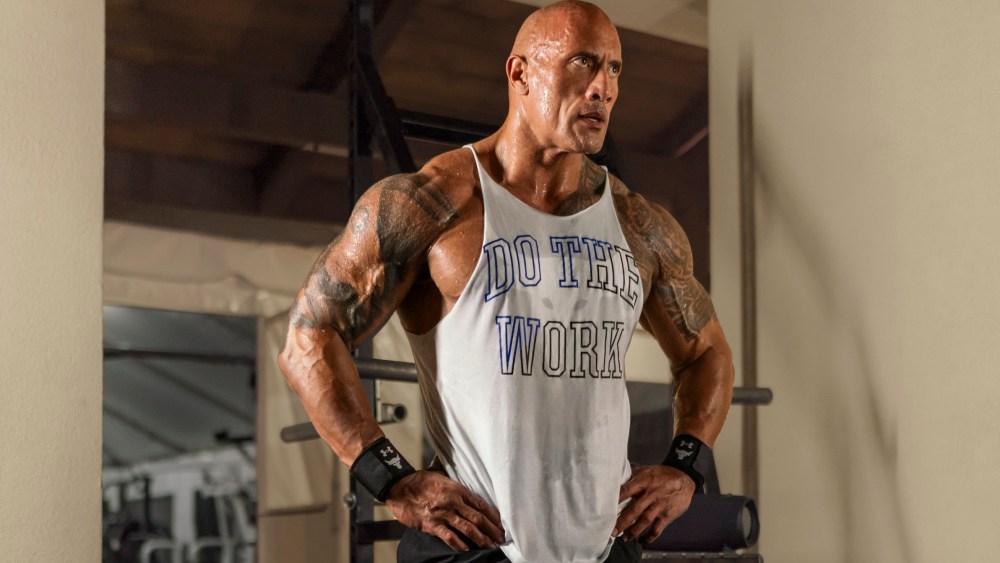
“There was also continued momentum in men’s Unstoppable bottoms and women’s leggings including Meridian and our No-Slip Waistband technology,” he said. Other standouts included the Project Rock collection with Dwayne “The Rock” Johnson as well as its Rush tops. In footwear, he said, core running products were the top performers including Pursuit, Aurora and Assert, which saw strength in all regions globally. The Project Rock footwear also performed well, he continued, along with slides and the Curry HOVR model. Back-to-school sales were better than expected, he said, as kids returned to class and team sports resumed.
“Our third-quarter results were driven by strong demand for the Under Armour brand and our ability to execute quickly to meet the needs of our consumers and customers,” Frisk added. “With industry-leading innovations, increased marketing efforts to deepen our connection with ‘focused performers,’ and consistent operational discipline — we’re building greater brand affinity and are on track to deliver record revenue and earnings results in 2021.”
For the year, the company is now projecting operating earnings will hit about $425 million, nearly double its previous range of $215 million to $225 million. Excluding the impact of restructuring efforts, adjusted operating income is expected to reach about $475 million compared to the previous expectation of $340 million to $350 million. Frisk said these results would mark “Under Armour’s best adjusted EPS year in our history.”
Revenue for the full year is now expected to be up about 25 percent compared to the previous expectation of a low-twenties percentage increase, reflecting a high-twenties percentage growth rate in North America and a mid-thirties percentage growth rate in the international business.
In August, the company reported solid second quarter results and raised its outlook for the year. Next year, the company will change its fiscal reporting dates with the start of fiscal 2023 on April 1. As a result, it did not offer any projections for next year but cautioned that the pressure on the supply chain, while minimal, is expected to continue into the first half of 2022. Backlogs in transit times from overseas factories will remain an issue, and Under Armour has had to cancel some orders for spring/summer 2022 product in order to ease pressure on its manufacturing facilities, which are still in the process of ramping back up. As a result, the company is expecting revenue in the first quarter to be up in the low single digits.