
Under Armour Inc. is now the underdog.
Shares of the activewear-maker dropped 2.2 percent to $18.80 Wednesday, having dropped 23.4 percent a day earlier, when the company shocked investors with a fourth-quarter sales gain of just 11.7 percent — the brand’s weakest showing since the Great Recession. The company expects to hold that sales pace this year, with net revenues projected to grow 11 to 12 percent, to nearly $5.4 billion.
And the hits just kept coming. Standard & Poor’s stripped Under Armour of its investment grade credit rating, cutting the firm’s debt to “BB-plus” from “BBB-minus,” a switch that will likely make it more expensive for the company to borrow money.
Related Articles
That Under Armour — one of the very few growth stories in fashion in recent years — is getting crushed for merely low double-digit growth, is a sign of just how tough the market is for nearly everyone. (Corporate chiefs at Gap Inc., Macy’s Inc., Sears Holding Corp. or nearly any other company in fashion would kill for such growth.)
You May Also Like
S&P debt analyst Mariola Borysiak noted, “Even with a slowing top line, we expect the company to grow in the low double digits — this is very healthy growth, we don’t have too many retailers growing at such high rates.”
Despite its virtues, Borysiak said Under Armour has become too volatile with sales growth that isn’t as profitable as it would have needed to be to hold its investment grade rating, which it just earned from S&P last year.
She pointed to the firm’s operating profit projections for 2018, which have fallen from $800 million to about $300 million over the last six months or so.
“There’s this huge volatility,” she said.
And now the brand is looking to get its mojo back by emphasizing fashion to keep to much of its assortment from becoming commoditized.
“Adidas and Nike, they’ve been pretty successful with ath-leisure, that’s what I think Under Armour is lacking, and it’s a little bit maybe late in the game,” Borysiak said.
Kevin Plank, the company’s chairman and chief executive officer, told Wall Street analysts, “We need to become more fashionable with the products that we have out there.”
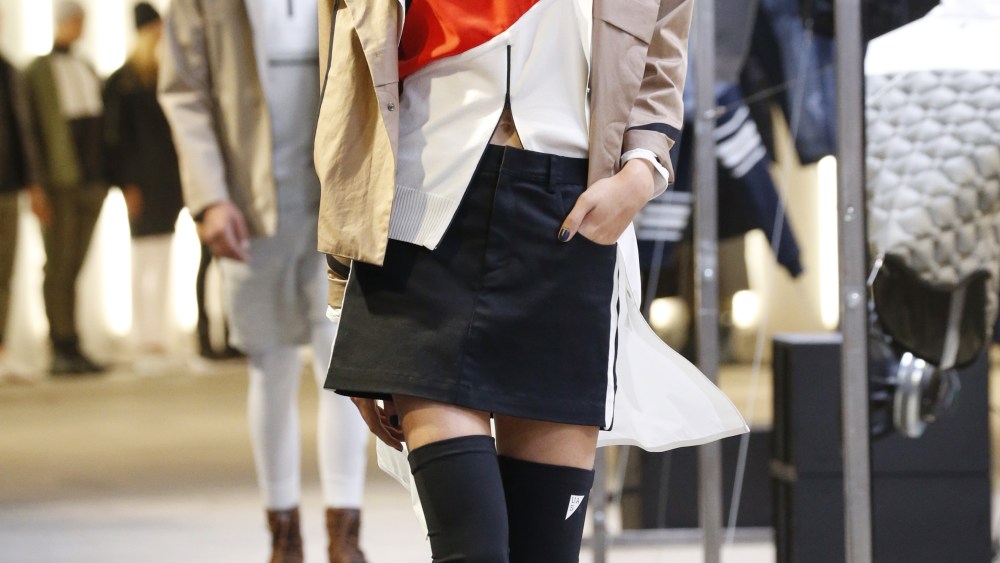
Under Armour has been inching toward fashion for some time, having teamed with designer Tim Coppens last year to create a temporary sportswear line, UAS.
But Under Armour had been counting on core basics to do more for the business. And Plank acknowledged, “a consumer today frankly has more options, and most of those options are from good brands that we compete with, that are heavily discounting as well.”
Emily Grant Turner, a forensic accounting analyst at CFRA Research, said her research suggested: “Under Armour significantly cut back on purchasing activity because it was sitting on a portion of unsold inventory that was left over from last year’s warm winter. The problem that they ran into is that the inventory that was out on shelves this fall wasn’t new, and lack of product newness tends to reduce consumer excitement. That played into the revenue miss.”
Even so, the company is moving onto a difficult path as it seeks growth.
“Fashion is much riskier than selling performance wear and the company has not yet proven that fashion is a core competency,” Turner said.
Separately, former San Diego Chargers linebacker Shawne Merriman hit Under Armour with a lawsuit in California on Jan. 26, accusing the firm of infringing on two trademarks using the phrase “lights out,” the athlete’s moniker, which is included on products sold through his company, Lights Out Holdings.
Under Armour’s new line of athletic footwear featuring NBA star Stephen Curry named “Curry 3 Lights Out” is the product at issue, as is the company’s marketing efforts using the phrase.
Merriman said the marks are “extremely valuable” and currently used as part of a brand partnership with a mixed martial arts company. The lights out marks are purportedly used for sponsored fighter apparel and Merriman makes personal appearances at fights using his professional nickname.
Moreover, Merriman said Under Armour’s use of the phrase is in breach of a 2015 settlement agreement between them, again over “lights out,” in which the company allegedly agreed to stop any current and future use of the marks.
Merriman sued Nike Inc. with similar complaints and the two parties settled out of court last year.