PARIS — Chinese President Xi Jinping’s call for China to achieve “common prosperity” and narrow its wealth gap has had no impact so far on sales at LVMH Moët Hennessy Louis Vuitton, the world’s largest luxury group.
Analysts fear the policy, announced in August alongside a crackdown on “excessive incomes,” could deprive the luxury goods industry of its biggest motor. While shares of leading companies, including LVMH, fell sharply in the wake of Xi’s speech, the French conglomerate’s third-quarter sales suggest there has been little impact in its stores in China so far.
“We don’t see a change in sentiment,” Jean-Jacques Guiony, chief financial officer of LVMH, told analysts during a conference call on Tuesday.
The luxury group posted revenues of 15.51 billion euros in the three months to Sept. 30, up 11 percent in organic terms versus 2019, considered a more reliable benchmark due to the disruptions caused by the coronavirus pandemic last year. This was comparable to sales growth in the first half, whether by activity or by region, the group said in a statement after the Paris stock market closed.
Organic sales in Asia, excluding Japan, rose 26 percent in the third quarter versus 2019. This compared with an increase of 34 percent in the second quarter, but the decrease was due mainly to measures to contain a resurgence in COVID-19 cases in August, Guiony said.
He declined to comment on what he labeled as “internal policy decisions by political leaders,” but said LVMH was not concerned about the impact of the new Chinese policy, which also includes curbs on celebrities who have traditionally driven sales for luxury brands.
“The only thing I could say is that when we look at it, we don’t see any reason to believe that this could be detrimental to the upper middle class, affluent class, that is the bulk of our customer base,” Guiony said. “So we’re not particularly worried or concerned with the recent announcements.”
Double-digit growth in Asia and the U.S. fueled growth at one of LVMH’s star brands: Tiffany & Co. While the group did not break out the U.S. jeweler’s performance, Guiony reported good progress with the house since LVMH completed its acquisition in January for a record $15.8 billion.
As a result, Tiffany has axed most of its wholesale business, he reported.
“Tiffany has really two cylinders, and the two are firing at full speed,” Guiony said. “The business is doing well. It’s doing well in Asia, it’s doing well in the U.S. As I said before, all the initiatives, be it product or marketing, are getting a good response from the client base, wherever it takes place, so we are pretty happy.”
The most visible change has been in the brand’s communications strategy, with a controversial guerrilla-style campaign with the slogan “Not Your Mother’s Tiffany” launched in July, and a high-profile advertising push featuring Beyoncé and Jay-Z unveiled in August.

Under the leadership of Ruba Abu-Nimah, its new executive creative director of marketing and communications, Tiffany is also reviewing all its product categories to determine what to keep and what to lose.
“We want the brand to have a broader appeal to a larger scope of clients, and it is exactly what we are implementing from a marketing viewpoint, but also from a product viewpoint,” Guiony said. He explained that Tiffany is less exposed to Millennials since it has traditionally relied on the U.S. market, which accounts for 45 percent of revenues.
“We want to develop the rest of the business on a worldwide basis, but not at the expense of the U.S. business,” Guiony said. ”Obviously, our aim is to develop our business with young people, but we don’t have particular quantitative goals in that respect.”
The integration of Tiffany has more than doubled the size of LVMH’s watches and jewelry business, which posted revenues of 6.16 billion euros in the first nine months of 2021, versus 2.26 billion euros during the same period in 2020.
Excluding Tiffany, third-quarter sales in the segment rose just 1 percent in comparable terms versus 2019, after a 9 percent increase in the second quarter. Guiony said the sector suffered from the volatility in Asia, which impacted jewelry in particular.
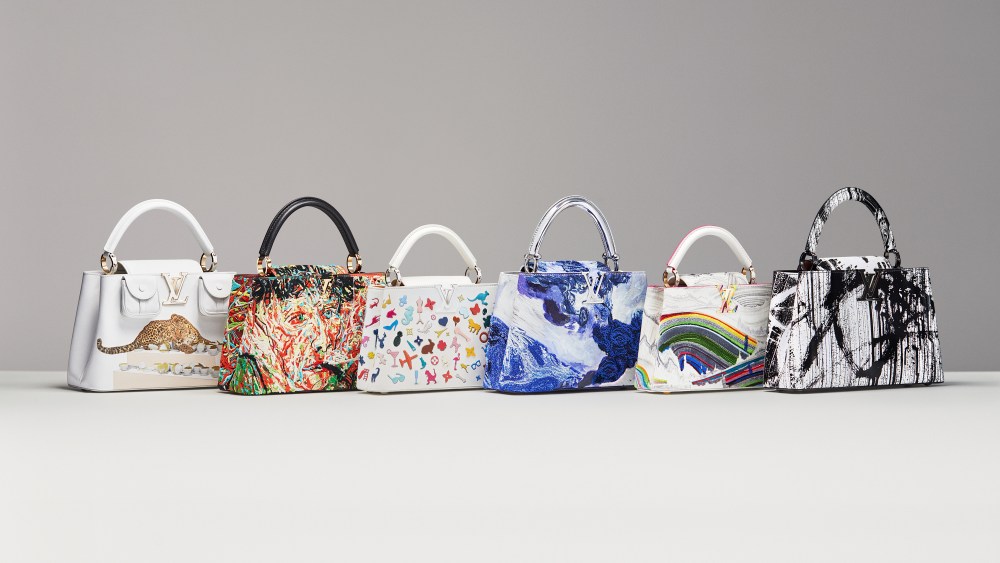
The fashion and leather goods division, home to cash-cow brands Louis Vuitton and Dior, remained the key driver of the business, with revenues of 7.45 billion euros in the third quarter, up 38 percent in organic terms versus 2019. This represented a slight deceleration from the second quarter, when the division posted a 40 percent sales jump, but was in line with the first-half average.
Organic growth in the segment was up 24 percent compared to the same period a year go, which marked a return to growth after a sharp decline in the first half of 2020. This was better than expected by analysts, who had penciled in a 21 percent increase, according to a consensus forecast.
“Louis Vuitton, which celebrated the 200th anniversary of the birth of its founder, performed remarkably well, driven by constant innovation and by the quality of its products. Christian Dior showed exceptional momentum,” LVMH said. It also cited the good performance of Celine, Fendi, Loewe and Marc Jacobs.
Guiony said there was still plenty of growth potential for Dior, which saw organic sales soar by more than 80 percent in the first half, according to market sources, prompting analysts to anticipate a slowdown. While declining to provide precise figures, Guiony noted that Dior was still smaller than many other luxury brands and benefited from a diversified product range.
“This gives us some headroom,” he said. “We are nowhere near the time when the brand is becoming too big or overexposed, even in terms of number of stores. I will not go into details, but we have way less stores than the biggest brands of the fashion and leather universe, so that’s also something we can count on to develop the business further.”
He expects the U.S. market to continue powering global luxury sales, dismissing the significance of a slowdown in organic revenue growth in the region to 22 percent in the third quarter from 31 percent in the previous three-month period. Guiony noted that LVMH’s sales in the U.S. have increased on average by 10 percent annually for the past 12 years.
“This is a growing area for luxury. I mean, we have no reason to believe that what has been playing in our favor over the last 12 years will not be there tomorrow,” he said.
Organic sales of perfumes and cosmetics were flat in the third quarter compared with 2019, while the selective retailing division, which includes LVMH’s travel retail business DFS, recorded a 19 percent decline. Both segments were hit by the continued dearth of international travelers and ongoing store closures.
“Sephora returned to its 2019 level of activity despite the tough commercial environment, marked by the closure of several stores during part of the year,” LVMH noted, while also reporting a “promising start” for its new La Samaritaine department store in Paris, which opened in June.
Meanwhile, sales of wines and spirits were up 7 percent, fueled by growth in the U.S. and Europe, which benefited over the summer from the reopening of restaurants and the gradual recovery of tourism. The third quarter marked the integration of Armand de Brignac, after LVMH’s acquisition of a 50 percent stake in Jay-Z’s prestige Champagne brand in February.
Analysts had expressed caution about prospects for the luxury sector heading into the results season.
Edouard Aubin, analyst at Morgan Stanley, said the recent correction in the LVMH share price was proof that the market has priced in a slowdown in growth rates. LVMH shares closed up 0.3 percent at 633.90 euros on the Paris Stock Exchange on Tuesday, down from an intra-year high of 712 euros on Aug. 12.
“Like other personal luxury goods names, LVMH will face a number of risks in the coming months,” Aubin said in a recent research note. “The group will likely not be in a position to sustain the growth rate of the last one or even four years. However, we would argue that this is more than anticipated by the market.”
Kering is due to report third-quarter results on Oct. 19, followed by Hermès International on Oct. 21.
SEE ALSO:
What Does China’s Crackdown on Celebrity Culture Mean for Luxury?
Investors Are Cautious About Luxury Sector, Barclays Finds
America Seen as Eldorado for Luxury Consumption