
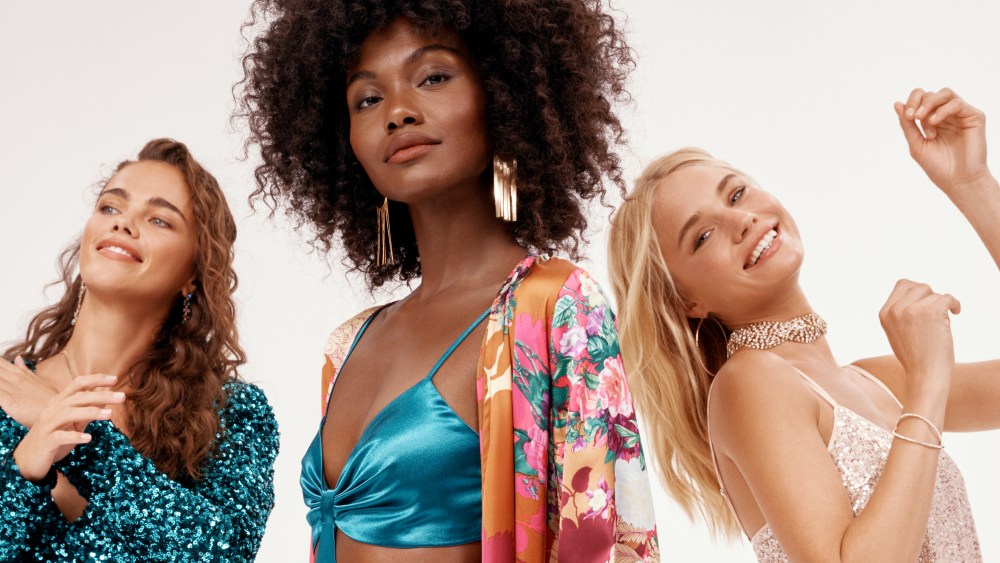
Shares of Lulu’s Fashion Lounge tumbled on their opening day, but chief executive officer David McCreight said the digital fashion company is playing the long game.
Lulu’s IPO priced at $16 a share, but the stock fell 18.4 percent to $13.06 once it hit the open market on Thursday, giving it a closing market capitalization of about $486 million. The Chico, Calif.-based e-commerce firm sold 5.8 million shares picking up gross proceeds of $92 million.
That money will go toward paying off a $71.4 million term loan and redeeming prepared stock, freeing the company to better respond to a rapidly evolving market.
“This will let us get close to debt-free,” said McCreight, who took over the top job at Lulu’s in April and previously held top positions at Urban Outfitters Inc. and Under Armour Inc. “This is about a wonderful opportunity to be able to look around the corner more. We never entered this to win opening day. We’re more about creating value for our shareholders over time and the market will do what the market does.”
Related Articles
Wall Street investors will come around and start to understand the company’s true value as it executes on its plans, McCreight said.
You May Also Like
“We want our long-term shareholders to participate in what we think is going to be a really good run.”
The data-savvy company has a business model that — to some degree — resembles the approach used by Revolve, although with lower price points and styles that, perhaps, have staying power.
“Lulu’s is not trying to be the bleeding edge of fashion,” McCreight said. “We think our styling is going to be pretty enduring. Part of our value equation is very approachable [average unit retail prices] combined with really good quality product.”
The company — which posted first-half sales of $172.5 million with net profits of $4.2 million — methodically tests and iterates with its product offering, producing small runs and chasing what works.
Over the past six months, the CEO said 70 percent of the company’s revenues came from products that were reordered after that initial test.
“It’s a very powerful place to be,” he said. “Every single style goes into that testing protocol.”
“I don’t know how all of e-commerce and digital don’t go the way Lulu’s is set up,” said McCreight.
The heavy-testing approach, along with a relatively steady sense of style, have helped the company miss the worst of the supply chain troubles that have vexed the industry this fall, McCreight said.
“We have suffered, to date, delays in the weeks, not to the multiple months,” he said, noting the company sources goods in Asia, but was not impacted by factory shutdowns in Vietnam. Lulu’s also does not use a lot of cotton, which has seen big price increases.
McCreight noted the company has evolved into “almost sort of a virtual company” during the pandemic, with its headquarters in Northern California, but employees all over, including at its Los Angeles office and its Easton, Pa., distribution center.
“We’ve been onboarding people knowing that they’ll probably be working virtually, but we’re still figuring out the balance for it.”
Finding that balance has been a delicate process and he said companies across corporate America that thought they figured out the right balance, found out from their employees that they had more work to do.
McCreight is working on ways to make sure workers all have a voice and just how everyone can get together for in-person meetings several times a year and form the right kind of bonds.
More from WWD:
Richemont Stock Jumps on Report of Activist Investor