
Adidas has not seen any serious impact from the conflict in the Middle East that is raising petrol prices around the world and roiling markets, executives said, as they revealed first-quarter results for the German sportswear giant.
The main problem for Adidas so far had been how to get products into the Middle East, chief executive officer Bjørn Gulden told journalists on Wednesday morning in Germany.
Well before the conflict even started in late February, when the U.S. and Israel attacked Iran, Adidas had already decided to accelerate deliveries of inventory into warehouses in order to avoid any complications nearer the upcoming football World Cup in North America. The international soccer tournament runs from June 11 to July 19 at venues in Mexico, Canada and the U.S.
Related Articles
Adidas did this “maybe a couple of months earlier than other brands,” Gulden said, and this caution was now paying off.
You May Also Like
Despite an increasingly uncertain economic climate and consumer uncertainty, Adidas was able to continue its growth streak for the first quarter of 2026. The company notched a 14 percent rise in sales, in currency neutral terms, to 6.59 billion euros. This was 5 percent more than market analysts had expected.
“Without [the early deliveries] we wouldn’t have been able to grow 14 percent in the first quarter,” Adidas’ chief financial officer Harm Ohlmeyer pointed out.
The company’s other achievement in the first quarter was growth in operating profit. This rose from 610 million euros in the same quarter last year to 705 million euros this year, reflecting an increase of 15.5 percent.
The number represents an operating margin of 10.7 percent, which is both higher than last year’s first-quarter operating margin of 9.9 percent and aligns with Gulden’s stated goal of a “healthy” margin above 10 percent.
“We feel that in a difficult environment we have done a fantastic job,” Gulden said. “It’s probably one of the best quarters that this company has ever had.”
Market analysts from the likes of Goldman Sachs, Jefferies and Deutsche Bank praised the “strong” results. “[Adidas’] revenue momentum…is increasingly rare in a challenging and fragmenting sportswear market,” Piral Dadhania, a Royal Bank of Canada analyst, wrote in an assessment.
However, the future may not be quite as bright.
Adidas hasn’t yet had any issues with rising costs of transportation and petrol-based materials caused by higher oil prices because of the way its transportation contracts were written and because materials for current products were ordered some time ago, executives explained.
“But the discussion now is what will happen in the second half of the year and into 2027, should the oil price stay high,” Gulden countered. “I think pressure on material prices will be going up for the next six to 12 months. But there’s nothing measurable yet on that.”
In the first three months of this year, almost every sales territory in Adidas’ portfolio saw double-digit growth, including Emerging Markets, which comprises much of the Middle East.
The latter territory grew by 10 percent despite impact from the current conflict in the region. “Nine of the markets there are at war. But the teams in those markets are working very well,” Gulden said. “And having growth even in this crisis is very strong.”
Meanwhile in Europe, Adidas’ biggest market, net sales rose 6 percent, in currency adjusted terms, to 2.09 billion euros.
“Europe probably has the highest level of consumer uncertainty and the highest level of discounting,” Gulden explained. In addition, comparisons to the same period last year were difficult; European sales had grown 14 percent in the first quarter of 2025. “So I am very proud we are showing growth in this market,” Gulden concluded.
In Greater China, and South Korea and Japan, net sales grew by 17 and 23 percent respectively, while Latin America sales rocketed 26 percent.
In North America, sales increased by 12 percent, and brought in 1.2 billion euros.
The North American market continues to be a tough one for Adidas. The German brand’s ambition is to be number one in as many international markets as possible but company leadership is realistic about the chances of that happening in the U.S., where their biggest competitor, Nike, dominates.
“The distance between us and number one [in the U.S.] is so big that it wouldn’t be realistic,” Gulden conceded. “But the ambition there is to almost double the business and to get to 10 billion [euros in sales] there.”
Adidas is focused on playing the long game: It is in the process of signing more American athletes in sports like American football, baseball and basketball.
When it comes to increasing the brand’s visibility in the U.S. by signing more athletes in American sports, “we see this will take some time but we think we are on a good path, with the right resources.”
While sales in most performance sports grew, resulting in an overall increase of 29 percent, sales of basketball-related gear fell 20 percent.
“Basketball is in a transitional phase,” Gulden explained. “But for us it is a very important category.” This is why a dedicated team is working on improvements that will include signature footwear and new technologies.
“And when we get to the NBA draft, you will see the investment,” Gulden continued, adding that Adidas is signing more female players and also entering into basketball partnerships outside of the U.S.
Apparel was Adidas’ strongest category for growth, with sales in the segment zooming 31 percent, in currency adjusted terms, in the first quarter. Apparel sales totaled 2.44 billion euros between January and March.
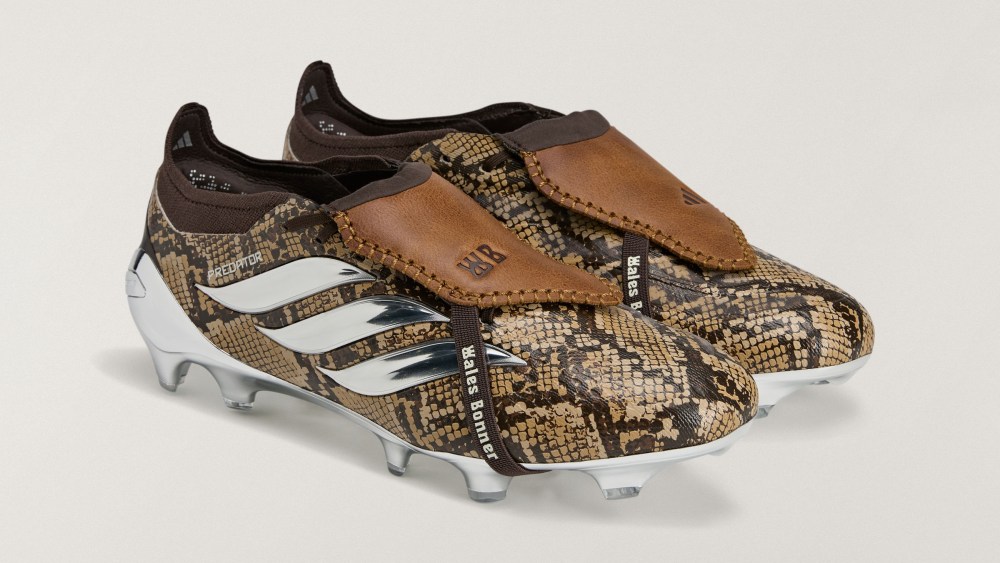
Gulden has high hopes that the upcoming soccer World Cup will continue that trend, as Adidas is trying to add “newness” to soccer shoes and clothing by, for example, printing shoes with unexpected patterns.
“In football we are the market leader and products around football are doing very well in general,” he noted. “That’s always been a dream for us: that football, or soccer, would have the same influence on the consumer that basketball has had for so long.”
Adidas apparel is also benefiting from its global network of geographically disparate teams, who create products to appeal specifically to their own market, whether that’s in China or the U.S. The company has seen that, once certain trend setting items feature on the company’s international platform, products from one market are crossing over to become global trends, executives boasted.
Adidas footwear sales equaled 3.69 billion euros during the first quarter. But growth didn’t keep pace with apparel and footwear grew 4 percent, in currency adjusted terms, over the first three months of 2026.
Footwear had a tough comparable, the company explained in a statement, and these results came “on top of more than 20 percent growth for the Adidas brand in the prior-year quarter.”
“We expected footwear to be flattish,” Gulden confirmed. That prognosis was also made because footwear is being heavily discounted by many brands at the moment, which puts pressure on the whole market. Adidas wants to avoid too much discounting and is being more cautious about selling too much into wholesale for that reason, Adidas executives explained.
Gulden also spoke about an area Adidas footwear is hoping to expand into, in which the brand hasn’t done particularly well in the past: comfort.
“I think it’s fair to say that many people buy sports footwear because of the comfort,” Gulden continued. “It’s an area people don’t talk about a lot but walking is a huge activity and we will start to develop a new concept for walking as a category.”
As for accessory sales, these rose 13 percent. Supplier issues in this category have now been resolved, the company said.
Despite all of the positive results coming in above market expectations and the boost the brand should get from the World Cup, Adidas did not move away from what analysts already considered fairly conservative guidance for the full year.
The German brand confirmed its forecast for currency-neutral sales to grow at a high-single-digit rate over 2026 while operating profit is expected to come in at around 2.3 billion euros by the end of 2026.
Earlier this year, market analysts said that operating profit should be around 2.7 billion euros but at the time, Gulden explained that he felt it was better not to promise what the company might not be able to deliver in the current climate.
On Wednesday morning he reiterated that. “The energy we are currently seeing, we are on a very, very good path, but of course, also in a very volatile market,” the Adidas boss explained. “The number of companies that are restructuring, the number of issues there are in the industry — and of course, not only in our industry but in the world in general — we need agility to adapt to all these tensions.”