
Retailers can’t move on to spring fast enough.
For the small sample of publicly held companies that still report monthly comparable sales as well as the broader U.S. retail market, numerous blasts of bitter winter weather severely limited sales in February, the second-lowest sales month of the year behind January, even under better climatic circumstances.
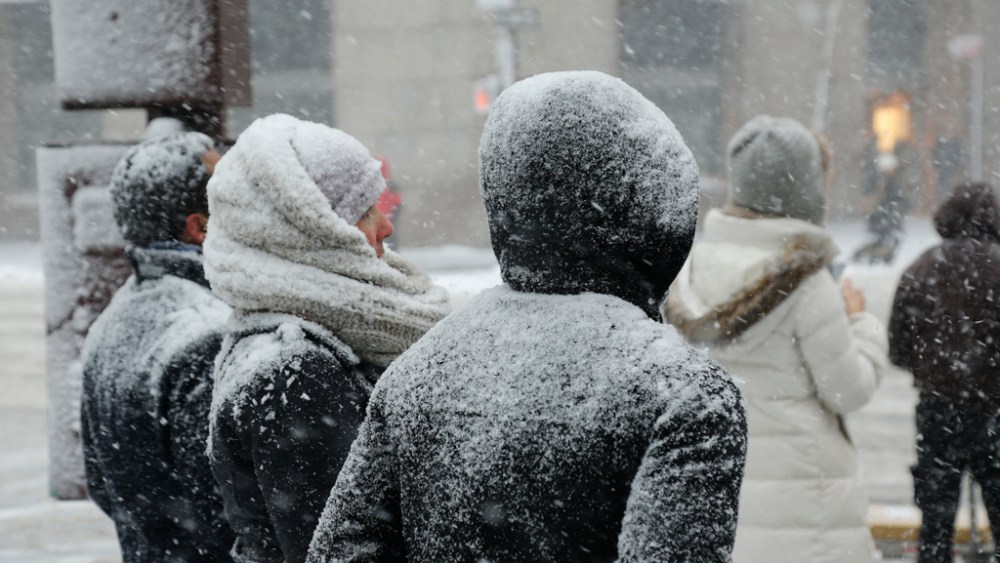
But virtually the entire eastern half of the U.S. felt winter’s wrath during February and the result was a month marked by disappointing sales.
Only two of the 10 retail brands tracked by WWD beat the sales estimates of analysts surveyed by Thomson Reuters — Victoria’s Secret with its 7 percent comp increase and Zumiez Inc. with its 6.9 percent gain — while seven came up short and only one, Victoria’s Secret’s sister brand at L Brands Inc., Bath & Body Works, met them.
Related Articles
Gap Inc., expected to post a 1.4 percent comp increase, instead registered a 4 percent decline, with all three of its nameplates falling below estimates. Even its hot Old Navy brand, expected to post a 5.1 percent increase, only managed a flat finish, while Banana Republic and the struggling namesake brand were down 5 and 7 percent, respectively, against expectations of a 1.7 percent increase and a 1.1 percent decrease.
You May Also Like
“Recognizing that February is a relatively small sales month, we’re focused on the spring shopping months ahead and delivering on our full-year goals,” said Sabrina Simmons, Gap Inc.’s chief financial officer.
Thomson Reuters expected a 2.1 percent median gain among the comp reporters, but instead saw the group post a 1.2 percent increase.
Stein Mart Inc., up 2.6 percent versus an expected gain of 3 percent, reported that its sales were strongest in the three states not touched by winter’s fury — California, Arizona and Florida — where comps were up at a rate three times the overall company figure.
Expected to register a 5 percent gain, Cato Corp. instead tallied a 10 percent decline, both the biggest “miss” and the worst result among the retailers reporting results. The company is based in Charlotte, N.C., with a concentration of its 1,346 stores in the Southeast. John Cato, chairman and chief executive officer, said sales were “significantly impacted by winter storms during the last two weeks of the month.”
Digging into more than 14 million shopping trips to an array of brick-and-mortar stores last month, retail analytics firm RetailNext measured a 10.4 percent drop in sales and a 12.5 percent decline in traffic, among the worst results of the past year.
The second week of the month — perhaps the one least affected by inclement weather — was probably the weakest of the period, according to Shelley Kohan, vice president of retail consulting.
“By just about every metric — conversion, sales, traffic, sales per shoppers — week two, even with Valentine’s Day at the end, was just bad across the board,” she said. “And there’s no way you can make up a traffic decrease like that online.”
Once committed to a shopping trip, consumers elevated certain metrics, Kohan said. Conversion rates rose 0.5 percent from year-ago levels while average transaction value and sales-per-shoppers had their best marks in recent months, growing 2.3 and 2.8 percent, respectively. By region, sales declines for the month, like the weather, were mildest in the West, where they dropped 10.6 percent. Sales in the Midwest, South and Northeast were down 13.5, 13.4 and 12.7 percent, respectively.
Kohan noted that March sales will derive a calendar benefit with the earlier timing of Easter this year versus last, as well as to the clock shift coming this Sunday.
“Sales frequently improve with the arrival of daylight saving time,” she added. “It’s one of the signs of spring and people are very anxious for those right now.”