
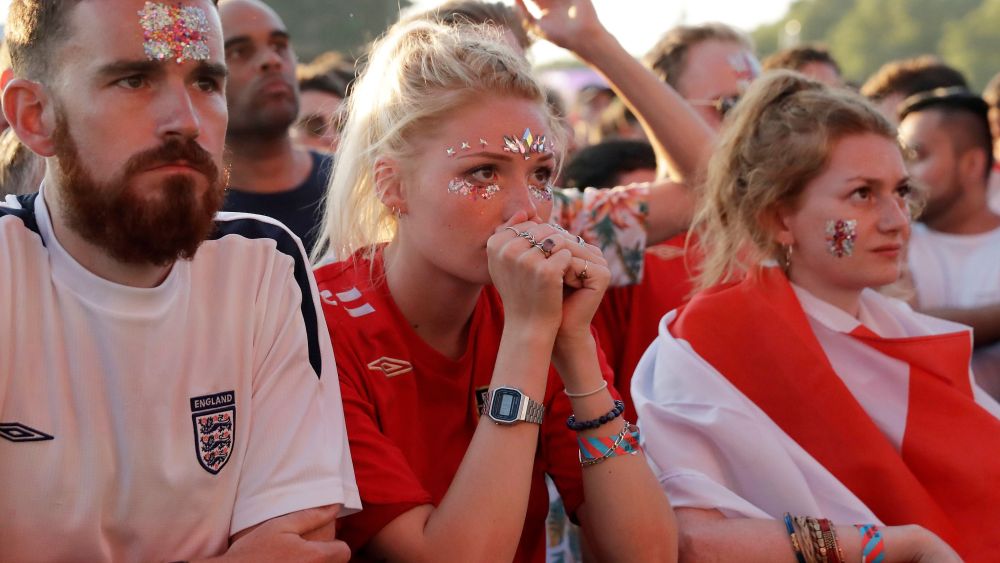
World Cup excitement and a heat wave kept Britons out of the shops last month, causing retail sales to unexpectedly slide.
After a strong April and May fueled by Royal Wedding mania, sales volumes dipped 0.5 percent in June, new figures from the U.K.’s Office for National Statistics, or ONS, showed.
The news, which followed hot on the heels of weaker than expected wage growth data, pushed the pound under $1.30, its lowest level against the dollar in 10 months, as analysts had been expecting a small rise in June’s spending data.
Rhian Murphy, a senior statistician at the ONS, said: “Retail sales actually fell back slightly, with continued growth in food sales offset by declining spending in many other shops as consumers stayed away from stores and instead enjoyed the World Cup and the heat wave.”
Related Articles
The news divided analysts over whether the Bank of England, Britain’s central bank, would have the confidence to lift interest rates at its August meeting, although the markets are still pricing in a quarter point rise to 0.75 percent.
You May Also Like
The central bank has been much slower than the Federal Reserve in returning monetary policy to more normal levels as it remains nervous over consumer spending, which makes up three-quarters of growth.
“While retail sales have been very strong over the past three months as a whole, the June drop-off has added to the uncertainty on rates next month,” said Jacob Deppe, head of trading at the online trading platform Infinox.
Apart from a Royal Wedding upturn in April and May, the British high street has been struggling as limited wage rises and stretched household finances have deterred consumers from spending, hitting retailers hard.
Department store chain Debenhams has been a casualty of this, recently issuing its third profit warning in six months, while its rival House of Fraser announced that it would have to close 31 stores, the equivalent of over half its portfolio, affecting 6,000 jobs.
Luxe retailers such as Mulberry and Burberry have also reported weaker sales as a stronger pound in the first quarter deterred tourists who had initially decamped on London in the months following the shock Brexit vote months to take advantage of an extremely weak currency.
Clothing was a big drag on retail sales in June, falling 0.8 percent. Samuel Tombs, U.K. economist at Pantheon Macroeconomics, put this down to the fact that “many households already had brought seasonal apparel when the weather also was unusually warm in April and May.”
In contrast, figures out earlier this week from the Commerce Department showed that U.S. retail sales rose by 0.5 percent in June, driven by higher vehicle sales and gas prices.