
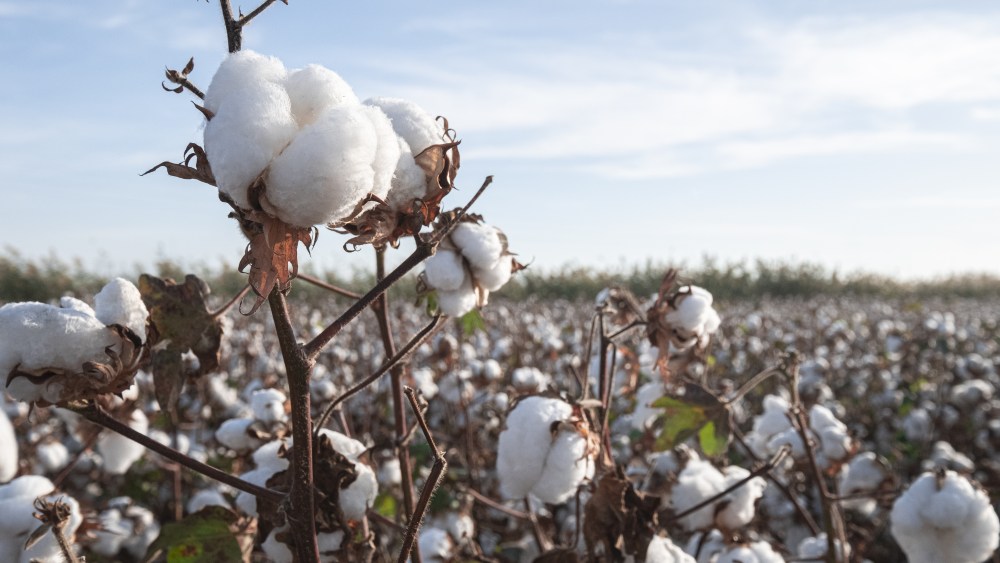
It feels apropos to release a fiber-focused report on World Cotton Day — that’s why The Transformers Foundation and the International Cotton Advisory Committee announced today that its first report — centered on cotton misinformation in the fashion industry — is now live.
The Transformers Foundation, a nonprofit organization that provides suppliers with a platform for sharing expertise and opinions on denim industry threats and solutions, and the International Cotton Advisory Committee, or ICAC, an association of cotton producing, consuming and trading countries, together released an investigative report on cotton data aimed at helping the fashion industry use data and claims regarding the fiber.
Related Articles
Titled “Cotton: A Case Study in Misinformation,” the report, authored by Elizabeth L. Cline, an expert and advocate in fashion sustainability and labor rights, and Marzia Lanfranchi, the foundation’s intelligence director and cofounder of Cotton Diaries, focuses on aiding fashion professionals with requisite tools for building “critical data consumption” in fashion while lessening “misleading” claims about cotton. It also intends to “train readers with the tools they need to become skilled combatants against misinformation.’
You May Also Like
Andrew Olah, founder of Transformers Foundation, said: “Transparency and traceability prove authenticity. We envision a future where farmers tabulate the amount of pesticides they use, the amount of water they use, all of the different inputs to compare this with their yield and continue retrieving the stream of data to a product’s end of life.”
“We have been eager to launch this report to provide readers with tools to enable data transparency that will ultimately inform best practice and viable solutions for the health of the planet, the people and our industry.”
The organizations emphasized that “Virtually every common claim about the sector is false or misleading, including that it requires 20,000 liters of water to make a T-shirt and a pair of jeans or that cotton uses a quarter of all insecticides. Even the notion that cotton is water-thirsty is misleading enough that we discourage its usage,” they said.
The 135-page report is flush with current research, interviews featuring industry experts and in-depth case studies that “debunk” the most widely used cotton statistics and equip the industry and consumers with current, accurate data on cotton and pesticides, as well as provides readers with tools and exercises to “engrain critical data consumption and use,” the organizations said.
Its report is organized into eight sections:
• Fashion’s Misinformation Problem and How It Works
• Cotton’s Environmental Impact: The Myths Versus the Reality
• Cotton and Water: The Reality (key figures, statistics and context)
• Cotton and Pesticides: The Reality (key figures, statistics and context)
• Cotton, the Environment, and Cotton Farmers (cotton’s social impacts)
• How to use data responsibly
• Six Calls to Action for the Industry
• Best Practice for: Citizens, Civil Society and Nonprofits, Media, Brands and industry
“Fashion has a serious and growing misinformation problem,” the firms explained. “Inaccurate and outdated figures are widely shared, as is data without any context. Fashion misinformation is inseparable from society’s broader ‘information disorder,’ driven by digital tools and ubiquitous social networks that allow misinformation to spread much faster and to reach more people than ever before.”
“While the industry doesn’t need to agree on one-size-fits-all solutions to fashion’s problems, we need to agree on the facts or progress will fade from view,” they said, adding that, “While there have been many attempts to debunk cotton myths, this report argues that teaching citizens and institutions to become critical consumers of data and information is the missing ingredient in halting the spread of misinformation.”
The Transformers Foundation philosophy is that by proposing clear and concise short- and long-term actions, it “hopes to push the denim industry — and inspire the broader fashion industry — to make data transparency the norm.”
FOR MORE BUSINESS NEWS FROM WWD, SEE:
Outerwear Brand Nobis Launches Upcycling Campaign