
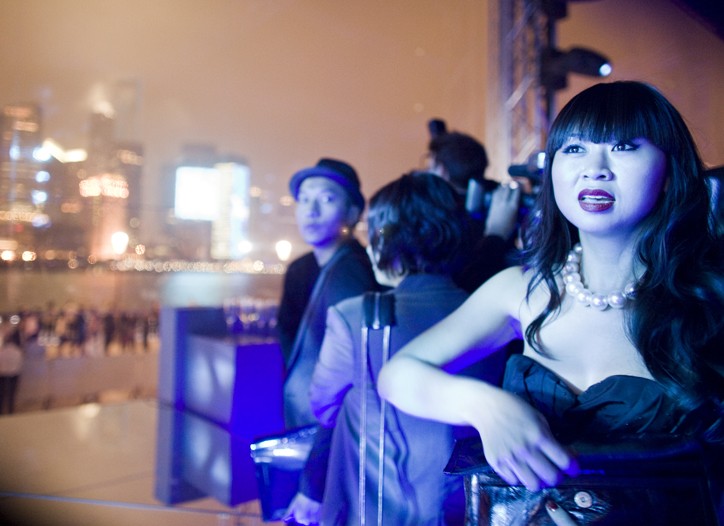
SHANGHAI — In the run-up to the 2010 World Expo, dozens of retailers, hotels and restaurants opened new locations, added additional staff, increased inventory and held special parties to capitalize off the much-hyped event.
No doubt in the eyes of the Shanghai government, the Expo, which commenced in May and wraps this weekend, has been a success. In recent weeks, millions of visitors flocked to the city before the close, pushing attendance figures past the 70 million target to around 72 million — a new world record for an Expo, according to the official Xinhua News Agency.
Billions of dollars poured into new infrastructure projects, including subway lines, road tunnels, airport terminals, shopping centers and skyscrapers in a bid to showcase this sprawling city as a glittering symbol of China’s modernity and growing economic strength. Yet it remains unclear whether the Expo was a home run for businesses, particularly foreign retailers, some of which opened their first stores in Shanghai or expanded their presence in the city for the six-month long event.
Related Articles
You May Also Like
This city has seen a flurry of activity over the past several months. Swatch Group opened four flagships for its timepiece brands in the lower part of a refurbished historic hotel on the Bund waterfront. Dior held a massive fashion show on the Bund to coincide with the refurbishment of its Plaza 66 boutique. Hermès International launched its much-anticipated Chinese luxury brand Shang Xia and opened its first store. Ermenegildo Zegna celebrated its centennial with a large party. Meanwhile, Louis Vuitton made a major statement of its own with an elaborate, interactive exhibition at the Expo’s French pavilion.
Additionally, around two-dozen luxury brands, including Louis Vuitton, Cartier, Prada, Gucci and Ermenegildo Zegna, launched flagships in the prestigious Shanghai IFC Mall, a retail space that opened at the end of April in Pudong. The mall is right next to a brand new Ritz Carlton, the hotel group’s second in Shanghai, which opened in June.
According to Maureen Fung, general manager for leasing for the IFC Mall developer Sun Hung Kai Properties, the retail space has had a 30 percent increase in monthly traffic in September compared to August.
“The Expo has brought amazing tourist traffic,” Fung said. “The hotel is full of people who then come to our mall to see the showcase of all of the international apparel and latest fashion. This is reflected in the sales performance of all of our flagship developments.”
Several luxury goods companies were mum on the topic of the Expo’s impact on their businesses. Louis Vuitton, Prada, Cartier and Zegna all declined to comment on their sales performance in Shanghai. Gucci could not be reached for comment.
Helen Willerton, Chloe’s Asia Pacific managing director, said the French brand has seen a “healthy increase in traffic” as a result of the Expo. “Not massive, but healthy. They were clearly tourists who were well-heeled and quite wealthy and able to buy our products and were looking for best-sellers, not for entry price point pieces or logo products,” she said.
Two of Chloe’s nine retail spaces in China are in Shanghai. The brand did not open any new locations for the event.
“We benefited less from foreign tourists who would have already purchased in their home countries,” Willerton said. “It was Chinese tourists, definitely, for us.”
Bruno Pavlovsky, president of fashion at Chanel, said both of the brand’s two newly opened boutiques in Shanghai, in the Peninsula and the IFC Pudong, are registering “very significant sales growth” this year. But he did not attribute that performance to the Expo. He said it was about customers’ response to the collections and the success of brand’s Paris-Shanghai Métiers d’Art Collection fashion show, which was held here in December.
“The Expo was not expected to have any measurable influence on Chanel’s Shanghai businesses,” he said. “Chanel’s experience over many years is that major events, such as the Olympic Games and the World Expo, do not positively affect the luxury and beauty businesses. In fact, such events can be an inhibiting factor due to adverse road traffic conditions and higher security alerts stifling retail demand.”
Hermès has a store in Plaza 66 as well as new boutique in IFC, which opened in May. Leo Lui, president of Hermès China, said both locations experienced high traffic throughout the event.
“There were so many people visiting the Expo who at the same time made use of the opportunity to visit our stores,” Lui said.
Shaun Rein, managing director of the Shanghai-based China Market Research, said his firm estimates retails sales rose about 19 percent and, more specifically apparel sales, increased 10 percent during the Expo period. But he questioned whether the tourist flows, which were predominantly Chinese, had much of an impact on the luxury sector.
“The Expo attracted tourists who would not shop for luxury items in Shanghai,” Rein said. “They would prefer to shop abroad where it is cheaper and there is a better product selection and more cache. In general a lot of people overestimated the impact on luxury sales and hotels. They were expecting more.” Instead the retailers that likely benefited the most were mid-tier brands, like Zara, Adidas and Uniqlo, which do not necessarily have a presence across China, he said.
Paul French, chief analyst at Access Asia, an independent research company, made a similar point. “The [brands that] will have done better will be the ones who have a good reputation, like Zara, and who are not everywhere in the country,” he said. “If you are pretty hip and you are cashed up, this was your chance to grab some Zara. They probably would have done quite well.”
A Fast Retailing spokesman in Tokyo declined to release sales figures for Uniqlo stores in Shanghai but said that it experienced a “very positive impact” from the event. This spring, Uniqlo opened its largest store in the world here.
“In terms of promotion and customer communication, it was also successful,” he said. “[The Expo] must have generated word of mouth.”
Spokespeople from Adidas and Zara declined to comment on Expo sales figures.
The Expo is expected to generate a net economic impact of $11.6 billion, the official China Daily newspaper reported in September.