
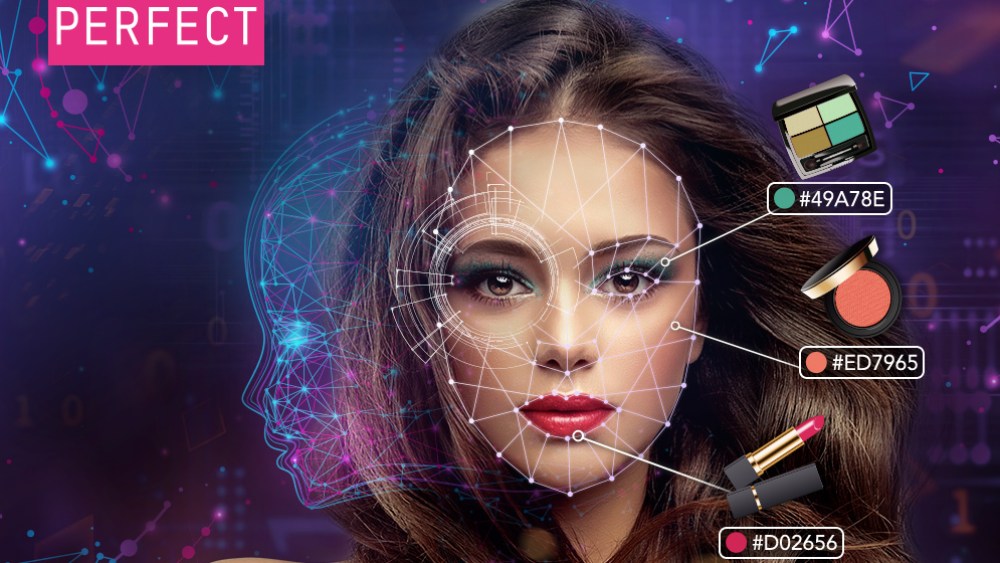
Shoppers are seeking surreal experiences from brands and retailers — and for companies such as Perfect Corp., a technology company focused on AR and AI solutions for beauty and accessories brands, that takes form in providing hyper-realistic virtual try-on opportunities for consumers.
To take a deeper dive into the space, Alex Badia, WWD’s style director, moderated the Accessories Roundtable: Online Shopping Reimagined Through AI, to discuss the latest breakthrough technologies in AR and AI-powered try-on experiences, sponsored by Perfect Corp.
Badia was joined by Wayne Liu, general manager and senior vice president of Perfect Corp.; Alessandro Bellati, director of Product Innovation and North America Product Design at Safilo Group, an Italian eyewear designer, manufacturer and distributor, and Matthew Harris, owner and founder of Mateo New York, a modern fine jewelry company.
Related Articles
Perfect Corp., previously focused on the beauty segment, offered virtual try-on technology exclusively for beauty brands until last year, when they entered the fashion market with virtual eyewear and accessory try-on capabilities. Its virtual try-on technology is compatible with desktop browsers, mobile devices and in-store beauty mirrors.
You May Also Like
Its solution scans facial measurements for exact specifications that facilitate the try-on process and deliver an optimized 3D experience via YouCam, its ultraprecise head movement tracking technology, in live camera mode. By taking only three images, it creates 3D virtual models, which allows customers to virtually try on products with definition and speed.
It also features automatic pupillary distance detection, or a precise detection of the distance between pupils, to ensure that a frame will fit. And naturally, its solution is highly customizable to fit a brand’s distinctive style through unique frame sizes, colors, and reflections as well as lens tints and lens reflections.
Shoppers can try-on jewelry with realistic movement simulation and AR effects; high resolution textures; lighting adaptation with luminescence and scintillation; and realistic material reflections, as Perfect Corp.’s solution is a true-to-life rendering of the in-store try-on experience.
Liu emphasized that its technology is “very precise” — the shape, color and reflection is conveyed to provide an experience quite comparable to the in-store experience. Its solution mimics reality, Liu explained — and has been a welcome addition to the customer journey.
Much of the success of virtual try-on technology is contingent upon that accuracy, and brand loyalty. “If the detail is there and it’s precise, they are going to shop,” Harris said.
But beyond consumer experience, its technology has led to dramatic increases in online conversions, particularly in a post-COVID-19 world, the brand said.
When Badia asked what prompted an interest in try-on technologies, Harris said his company began exploring said solutions back in 2018. “I wanted to know how the customer could engage with the product without physically touching the product,” he said. “We make fine jewelry — it’s a very tactile product, and people want to feel, touch and see how it looks on them.”
Soon after, the pandemic presented an opportunity to try solutions that would give shoppers the try-on experience at home, and Mateo New York engaged solution firm Fashion to MAX to experiment. The company’s AR department created a few filters for Mateo New York’s Instagram account, and Harris said interaction and engagement grew as a result.
And at Safilo Group, the brand has been experimenting with try-on technology, too, and said it was “an edge” during the pandemic when in-person shopping was a challenge. Bellati said: “It’s not just the product’s touch and look — this is absolutely still there and is a fundamental part of the business — but from the other side, this enables a new way of providing an assortment, and as Mateo said, during COVID-19 it definitely helped to essentially try, virtually, all those different glasses without having to strictly sanitize them.”
When Badia asked about the benefits of virtual try-on for inventory, Liu said: “This industry doesn’t need another AR company. But they do need a company that has an enterprise mind to do AR.” For Perfect Corp., that means enabling brands to create their inventory through its customizable database based on that company’s structure, offering a highly personalized brand experience, among other tailor-made features.
Its technology can also be incorporated into brick-and-mortar businesses, which could conceivably enhance the in-store experience as the consumer can pre-engage with frames by narrowing down their selection online prior to shopping in-store. “We can definitely move a little bit closer to the omnichannel approach,” Bellati noted.
FOR MORE BUSINESS NEWS FROM WWD, SEE:
Outerwear Brand Nobis Launches Upcycling Campaign