Differentiation is key to success in a saturated market – and Luxottica’s strategy for its strong portfolio of brands lies in its enduring focus on the eyewear consumer’s ever-evolving wants and its ability to remain true to the DNA of each of its brands.
Its agility in setting and observing trends alongside a swift delivery of new, wide-ranging products for eyewear shoppers creates an aura of distinctiveness around the brand – and for Luxottica, that means a refined focus on sustainability, technology, and eye-catching style.
Here, Fabrizio Uguzzoni, President of Wholesale for EssilorLuxottica North America, talks to Fairchild Studio about changes and trends in the eyewear industry, its “Eyes on” approach to sustainability, and the continuous growth of its portfolio.
Related Articles
Fairchild Studio: Tell us about Luxottica’s current place in the market. How is it differentiated in the eyewear segment?
Fabrizio Uguzzoni: Luxottica holds a unique position in the market. We have built our strategy around delivering innovative eyewear products and experiences to consumers – and in that respect, we’re proudly leading the way. Everything from predicting and interpreting style trends to R&D across new materials and products like smart glasses has made us a partner of choice for some of the world’s most iconic fashion brands.
What really sets us apart is our commitment and ability to stay true to the DNA of each brand. It’s not an easy task – our portfolio is broad including fashion, luxury and sport, but each brand has a distinct place in the portfolio, a unique heritage, sensibility and point of view that we adopt from the very beginning of the design process. With our licensed brands, it is a great privilege and a responsibility to weave these things into the eyewear and we do it as part of a wonderful relationship we’ve built with our partners.
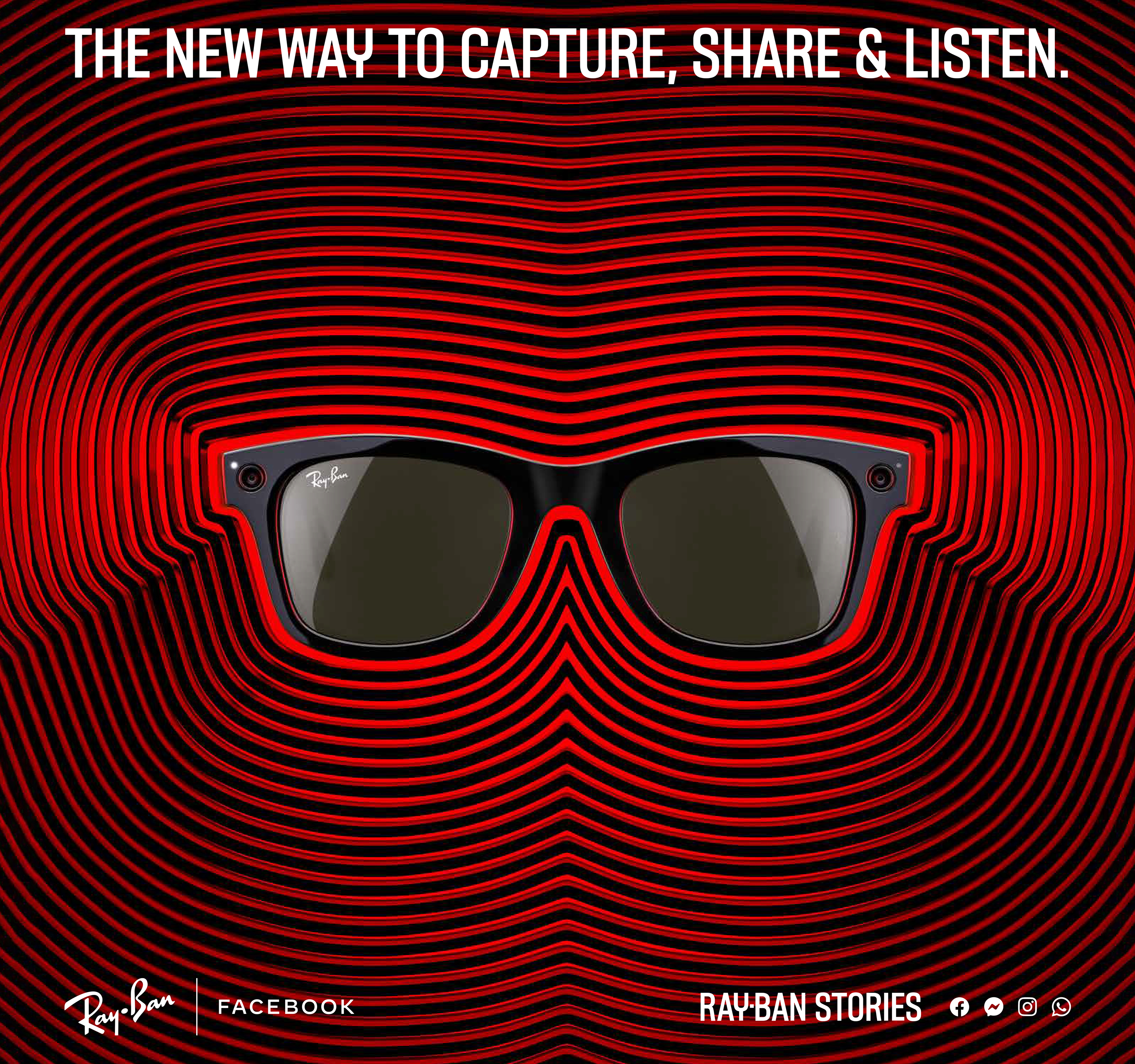
Our house brands continue to stand out as groundbreaking in terms of their materials, technologies, and manufacturing processes, but also in terms of their cultural appeal. Ray-Ban is having an incredible cultural moment right now with the launch our Ray-Ban Stories, our smart glasses designed with Facebook technology. This will be the first pair of smart glasses that people will actually want to wear. Oakley is key partner of the NFL and with the season launching this month, we are front and center on the faces of coaches and on the helmets of players. Costa is another brand that continues to build its consumer appeal and loyalty by staying true to itself.
Fairchild Studio: Retail has experienced significant change in the last year. From your perspective, how has COVID-19 impacted consumer trends at Luxottica?
Fabrizio Uguzzoni: COVID-19 didn’t just impact consumer trends – it accelerated them at 10 times the speed.
In terms of digital adoption, what was supposed to happen in two years happened in two months. For example, digital and social media has played a role in purchasing decisions for some time. In our new COVID reality, where consumers spent the better part of the last 18 months on their devices, we need to meet them wherever they are. We are building relationships with our consumers on social channels and staying connected, not only when they’re looking to make a purchase.
The experience also must be the same regardless of channel – part of building loyalty is knowing you’re going to get the same great experience whether you’re in store or surfing a brand’s Instagram channel. You will see that with Ray-Ban whether you’re in our flagship store in Soho, on Ray-Ban.com or purchasing a pair from your eye care professional. Trust is another factor that has always been important. But in uncertain times, consumers are looking for brands they know and trust more than ever.
One behavioral change since the pandemic is that people have been spending more time outdoors where there is less of a risk. It’s great for consumer health and wellbeing. More time outdoors has boosted the performance of sport retailers including our own Oakley and Costa brands. It has also created opportunities for advanced lens technology to play a more important role. Following our combination with Essilor, the Transitions lens for example, which automatically darkens when the wearer steps outside, is an ideal fit with a pair of our branded frames.

Fairchild Studio: What role does sustainability play in Luxottica’s story?
Fabrizio Uguzzoni: Sustainability has always been embedded in Luxottica’s DNA and business model. And this heritage has contributed to the creation of the sustainability approach we recently launched for EssilorLuxottica, “Eyes on the Planet,” which is focused on areas like carbon neutrality, circularity and world sight and is supporting our mission to “see more, be more and live life to its fullest”.
We’ve recently committed to achieving carbon neutrality at our operations facilities by 2025, starting with Europe by 2023. Our investments in renewable electricity, such as solar and biomass heating systems and photovoltaic installations, have allowed us to significantly reduce our reliance on fossil fuels and reduce greenhouse gas emissions. One project I’m particularly proud of is a major reforestation effort in the foothills of the Dolomites near Luxottica’s main plant in Agordo.
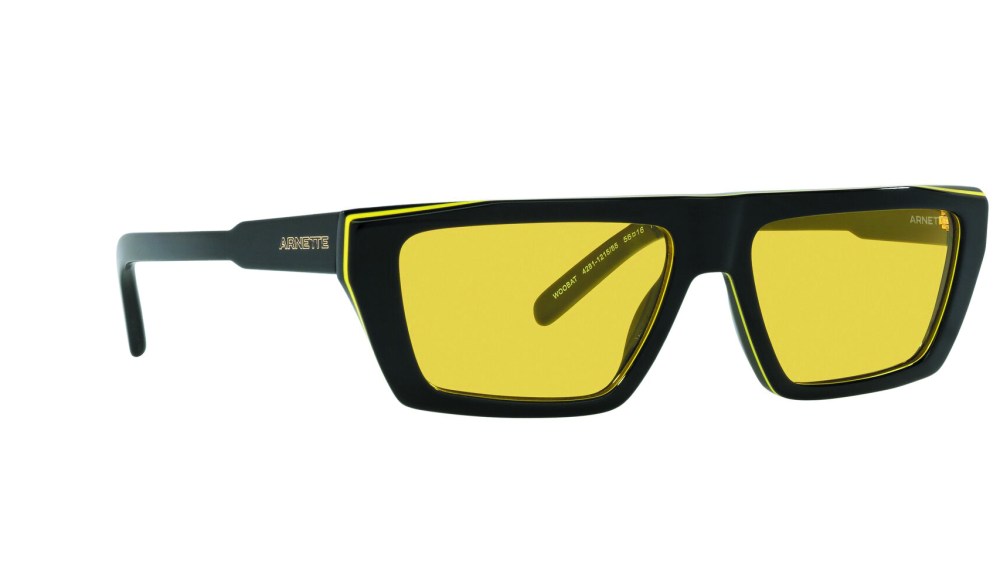
In terms of circularity, we’re shifting from fossil-based materials to bio-based materials, which produce fewer emissions and are easier to recycle. We recently invested in Mazzucchelli to develop a highly sustainable type of acetate. We’re also introducing sustainable eyewear such as Arnette’s new collection – the materials are reusable, recyclable and reduce environmental impact – as much as 70 percent of their active range is sustainable.
Given our strong belief that good vision is a basic human right, we’re on a mission to eliminate poor vision by 2050. By helping to train over 18,000 community based primary vision care entrepreneurs and building more than 200 sustainable vision centers to date, EssilorLuxottica has created access for nearly 450 million people in underserved communities around the world. We are also using our innovation muscle to help solve the vision crisis. Essilor’s Stellest lens, designed to slow down the progression of myopia in children, has recently been granted “Breakthrough Device” designation by the FDA.
We have made great progress, but there is so much ahead in our sustainability journey.
Fairchild Studio: Luxury has become a key category in eyewear. From your perspective, why has that segment grown so dramatically? How does the growth of luxury impact Luxottica’s portfolio?
Fabrizio Uguzzoni: Millennial and Gen Z consumers are behind the steady growth of the luxury eyewear segment and are reshaping what luxury means today. This group makes up half of all consumers and they are closely following trends and celebrity fashion – with social media it’s all around them every day. They also think and act differently than other generations in terms of aligning with and purchasing from luxury brands.
On top of being style-obsessed, these younger generations deeply value authenticity, transparency, and community. Gone are the days of luxury brands having a singular focus on exclusivity. While superior products and brand prestige are still important, successful luxury brands today operate in a more accessible way.
Through thoughtful partnerships, collaborations, special events and philanthropic initiatives – and democratically sharing everything on their public channels – luxury brands are telling a great story right now about who they are and what they stand for.
EYEWEAR TAKES CENTER STAGE
Luxottica’s fall lineup offers a range of reinterpreted vintage styles, technology-driven contemporary looks and sustainably made frames that reflect consumers’ needs and desires.
Accessories indeed make the outfit – and for Luxottica, the company’s fall lineup proves the case that bold, bright, or beautiful eyewear can complete any look, for any occasion.
Luxottica, a global leader in design, manufacturing and distribution of fashion, luxury, and sports eyewear, boasts a portfolio of 30 brands, extending from luxury purveyors such as Chanel, Burberry, and Prada to its house brands including Ray-Ban, Oakley, Costa, Arnette and Persol.
Akin to specific segments in retail that fared well during COVID-19, the state of the eyewear industry is quite healthy: Already in 2020, the global eyewear market was valued at $147 billion and is poised to expand at a compound annual growth rate of 8 percent from 2021 to 2028, according to a report from Grand View Research.
Alessandro Mariani, Vice President of Marketing at Luxottica, told Fairchild Studio that the coronavirus pandemic dramatically impacted the eyewear industry at large, as well as consumers’ spending habits. “On one side, consumer shopping habits have evolved with product discovery and purchases shifting towards online at an increasingly quick pace. This has forced brands to engage differently with consumers and brought a renewed centrality to the product itself.”
Eyewear has become an even more relevant accessory for consumers due to increased video presence and screen time. “With most of the interactions happening online and people showing essentially only their faces through video, eyewear has become a key component of everyone’s personal look. This combined with a renewed sense of self care and self-worth has propelled the eyewear category growth.”
Much of this is due to a growing number of consumers that are discovering new products through social media and ultimately purchasing through their phones, Mariani noted. “With people spending time in front of screens more than ever before, consumers are continuing to invest in quality eyewear knowing that they will get the same great experience whether shopping in-store, online or through Instagram.”
And due to consumers’ piqued interest in spending more time outdoors, Luxottica’s sport and sun categories saw a significant uptick, particularly during the warmer months when shoppers need UVA/UVB protection from the sun, Mariani explained. The company’s Transitions lenses, which are fully clear indoors and automatically darken outdoors in seconds, are a natural fit.
Authenticity is also driving shopping trends. “Consumers are seeking authenticity above all else and brands have embraced that in unique ways. Inspiration from architecture and jewelry have influenced design trends for the luxury consumer looking for minimal, refined, geometric silhouettes. Trend driven designs “range from a mix of vintage frames that are reinterpreted with new materials and technologies”.”
Here, Mariani walks Fairchild Studio through trends that inspired its fall collections.
Reinterpreted designs that link back to brands’ heritage are trending up.
Luxottica’s eyewear brands continue to bring their authenticity to the party. Part of being an authentic brand is maintaining that strong connection to the brand’s roots, the essence of where it comes from. Prada is introducing a modern take on its triangle logo that blends tradition with creative experimentation. Two bold new acetate styles with sculptural construction are added to the Symbole collection. Burberry is another great example, celebrating their signature house logos by incorporate the B, the stripe and the check into its latest eyewear designs. Ralph Lauren’s new Automobile Collection, which evokes speed and style, is inspired by the designer’s love of automobiles. Reinventing one of Versace’s most iconic designs, the metal hardware of the original Medusa Biggie temple will be reinterpreted this season with a clean-cut on see-through construction for a full-lens effect enriched with metal Medusas.
No more choosing between fashion and function – you can have both.
Luxottica is reimaging what a pair of glasses can be. Ray-Ban is leading the way with the just-released ‘Ray-Ban Stories,’ a new generation of smart glasses integrating Facebook technology that lets you capture, share, and listen in a whole new way. This is the first smart glasses that consumers will love wearing. Wearable technology, especially when it comes to a product we wear on our faces up to 12 hours a day, is not really a trend anymore – it’s here to stay.
Consumers are becoming increasingly focused on the “conscience” of a brand.
Our Costa brand has built a fiercely loyal customer base around its commitment to cleaning up the oceans. In partnership with Bureo, Costa is taking discarded fishing nets and giving.
them a new life in their Untangled Collection. Arnette will announce another exciting sustainable, bio-acetate collaboration within the music world this fall. This season Tory Burch’s sustainable frames are manufactured with 100 percent recycled materials (exclusive of metal hardware) while the lenses feature mineral glass. We’re also proud to work with Giorgio Armani to introduce their second, sustainable bio-acetate capsule collection. Emporio Armani will also release a special edition bio-acetate style with partially bio-based sun lenses.