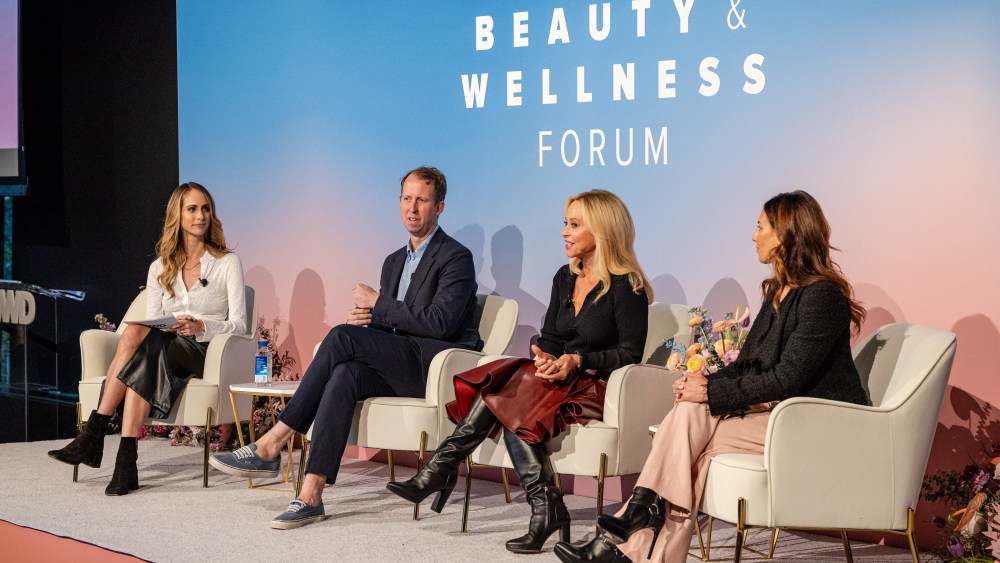
During WWD’s annual Beauty & Wellness Forum, Allie Egan, founder and chief executive officer of test-to-treatment hormonal skin care company Veracity, hosted a panel on the rise of customizable wellness. The conversation featured Julie Wainwright, cofounder of precision nutrition company Ahara; Craig Elbert, cofounder and CEO of quiz-based supplement company Care/of, and Carla Brenner, founder of test-to-treatment hair loss company Roots by Genetic Arts.
As each founder introduced the impetus behind their brand, one sentiment rang true: “One size does not fit all,” as Wainwright emphasized.
Related Articles

“There are so many products out there that people can be taking and it’s overwhelming to understand which products could be right for which person, which situation,” Elbert said. “Personalization is a means of providing guidance for what could be right for you.”
With this, each company has taken a different approach to customizing products. Care/of uses a quiz to learn about a user’s lifestyle and goals, then suggests what supplements might be best. Veracity uses an at-home saliva test to gauge a person’s hormone levels and provide them with suitable skin care and supplementation recommendations. Ahara combines a survey and epigenetic and genetic tests to make precise nutrition plans. Roots by Genetic Arts employs a DNA test, which will be reviewed by a dermatologist to provide consumers with a custom treatment plan.
This level of personalization offers consumers peace of mind prior to purchasing, as they know the likelihood the product will be efficacious is much higher.
“You might be taking and spending money on a whole bunch of other solutions that might not actually work for you,” Brenner said. “The impact is that you actually know what solutions work best for you. “You’re not wasting time on the wrong solution and spending money.”
But are consumers looking for this level of personalization? According to Wainwright, they absolutely are. Since launching Ahara into beta testing, she has found that users are opting for their most personalized offering over the free survey version, opting to take additional testing.
“They’re mostly choosing the testing option,” Wainwright said. “They’re engaged and they really want to know what’s going on their body and they will get better results.”
When opting for a personalized methods, these founders agreed science should be at the forefront of the brand to ensure the messaging isn’t overpromising results to consumers.
“Within health and wellness there’s a danger of overpromising,” Elbert said. “People lose trust. The importance is transparency.”
Egan doubled down on the point of education, noting since the space is so new education is key — for example, on their websites, each of these brands breaks down how they are analyzing a user’s data to create custom results.
“The biggest thing that we’ve learned is we have because this is such an emerging space you have different people at different points in their journey,” she said. “It’s really finding ways to develop the brand and then meet people where they are.”