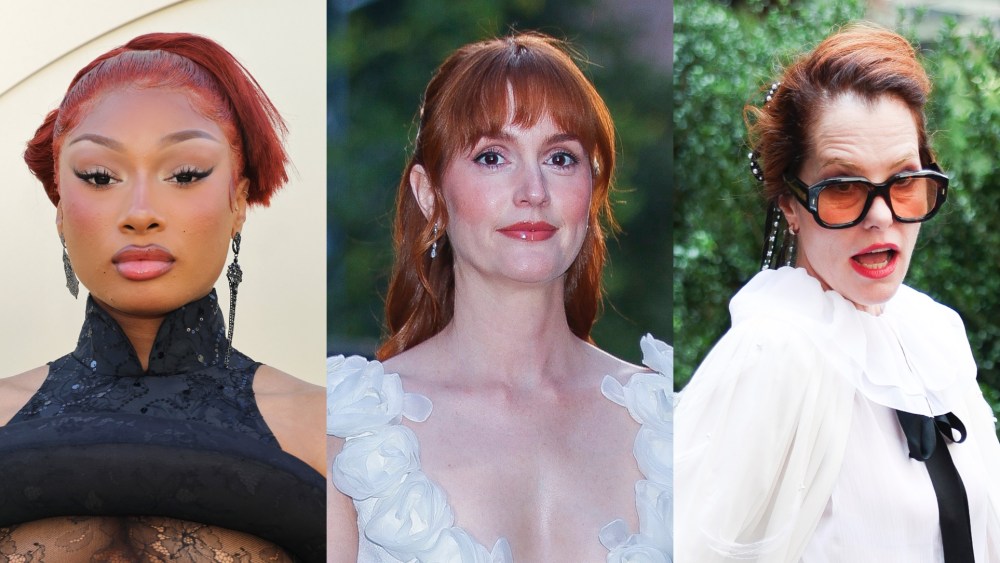
The 2025 hair trends are getting wild.
While “cherry cola hair” may have dominated as a top color choice for most of 2024 and the early months of 2025, movement toward warmer, rustier tones is gaining momentum now, with celebrities such as Andra Day, Keke Palmer and Leighton Meester leading the charge. Behind them are Megan Thee Stallion and Malia Obama, who subsequently ditched their garnet coloring for the charred amber hue in recent weeks, while Parker Posey set her inky black hair aflame with copper dye in late May.
Related Articles

According to Spate, a company specializing in machine intelligence for the beauty industry, these eye-catching transformations are part of a wider shift within the beauty lexicon toward more expressive, striking hairstyles that epitomize an individual’s persona. The majority of these looks infuse the fiery tones favored by Hollywood elite, but they aren’t limited to a single color — the opposite, actually.
Calico hair, specifically, is poised to be one of the biggest hair trends to come out of 2025, with a 1,400 percent increase in popularity growth year-over-year, per Spate. The tricolor aesthetic, modeled after the fur of calico cats, is a melting pot of orange, red, brown and blond. The blend of color can be subtle, but traditionally, the finished product is highly contrasted and choppy, like early-2000s foil highlights. Miley Cyrus’ stark blond streaks are beginning to toe the line of the calico trend, without the vibrant pops of amber and dark brown.
Like many modern-day trends, the hype surrounding calico hair mainly lives on TikTok — for now. According to Spate, the platform makes up 96.3 percent of its popularity share, generating millions of views under hashtags such as “alternative girl,” “makeover” and “Y2K hair.” Videos show before-and-after footage of women dying their locks at home or the salon, encouraging others to take the plunge with them.
On the heels of the feline-like aesthetic is the foxtail trend, which sees people tinge their orange, red or blond hair with dark brown or black ends (think Lindsay Lohan in “Freaky Friday”). The gradient style isn’t a slow burn like balayage; it’s a quick dip dye at the bottom, a matured version of the Kool-Aid hair craze, if you will.
Gregory Patterson, celebrity hairstylist and styling expert for Sally Beauty, described the foxtail trend as a “total DIY-able color moment.” He said, “It’s a money-saving way to evolve your hair color.”
As for what the style says about current consumer mindsets, Patterson noted: “I think it reflects a shift toward wanting more longevity from foundational color — people want their base shade to work harder and last longer – it’s all about value. It’s kind of like selvedge denim: the longer you wear it, the more character it develops.”
As these animal-inspired approaches emerge from the “cherry cola hair” era, many individuals are also gradually going back to their natural color after being platinum or bleach blond for years. Dubbed “recession hair,” the movement was born out of fear for where the economy may be headed, as many consumers cut back on luxury spending (product and treatment-wise) to save money. Already, a long list of stars such as Millie Bobby Brown and Justine Lupe have phased out their blond, cutting the light color with long, dark roots.
In May, WWD spoke with Jeff Lindquist, a partner at Boston Consulting Group, about the threat tariffs pose to the beauty industry. Generally, though, Lindquist said: “We’re increasingly concerned about their impact on consumer confidence, consumer spend, consumer wealth, the competitiveness of U.S. businesses who are now facing increased input costs and perhaps, most importantly, we’re concerned about the U.S. as potentially a slow-growth economy going forward.”