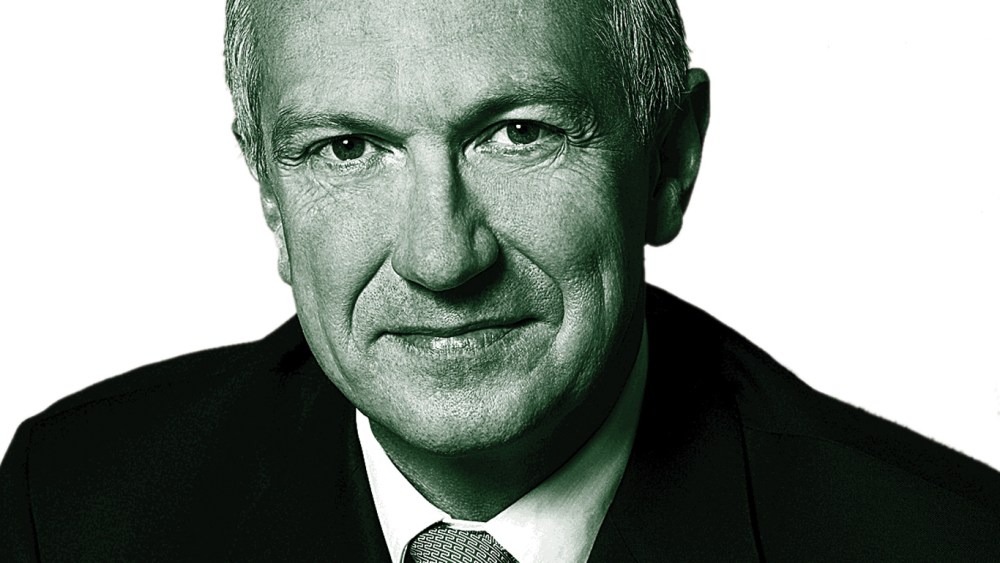
CLICHY, France — Hailing the digital era as a new dawn for the beauty industry, L’Oréal chairman and chief executive officer Jean-Paul Agon outlined how technology is allowing the company to move forward both in its processes and its drive to gain new consumers.
“The world of beauty is changing radically, we are at the dawn of a new era,” Agon told shareholders at its headquarters here a day after the company reported its fourth-quarter and year-end results. “We are very confident that this new golden era for beauty can be a new golden era for L’Oréal.”
Agon anticipates that the digital era will drive continued new demand for beauty products as consumers focus more on their appearance, and said that the company is embracing digital to interact with consumers to offer them better products in line with their desires, which he expects to drive demand for more premium products in the future, he said.
Related Articles

Areas where the company is already doing this, by integrating what he described as “social listening,” are makeup, natural products and personalization, he said, and this is allowing the firm to improve its research and innovation, digitize its laboratories and regionalize its research.
L’Oréal has been investing in innovation and digital for its mass-market activity to reach out to consumers via targeted digital content and new formulas that it believes are closer to what consumers want, like recent introductions Colorista hair color by L’Oréal Paris, which targets Millennials, and more naturally oriented products like Botanicals Fresh Care, a hair-care line.
“We are reinventing the division in this new exciting world,” said Consumer Products division president Alexis Perakis-Valat. “We are ready and determined to lead the new mass beauty market.”
In skin care, web-based sales for those L’Oréal products grew 64 percent, to account for 10 percent of revenues worldwide, and precision marketing online enabled Yves Saint Laurent to succeed with the launch of Mon Paris without cannibalizing Black Opium, revealed selective divisions president Nicolas Hieronimus.
But even as L’Oréal aims to grow by capitalizing on digital innovation, it is looking to sell off at least one of its holdings: The Body Shop International. Agon confirmed news reports that L’Oréal is considering strategic alternatives for its ailing The Body Shop business. “It has been decided to study all strategic options,” he said. “It could take several months, maybe a bit more,” added Mulliez.
Still, despite ongoing uncertainty in many regions and categories heading into 2017, Agon is convinced the company is on track to continue to outperform the global beauty market in the year ahead.
“The growth of the market itself in 2016 was a bit slower for emerging markets and higher for markets like the U.S. and Europe, which is good for us because we are probably the most balanced company overall between the three parts of the world,” said Agon.
“The world is becoming very unpredictable. Several impacts that existed [in 2016] still exist. The situation in India is not much better, the demonetization is still ongoing. In China, the mass market has clearly decelerated. In Brazil, the situation is not getting any better for the moment. At this stage of the year, I would say it’s probable that the global growth of the market will be more or less the same as last year [at around 4 percent],” he said.