Cross-generational and more engaged than ever, beauty’s consumers are changing the way retail giants are approaching the category.
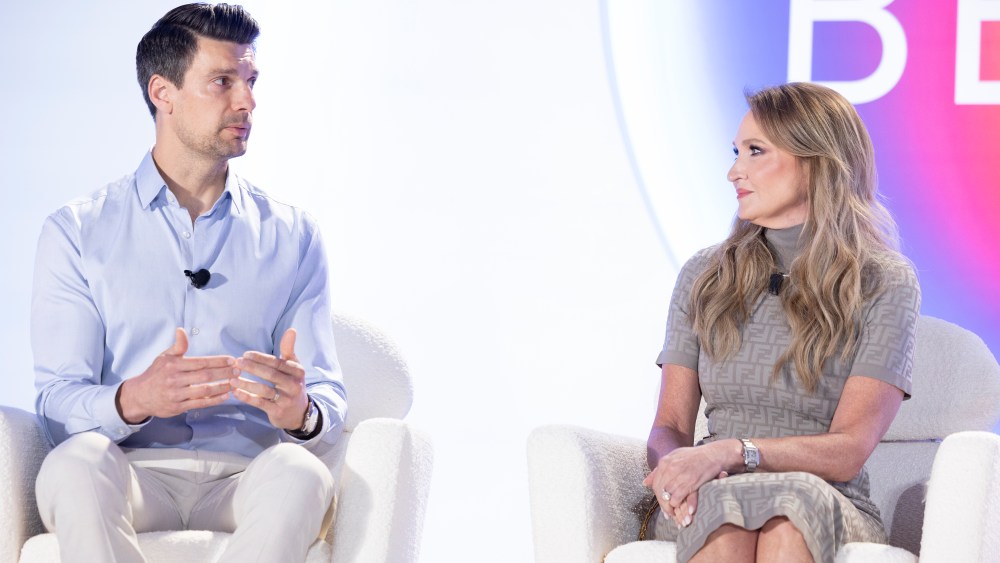
At the 2024 WWD Beauty CEO Summit, two retailers with booming businesses — Ulta Beauty‘s president and chief operating officer Kecia Steelman and Space NK‘s chief executive officer Andy Lightfoot — spoke with WWD senior beauty editor Kathryn Hopkins to talk how the landscape is changing and how they’re reacting.
“We’re seeing this incredible relationship with brands and customers,” said Lightfoot. “It’s unique to beauty but it’s certainly very strong, and beauty is just the breadth and wealth of brands that exist — there is something for everybody. From a retail point of view, it’s about how you tell all of those different stories.”
Related Articles

Steelman is equally bullish, despite growth moderating in the category. “The business can get even larger in size. We’re all focused on share, but wouldn’t it be fantastic if we can entirely grow this business all the way around?” she said. “Retail, especially beauty retail, is generational, it’s personal, and the more information you have that you can really communicate with that consumer it makes me feel great about the future,” she said.
Both noted that Gen Alpha is starting to shop the category, and in the case of Space NK, is also educating their parents on which products to buy and when.
“My mom only learned makeup from her mom, and it was very mono-directional. Now, mothers are getting educated from their daughters, because they have such access through social media. We’re seeing these incredible interactions,” Lightfoot said.
Capturing consumers early has become the imperative. “The lifespan of the consumer is pretty lengthy if you can keep them as a consumer for life, which is what we’re focused on at Ulta Beauty,” Steelman said.
Both retailers seem to be excelling. Space NK is now double the size it was pre-pandemic, Lightfoot said, and Steelman noted Ulta’s last two years of “unprecedented” growth. Data plays a key role in how the businesses will drive growth in the future, and each executive is looking to their loyalty programs for insights.
“Our loyalty program has 43.3 million active members, and they have to purchase within the last 12 months, so it’s a clean data set,” Steelman said. “How you can unlock [data] to personalize your offer to connect with that consumer.”
“Data is everything, otherwise you’re fumbling around in the dark,” Lightfoot said. “We use that data to educate the entire journey, from the first purchase through to the customer that’s been with us for 10 years.”
The structure of Space NK‘s loyalty program has also driven high retention rates, as consumers gain rewards on future purchases, not present ones. “It’s always downstream, so you never get the money off in this purchase. It’s about building the opportunity to come back. It’s an incredible retention driver.”
For Steelman, the pillars of Ulta’s strategy are continuing to grow the business. “One of them is around our omnichannel guests, understanding how and where they want to shop,” she said. “Wellness is another category we’re doubling down on. And the last thing is leaning into community, connections with people that started during COVID[-19]. Whether it’s around our creator network or in-store events, we see that consumers still want to engage in different ways.”
There are tenets of Space NK’s strategy that are still holding strong, too. “We see it as a flywheel. Ours is simple,” Lightfoot said. “You add brands that people want to buy, that’ll attract customers, you look after and care for those customers to grow your customer base, and that will attract more brands. This cycle is continually accelerating, and that’s what’s driving our business.”