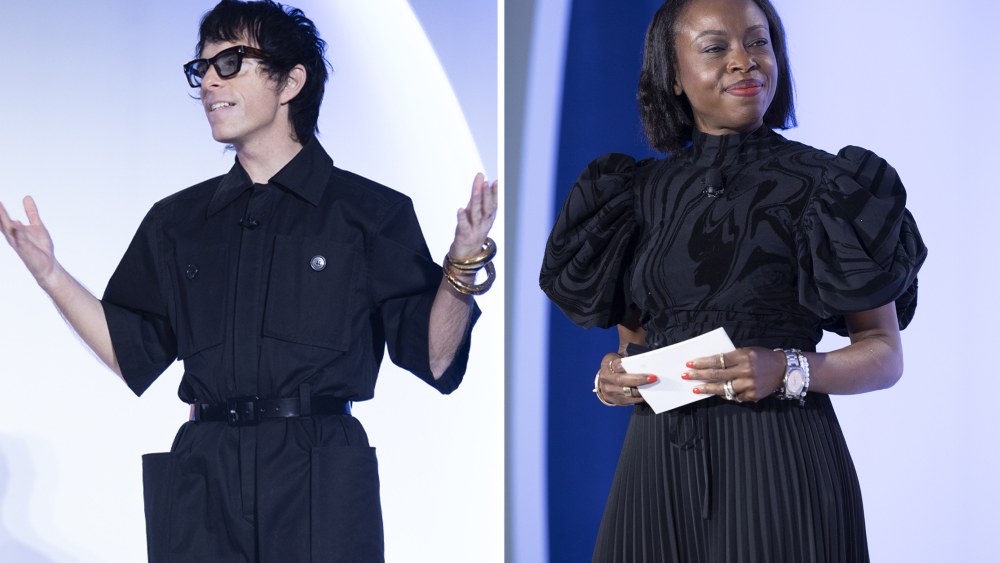
Despite their all-black attire at the 2024 WWD Beauty CEO Summit in Miami, MAC Cosmetics‘ Aïda Moudachirou-Rebois and Drew Elliott have much to celebrate.
“We dressed appropriately for the weather,” joked global creative director Elliott, who noted the duo was dressed in “MAC Black.”
This year marks 40 years since MAC’s founding and 30 years of its Viva Glam charity campaign. A disrupter since the beginning, today it is the number-one prestige makeup brand globally.
Related Articles

“Our founders [Frank Toskan and Frank Angelo] started this brand out of their kitchen in Toronto in 1984 and they weren’t just creating makeup — they were making history,” said senior vice president, general manager Moudachirou-Rebois, pointing to MAC’s cultural resonance and exaltation of its makeup artists as the brand’s key differentiators then and continued growth drivers now.
“I never considered MAC a makeup brand — it’s a culture brand,” said Elliott, who said MAC’s finger on the pulse is “what allows us to be ahead of trends and build our own trends.”
“Whether its backstage, on the runway, on the small screen with Netflix or on the big screen — it’s about being right there with culture,” said Elliott, noting that MAC sponsored makeup at hundreds of shows last season — including that of CFDA Menswear Designer of the Year winner Willy Chavarria — and helped bring to life Lady Gaga’s Harley Quinn portrayal in the upcoming “Joker 2” film.
This collaborative spirit extends to MAC’s network of roughly 13,000 makeup artists globally who “have a seat at the table across every step of the product development process,” Moudachirou-Rebois said. For example, artist feedback was pivotal in creating MAC’s Hyper Real skin care range, which rolled out last year. “We know that when [our artists] love the product — it will work,” she said.
The brand taps its artists to drive social media engagement and MAC routinely ranks as a top-10 makeup brand by earned media value according to CreatorIQ.
“Our artists are able to demonstrate how to bring a trend to life for customers; how to bring a shade to life — but then we also reach out and partner with remarkable creators,” Elliott said.
Indeed, MAC was the first makeup company to sign TikTok creator Sabrina Bahsoon, more widely known as “tube girl,” for a collaboration after the 23-year-old went viral while filming herself dancing and lip-syncing on trains last fall.
“There are moments to do those MAC campaigns and [create that] aspiration, but then you also have to leave it to the cool kids and let them play with it, mess it up and make their own thing, and be comfortable and jazzed on that,” said Elliott, adding that TikTok’s recent infatuation with “lip combos” — any combination of two or more lip products used to create one look — have given many of MAC’s ’90s-era lip pencil shades a sales boost.
“We were in a meeting with Leonard Lauder and he said, ‘what’s old is new again,’ and I said, ‘well, not no,'” laughed Elliott. “With the lip liners and all of those things, I call it ‘nowstalgia,’ where, yes, it’s about then — but it’s also about nuance and reflecting modernization.”
In a similar nod to the times, MAC has expanded its Viva Glam campaign — which has raised more than $525 million to date for organizations fighting AIDS and supporting the LGBTQIA+ community — to benefit organizations which more broadly support gender, racial and environmental equality.
“The new generation doesn’t see AIDS to be as much of a threat as it once was, but they do believe equality is something we need to fight for…expanding Viva Glam will allow us to connect to a new generation of makeup artists and consumers,” Moudachirou-Rebois said.