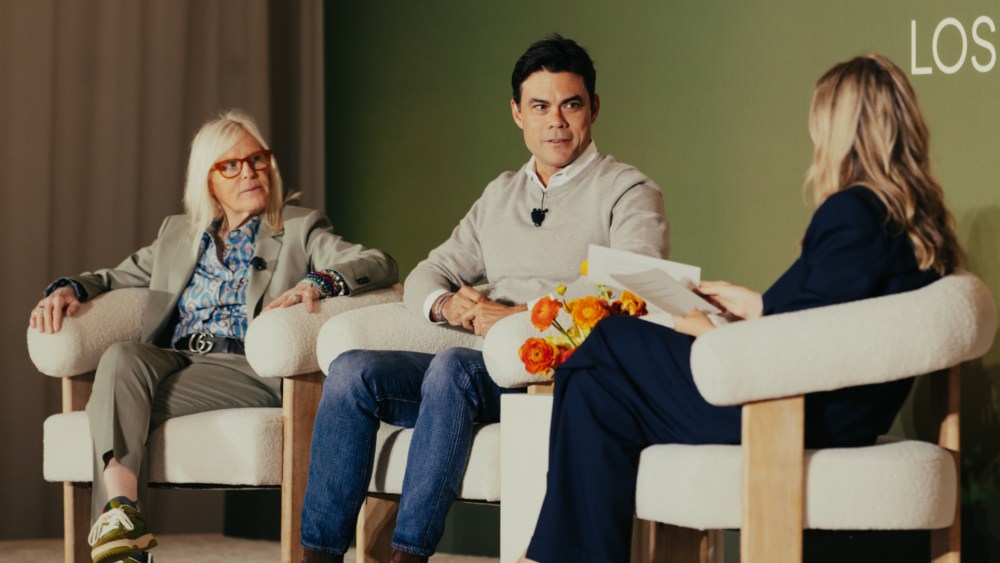
The emotional experience of beauty relies on human connection, and that’s where hair, makeup and skin services have an advantage.
So said Amy Errett of Madison Reed and Julian Reis of Skin Laundry, in conversation with senior beauty editor Kathryn Hopkins at WWD’s annual Los Angeles Beauty Forum on March 26.
To kick-start the conversation, Reis, who also serves as the chief executive officer of SuperOrdinary, chronicled the evolution of Skin Laundry, starting from the establishment of its facial bar and product line in 2013. He said, “I saw Drybar, and I was like, ‘What is this service that everyone was offering? Why hasn’t someone done this for facials?’ And when I came to the country from Asia, where everyone was using lasers as a treatment, I said, ‘wouldn’t it be great if you could do this in the U.S.?'”
Related Articles

As for Madison Reed, the brand started direct-to-consumer, offering a wide range of prestige color products for at-home use, before its first salon opened in 2017. Today, the membership-based business retains 70 percent of its customers. “On average, a woman is spending about $1,100 with us a year, and it costs us $80 to acquire her,” said Errett.
Products remain central to both businesses today. That said, the customers who purchase Madison Reed box dye are not the same as those (mostly 38 and over) booking appointments at their color bars. “Our customers are very wealthy in our at-home business, they’re just doing it for convenience,” said Errett. “The woman that comes to our hair color bars does not want to do it, and I’m not trying to teach her to do it at home. This business also doesn’t work unless the people in the industry are changed because of your business model.”
Piggybacking off that point, Reis said consistency is key, as well as “building a reputation that wherever you go, you get exactly the same service.”
Looking to the AI-infested future, Errett and Reis don’t anticipate the demand for service to diminish. In fact, they believe the human connection will likely put their brands at an advantage.
“I think launching a product business today is extremely difficult. It’s always about retention,” said Reis. “I think what services allow us to do is we have this natural flow of customers that come through and we’re able to pivot very quickly. We’re not fighting against Meta, Google, all the different acquisition costs that you all suffer from.”
Adding to that, Errett said, “This notion that we’re all in something that isn’t creating value is absolutely wrong. I love the fact that we’ve created something that is emotionally connected to building confidence in human beings. I think that’s a great place to be. Would you be comfortable with a robot touching your hair and coloring it? Is that an emotional experience that makes you feel confident? Absolutely, no.”