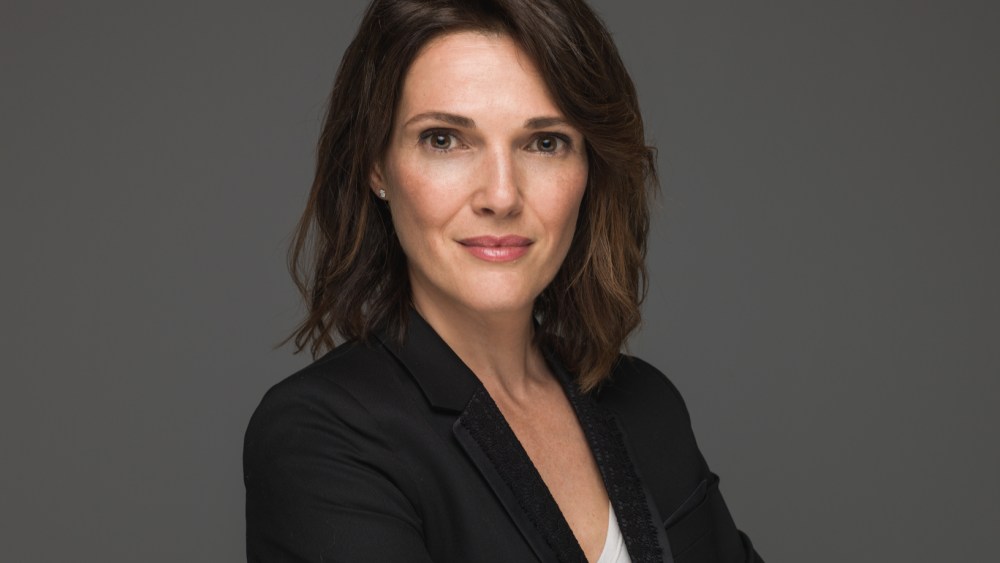
TORONTO — Canada’s Shoppers Drug Mart has long been in people’s daily lives and popular culture. Drake even shot part of his music video “Started From the Bottom” in an Ontario store and last year launched his candles exclusively at the drug store chain, which is part of Loblaw Cos.
It has also over the years been gaining market share in the prestige beauty sector, which has only ramped up with the appointment of Gwennaëlle Varnier as vice president of prestige beauty in 2019.
Related Articles

Here, Varnier, who hails from France and has experience at Teoxane Laboratories, Clarins Group and Dufry Group among others, talks to Beauty Inc about everything prestige beauty at Shoppers Drug Mart, which has more than 1,300 stores (and is known as Pharmaprix in Quebec) across Canada, including more than 400 in-store, high-end Beauty Boutiques.
Has prestige beauty always been an important part of the company?
Gwennaëlle Varnier: It’s a business that is growing double digits year on year — at least since I arrived in 2019 — with a little slow down in 2020.
What changes have you made in prestige beauty since you joined?
G.V.: The first thing we worked on was the branding of Shopper’s Drug Mart in terms of beauty. For me, Shoppers was a banner for drug store, but didn’t necessarily convey anything when talking about beauty. We worked with an outside agency that helped us put on paper what we want to stand for and what is our promise to the customer in terms of beauty. We do see that we are here in the life cycle of most Canadians. They start going in a Shoppers when they are kids and when they are sick with their mom and they go around the aisles and stumble upon products. For them it’s a kind of “Alice in Wonderland.” So the idea is how do we build on that, and we do think that we’re beauty for life because we’re here every step of life. So, a lot of work on the branding to position us in the market.
What changes have you made in terms of categories?
G.V.: Skin care is a big piece, but there were some other pieces that we didn’t tackle. We were non-existent in hair, it was mostly mass. For me talking about skin and hair is the same thing, because we talk about skinification. We know it’s a growing category so we launched the prestige hair category this year with about nine brands, including Virtue and Pattern. Some are online only, some are in store. We’ve launched in 125 stores. It’s only the beginning. We also went into ingestibles with Imaraïs Beauty, which is a Canadian ingestible product.
Tell me more about ingestibles.
G.V.: We want to pursue this, but we have a lot of difficulties with Health Canada and the compliance that is asked is difficult. Brands usually launch in Europe or the U.S. first then come to Canada so that’s definitely something we’re looking to continue.
What about skin care launches?
G.V.: We just launched Kiehl’s in stores. We know it’s also going to do well online. We do think it’s a brand that talks to both men and women. We have more than 75 percent of the men’s market. We know we have that customer. We’re hoping that they will be really thrilled to find that brand in our stores.
In the U.S., fragrance has been booming. Is that your experience in Canada?
G.V.: Yes, it’s exactly the same. It’s been double digits since the summer of 2020. It’s not slowing down. There’s really a big, big appetite for fragrances. At the beginning the feeling was that it was because travel retail was closed. But now everything has reopened. What I’m seeing is that it’s the generation that used to buy makeup and were so excited about it. Now they’ve moved to fragrances. We talk about fragrance wardrobe — people having more than one fragrance — and also the client being younger.
What’s happening in color cosmetics?
G.V.: It’s continuing to boom since we took the masks off. Lip is doing very, very well and we have Kylie Cosmetics exclusive to us and we know how good she is with her lip kits so each time she has a drop with that collection, we do extremely well. We’re the only retailer that has Chanel Beauty and Dior also does really well.
Is there much of a market for Canadian brands across any of those categories?
G.V.: We are looking out for Canadian brands. We are promoting them. We have this brand called Evio, which is amazing. The founder was actually in a shelter and developed her brand from the shelter. She had gone through domestic violence and decided to find a way out and developed her brand. She has a very strong story behind it. Definitely we want to help and develop Canadian brands.
How does the Canadian market differ to others?
G.V.: It’s the population of California, but the country is very big so obviously you can’t expect to do the same sales that you would in the U.S. There’s 10 provinces so each one is very different because of where it’s situated geographically, but also because of the demographic. For example, if you look at Ontario, 80 percent of the population are immigrants so you have to take that into account and there’s a large South Asian community, for example, who are very fond of makeup and it’s all about ceremonies and parties. When you look at British Columbia, there are more Chinese and they are very about skin care, long routines, so here is a very different customer. You need to take into account all those different aspects. I always say Canada is 10 countries in one. You cannot think that it’s an extra state of the U.S. If you come with that in mind you’re going to fail. It’s much more complex.
Also, you have Health Canada and the dual language so there’s a lot of boundaries for a brand to come to Canada and that’s why there are some distributors here to help bring those brands that are maybe small.
What kind of perception of Canada do U.S. brands tend to have?
G.V.: Sometimes their benchmark is Ulta. If you look at our concept, we’re very close. We have mass and prestige in the same stores, we are in secondary locations, we have a huge numbers of doors. I think sometimes they’re like, “OK, I’m doing that with Ulta. I can do the same with Shoppers.” We don’t have the same population so it’s educating them to understand that it’s not going to be the same and it doesn’t work the same. Copy pasting what happens in the U.S. doesn’t work and can be offensive sometimes.