However many brands bill themselves as the “best-kept secret in beauty,” few can claim $33 million in sales of a single stock keeping unit during their debut year — plus triple-digit growth each year since.
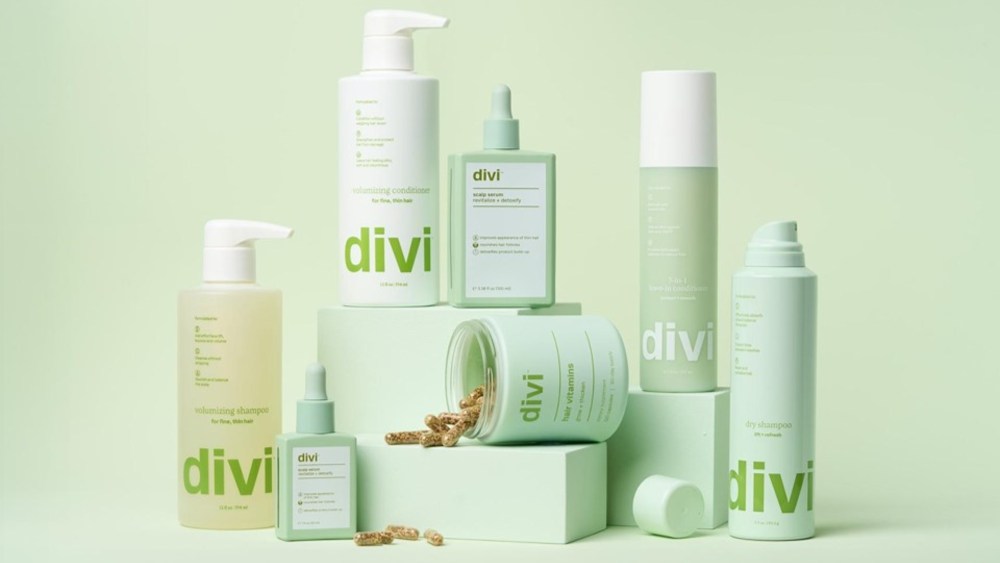
Such is the case of Divi, the quietly exploding hair care brand launched in late 2021 by Texas-based lifestyle influencer Dani Austin, whose first product — a $48 peptide and caffeine-infused scalp serum meant to promote hair growth — was designed to offer a more natural alternative to chemical hair loss treatments such as Rogaine.
Related Articles
“I had been going through my own hair loss experience since 2019, which as we all know can be very emotional,” said Austin, who dabbled with wigs and myriad homemade topical concoctions before enlisting a chemist to help develop Divi’s hero serum. “I wanted to come up with a solution that was clean, but also effective and that I could use long-term.”
The serum was an instant hit, recalled the founder, who promoted the product to her millions of social media followers and soon realized “this epidemic of women that were going through something similar — it became this community of people just helping each other, posting their before-and-after pictures, and wanting to learn more,” she said.

One year after launching, Divi began selling at Ulta Beauty, and within its first week was generating “Olaplex[-like sales] volume online,” the retailer’s vice president of merchandising Jessica Phillips previously told WWD.
As the brand’s assortment has expanded to feature a leave-in conditioner, hair growth capsules and a planned eight new products in 2024 alone, including a latest dry shampoo launch, Ulta is doubling down on Divi, bringing the brand to more than 500 Ulta Beauty at Target doors and online at target.com/ultabeauty.
“We’re thrilled to continue to support the brand’s growth…much of Divi’s success is rooted in Dani’s personal journey with hair loss and genuine mission to provide effective hair and scalp care solutions,” said Monica Arnaudo, chief merchandising officer at Ulta, in a statement.
“My biggest thing has always been wanting my products to be accessible for everyone; [entering] Ulta Beauty at Target is a pinch-me moment,” said Austin, for whom the expansion comes shortly after appointing JP McCary as Divi’s first chief executive officer.
Most recently, the beauty veteran served as group president at Sophia Bai’s biotech incubator B.a.i. Biosciences, and before that, McCary held senior leadership roles at Peace Out Skincare, Milk Makeup and Shiseido.
“Divi’s balance of heart and science, as well as its community, give this brand the runway to be able to thrive for the next 20, 30 years,” said McCary, adding that the brand has cultivated a near-equal split of consumers who are seeking hair growth solutions due to postpartum-, COVID-19- or chemotherapy-induced hair loss, versus those who are simply looking to improve their scalp health. “Addressing hair loss is where Divi began; creating the environment for your scalp and hair health to be at their best is where we’re thriving.”
The brand’s dry shampoo, for instance, is marketed for all hair types — regardless of density — and upon launching in April sold one unit every second during its first 24 hours. In the three months since its debut, the $26 rice starch-powered product has become Divi’s number-two sku.
“That was our most requested product from the community, both through communication to Dani directly and through our post-purchase survey,” said McCary, adding that just as consumers who purchase the scalp serum are often making their way to other Divi offerings, the opposite is true.
“We know factually that almost 50 percent of new consumers who bought the volumizing shampoo and conditioner we launched in January, within three months, have come back to buy the scalp serum,” he said.
This retention is a key element in Austin and McCary’s aim to reach $100 million in annual sales by 2025. Expanding Divi’s retail presence is another means toward that goal.
“Direct-to-consumer is our cathedral — it’s our [biggest channel] and something we’re highly focused on — but we understand that the consumer is much more than that, and so we’re building out a complete journey to know how Ulta fits into that, to understand how Ulta at Target fits into that, and the same for Amazon,” said McCary.
The brand has also begun planting its feet in the salon, enlisting more than 700 hairstylists at present — 1,200 by year-end — who comprise the brand’s Scalp Specialist program to educate and recommend product to clients who are enduring hair loss or other concerns.
“We see a very clear pathway to hitting $100 million in revenue in 2025 — we’re on the right path to have an incredibly meaningful business,” said McCary.