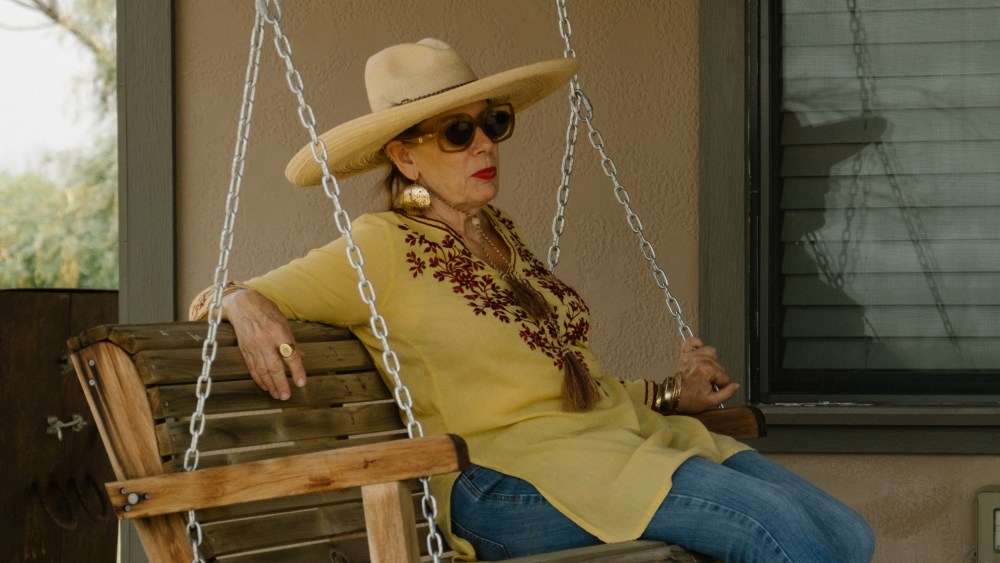
Ask Cultus Artem founder Holly Tupper what she loves most about her San Antonio, Texas, ranch and her response might surprise you.
“The smells. The fecundity, the rotting vegetables, manure, skunk,” she laughed. “My feral brain goes into this smell dissection of, ‘well, what are the components of skunk?’ — there’s a sweetness to it, an animalic aspect. I love to dissect.”
There are good smells, too, though. Whitebrush, acacia, blackbrush, peonies, petrichor — the post-rain smell of the earth, for which Tupper has grown an even deeper appreciation amid the monthslong dry spell the ranch has endured of late — and so on.
Related Articles
“Places have very distinct odors,” continued the beauty founder slash ranch operator, who would know.
Tupper grew up in New York’s Upper East Side with a floral designer mother and a stockbroker father who, despite his day job, “was very much a renaissance man,” she said. It wasn’t out of the norm to find him sculpting, playing the flute or making “groovy, ‘60s-style jewelry,” for Tupper’s mother during his spare time — a pursuit Tupper also took to.
By the time she left her career in finance and launched the luxury jewelry, fragrance and skin care brand Cultus Artem in the ‘90s — the brand was then called Holly Tupper — she was living in Singapore, where she and her late husband, Alston Beinhorn, resided for 18 years.
There, the couple started their family — they have two daughters, Summer and Camille — traveling frequently to and from San Antonio to help manage the Beinhorn family’s cattle ranch, called San Ysidro Ranch. During that time, Tupper stopped wearing perfume for 15 years.

“Commercial fragrances were very strong and not very popular among local Singaporeans — so I stopped,” said Tupper, whose hiatus, if anything, made her hyper-aware of the natural smells of the world around her. “I felt very compelled to try and create a fragrance that was made predominantly from natural ingredients.”
So she did. In 2015 the couple left Singapore, moving to San Antonio to oversee the ranch full-time, and Tupper rebranded her artistry-driven brand to Cultus Artem, marking a next chapter for the company in more ways than one.
“I feel very privileged to be associated with this ranch — it colors much of how I approach the different collections that I create,” said Tupper, who is now the sole manager of the land following her husband’s passing last December.
In between raising cattle and operating a writer’s residency out of a small cabin on the ranch, Tupper creates. She has launched eight natural fine fragrances, priced between $550 to $580 for 50-ml. bottles; a three-product capsule skin care collection, and a line of fine jewelry, including a recent, 18-karat-gold “Memento Amore” locket containing a porcelain disc designed to hold either fragrance, small photos or other keepsakes. Earlier this year, she unveiled a first home fragrance collection featuring three candles and a handmade, refillable porcelain vessel retailing for $350.
“It is a bit of a strange combination — jewelry and fragrance — and many people have said I shouldn’t be showing those together, but we’re always looking at how to expand in ways that make sense for the ethos of the company,” said Tupper, whose North Star is to create lasting, sustainable works of art — in whatever form that may be.
Others, too, source inspiration from the ranch to create art of their own.
“About five years ago, my husband was very intrigued by the idea of our landscape serving as a venue for creatives — particularly authors — to be removed from the noise of their day-to-day lives and allowed to pursue their creativity in an unfettered environment,” said Tupper.
So the San Ysidro Ranch Writer’s Residency was born. Three times a year, writers of different backgrounds are invited to stay for a month in a cabin on the ranch called The Istana (a Malay word meaning “palace”), where they write about their experience and, per the residency’s sole stipulation, host a reading of their work at the Carrizo Springs public library and the local high school.
“We look for writers who are emerging but published,” said Tupper, adding that the 25-or-so residents to date have included Elizabeth Wetmore, whose novel, “Valentine,” is being developed as a limited series by HBO Max; “Pharm Table” author and chef Elizabeth Johnson, and more.
“As an artist, I know residencies have enormous value,” said Tupper, who, now as a residency operator, finds that her equivalent is “when I’m on an airplane and I have an eye mask on and earplugs in; it’s that kind of sensory deprivation that allows the creative process to come to the fore, because it is quite a noisy existence right now.”
Tupper taps into that creative process not just via Cultus Artem, but life at the ranch, too.
“Every time I go into the creative space, I’m solving for problems — for texture, form, color, functionality. When you’re managing a ranch, you’re solving problems all the time,” said Tupper. “They don’t always have to be mountain lion problems — although we are dealing with one right now — they can be nice problems, too; working with local conservation groups to decide the best type of grass to grow, figuring out how to be the best steward of this land we inhabit.”
Though managing her time between the two occupations is, as she put it, “a feat of juggling,” it’s worth it.
“The creative process is such a fulfilling experience — when I’m in the thick of creating something or engaging with a writer and having a meeting of the minds about what makes us tick and how we relate to our mediums — that’s the thing that makes me feel most actualized,” she said.