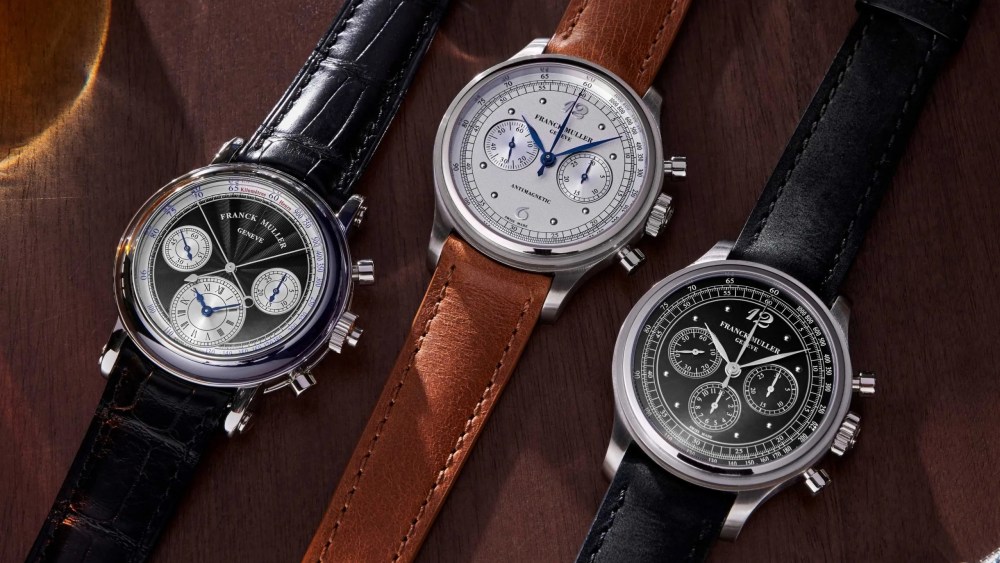
Collaborations are everywhere — and in today’s consumer market they are as inevitable as competition as today’s society remains fascinated with the idea of multiple, distinct personalities, be they brands or individuals, converging to create a singular product.
Few industries boast a tradition of collaboration as rich as the world of watchmaking. Given that a watch is a smaller canvas to work on compared to clothing or footwear, the collaborations bring about results that are more unique. Even the smallest modifications in the design dramatically affects the original style.
Related Articles
Watch collaborations reflect different world views and blend the art of watchmaking with broader cultural spheres like art, sports and fashion. These partnerships are a strategic decision to help extend the industry’s reach into other subcultures.
You May Also Like
The goal is to gain access to audiences who previously might not have considered purchasing or wearing watches — while also exciting ardent aficionados. By co-creating limited-edition products with pop culture favorites, collaborations capture the attention of consumers with diverse interests and fan the flame of hype, making them the new “gateway drug.”

“It’s definitely the biggest trend in the industry today,” said Eugene Tutunikov, chief executive officer of SwissWatchExpo. “It has surpassed the trend of vintage reissues, where brands dig into their archives and breathe new life into their designs. The increasing popularity of watch collaborations means one thing: watchmakers are becoming more and more willing to give others creative license over their timepieces.”
Yet watch collaborations are nothing new. Brands have over the years partnered with various partners including popular artists such as Takashi Murakami and Premier League soccer teams such as Juventus partnering with Hublot; singers such as John Mayer and Ed Sheeran with G-shock; automobile companies like Aston Martin with Girard-Perregaux; Bulgari with Japanese architect Tadao Ando; Audemars Piguet with jeweler Carolina Bucci and even Marvel Studios; Tag Heuer and Nintendo; Seiko and clothing brand Rowing Blazers, and the list goes on.
Indeed, since watch collaborations aren’t going away anytime soon, there’s an argument to be made that they’re just beginning to hit their stride.
“Collaborations widen the aperture for a brand’s reach. In a successful collaboration, each contributor brings something significant to the table, expanding the creative horizon and reaching audiences that might not have been on the radar before. It’s about creating a shared narrative, a story that goes beyond the commercial aspect and resonates with the values and passions of both creators and patrons. It’s this depth and authenticity that make collaborations not just successful but also meaningful in the broader cultural landscape,” said Justin Reiss, global CEO of The 1916 Company (WatchBox).
The key is to launch a collaboration the right way to make sure true collectors and fans get it, with brands cultivating the concept by transforming details into compelling storytelling, shared experiences, creating a sense of community, and making each person feel like a collaborator in the process.
“I’m impressed and energized by Jean Arnault’s approach to collaboration — lending the spotlight of LVMH to bring independent watchmaking to the world’s stage. From the Louis Vuitton Watch Prize for Independent Creatives to the unexpected and extraordinarily complicated collaboration between Rexhep Rexhepi’s Akrivia and Louis Vuitton, the message of collaboration is reinforced with authenticity,” said Reiss.
One recent example of such a craze would be The Swatch Group, whose stable of largely Swiss brands stretches across the pricing spectrum but the company is careful not to dilute the position of each.
In 2022, the Swatch brand and luxury stablemate Omega created a planet-themed collection, dubbed the “MoonSwatch” that is now one of its primary lines, a marriage that created massive lines from fans and newcomers alike eager to snap up one of the drops. The effort melded Swatch’s price accessibility with Omega’s historic position as supplier of watches for the U.S. astronauts.
Swatch expanded the concept this year via the new Blancpain X Swatch Scuba Fifty Fathoms — the series is a tribute to Blancpain’s Fifty Fathoms, a diving watch first released in 1953 that has become a standard of horological waterproofing and costs upward of $20,000. It has brought the premium Fifty Fathoms branding to a wider audience, in which assembling by hand was replaced with automated manufacturing thanks to the Swatch.
“The Blancpain/Swatch collaboration helped Blancpain penetrate an untapped segment of younger buyers that they hadn’t reached previously. The media coverage of lines at Swatch boutiques, excitement leading up to the model’s debut, and individual buyers’ reviews on social media platforms helped get Blancpain more organic coverage and exposure than they could have ever dreamed of,” stated Joshua Ganjei, CEO and head curator of the European Watch Company.
While both Swatch collaborations generated significant sales, it is important to remember that brand tie-ups should not be simply transactional but should also increase brand equity.
“Certain watch companies such as Hublot and MBF have built their brands and their businesses on collaborations, while others use collaborations very selectively. In all cases, though, the brand is looking to cultivate a long-term relationship with their clients that hopefully will include a number of watches over their lifetime. Collaborations are a great way to reignite interest with a client and give them a reason to expand their collection. It’s important for watch companies to have insight into what their customers are looking for, as well as an overall sense of the market — and that’s where we come in. We work closely with our watch brand partners to ensure there is a dialog happening with the end consumer and that feedback is well received,” said David Hurley, Watches of Switzerland group deputy CEO.
Yet In a world where most mechanical watches have outlived their original purpose as practical instruments with the inception and slow takeover of smartwatches, brands are faced with the much trickier prospect of imbuing their modern descendants with a quality that’s relevant to a broader consumer while adding freshness, creativity and new technologies.
“It would be interesting to see more watchmakers collaborate with industries to solve particular client problems. We rarely see partnerships like Rolex and Comex nowadays, where two greats come together to test and develop new technology. Richard Mille is one of the brands that comes to mind. The brand developed 2017’s RM 50-03, the lightest mechanical chronograph watch, with the University of Manchester and McLaren Applied Technologies. Collabs of this kind are promising and I hope to see more of it,” said Tutunikov of SwissWatchExpo.
At the same time, consumers crave newness and pieces that will offer a greater cache of collectibility, especially in the realm of technology, with the promise and expectation that watch brands can offer consumers something truly special.
“Zenith x Kari Voutilainen x Phillips is a key example of how Zenith provided a vintage observatory movement that did not exist in their current catalog, the caliber 135. That caliber was then finished and assembled by Kari Voutilainen, one of the most talented independent watchmakers in the watch industry, which resulted in a 10-piece exclusive series, from which neither the case, movement nor dial existed before,” stated Alexandre Ghotbi, deputy manager and head of department Europe and Middle East director at Phillips in Association with Bacs & Russo.
Even as sales of fine watches have soared during and after the pandemic, collaborations have helped expand the industry’s influence into various subgenres, allowing it to reach people who might not have contemplated wearing watches earlier.
“Despite the massive proliferation in collaborations in the past few years, we believe there is still considerable momentum, and we don’t see signs of this slowing in the near future. We are confident that consumer interest in watches will continue to grow. In fact, we just announced today that we expect to double our sales by 2028. That constant growth is going to fuel the need for more creativity, more innovation and yes, more collaborations,” said Hurley of Watches of Switzerland.
“I can certainly see a lot of watch brands trying to capitalize on the success of the Omega x Swatch collab, trying something similar. But it’s impossible to say whether these will be successful or not. It’s all about the marketing and storytelling with each collaboration. Fans want to buy into a story, they just have to tell it in the right way,” stated watch enthusiast and content creator Kieron of the @TopTierTicker instagram account.