
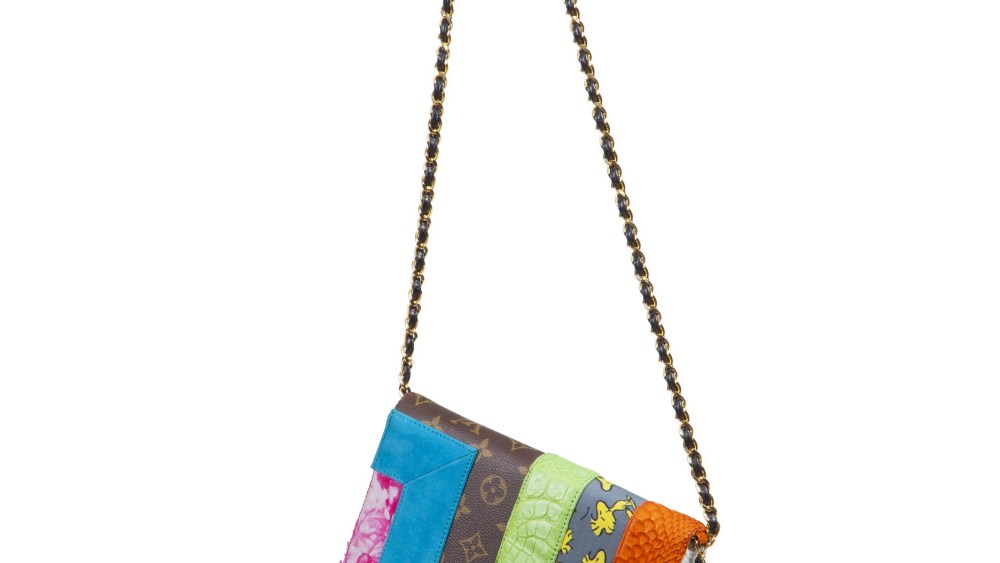
HONG KONG — The idea of ripping a Chanel Classic Flap to pieces would probably make most handbag enthusiasts wince, gasp or cry (perhaps a combination of all three). But one Hong Kong-based designer is out to change that.
Piecco Pang, who runs his own accessories brand called PP4E, is doing what many people in the fashion industry would consider unthinkable, possibly even blasphemous. He’s cutting up Chanel and Louis Vuitton bags and splicing them together with other materials — like strips of crocodile and panels of Hermès furniture fabric — to create new takes on totes and evening bags.
Pang has been engaging in this high-end recycling effort for a few years now and has created 12 bags so far to fill custom orders from well-heeled Hong Kong women. Appropriately enough, he’s dubbed the collection “Chanton,” an amalgamation of the two luxury brands’ names. Prices range from 8,000 Hong Kong dollars to 100,000 Hong Kong dollars, or about $1,030 to $12,875, and orders take at least a few months to complete.
Related Articles
“It’s actually about letting things go. It doesn’t matter — even to me, a bag is just a bag,” said the designer, who came up with the idea after visiting some of his shopaholic friends with “rooms full of clothes” and designer bags gathering dust. He was frustrated to see so many high-end, valuable items going unused — and owners who refused (or just couldn’t be bothered) to sell or donate them.
You May Also Like
“Hoarding is meaningless to me,” Pang said. “A piece of leather goods, when it doesn’t get used, it’s not alive because leather is meant to be used.”
He convinced his friends to start handing over their old bags with the promise that he could transform them into something new that they could actually wear. It was a more honorable way to retain a piece with sentimental value — like a gal’s first Louis Vuitton bag — rather than just letting it sit in a closet, he argued. “It’s still significant to you but you are moving on,” he said.
Pang, who grew up playing in his father’s garment factory and worked stints as an apprentice with a handbag craftsman in France before launching his own brand, said he has always been fascinated with the construction of things.
“Those old Chanel [bags] made in France — not those made in Italy — are perfectly made,” said the designer, who also reworks designer purses he has found at vintage stores.
Pang said he sticks to Chanel and Vuitton for his mash-ups, as those brands’ bags feature distinctive details — like the double-c turn lock and the monogram — that lend themselves particularly well to splicing. It does not make sense to cut up less identifiable bags, he argued.
“If you cut up a Prada, any Prada, it doesn’t reek of Prada,” said Pang, who also draws the line when it comes to a certain other French brand. “I think it’s a small crime to cut up a very nicely made Hermès.”
Pang orders leather from France and skins from Singapore and Japan. The designer gets creative in terms of sourcing other materials — he incorporated fabric from a vintage camouflage jacket and a textile featuring Snoopy’s sidekick, Woodstock, into some of his bags.
“I don’t limit myself on the fabric,” he said.
One limit the designer has set for himself is in his online presence. While PP4E does have a web site, it’s extremely basic, featuring a few photos of bags, Pang’s e-mail address and background on his design ethos. That seems to be more than enough for the designer, who runs his entire business via trunk shows.
“If you want to find me, you find me,” he said. “I’m very low-tech. I hardly take selfies. I do use my phone to check my teeth.”