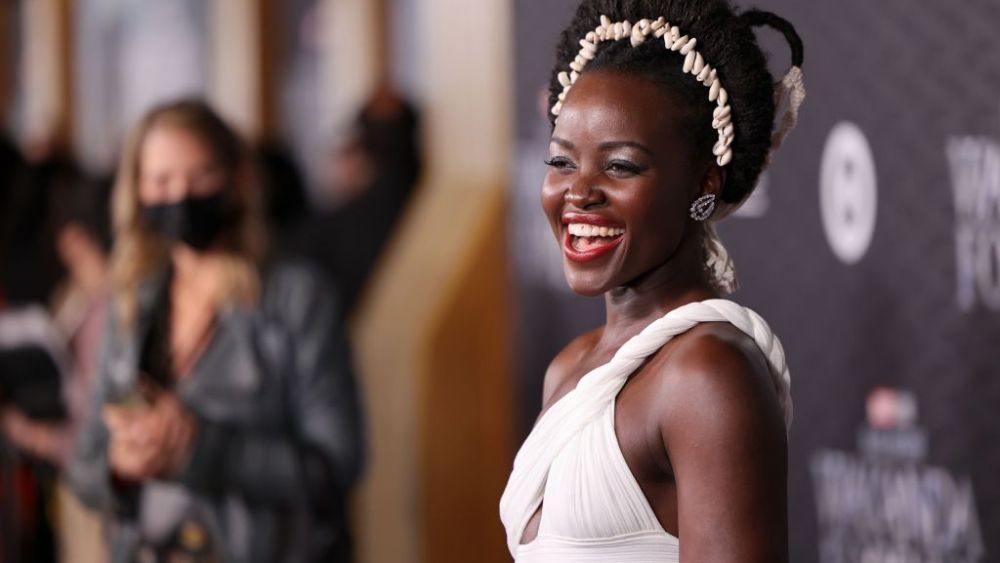
LONDON — When De Beers picked Lupita Nyong’o to appear in its new campaign — the first ever to showcase a rough diamond — the company was looking for more than a pretty face and an Academy Award-winning actor.
It wanted a woman of substance and a social campaigner, someone who could speak just as easily to the big spenders on Bond Street as she could to the daughters of De Beers miners, and to the diamond cutters, polishers and jewelers in the brand’s wide community.
You May Also Like
The company also needed someone who was willing to put in the hours, despite having a day job in Hollywood.
Related Articles
Nyong’o not only is the face of the new ad campaign, she’s also the brand’s first global ambassador, working to engage thousands of girls from southern Africa in STEM subjects (Science, Technology, Engineering and Math) by 2030.
She’s helping De Beers to support thousands of women entrepreneurs and invest millions across southern Africa by 2030. De Beers describes her as the “ultimate representative of its Building Forever commitment to people and the planet.”
Nyong’o’s appointment reflects a strategy pivot at De Beers, a vertical company that stretches from the rocky mines of Botswana and Canada to the glittering windows of jewelry stores worldwide.

In the past, De Beers thought of itself as multiple companies speaking to a variety of audiences, but that’s all changing. In his first media interview at the company, Marc Jacheet, chief executive officer of De Beers Brands, said from now on De Beers will speak with one voice to all of its clients and constituents.
The focus will be on the “mother brand” of De Beers.
The company also wants to bring clients along for the ride and give them the opportunity to buy into De Beers’ environmental and social missions and take the relationship far beyond the purely transactional.
It wants its customers to know that when they’re buying a De Beers diamond, they’re also buying into a larger charitable and environmental package that includes safeguarding endangered species; helping women entrepreneurs, and fighting climate change in Africa and Canada, where the company does much of its business.
De Beers is 85 percent owned by Anglo American, with 15 percent held by the government of the Republic of Botswana.
Some 90 percent of its 20,000 employees are from southern Africa, including Botswana, South Africa and Namibia, and the company has long been involved with local communities in the region.
Jacheet joined De Beers from Tiffany & Co., where he served as president of Tiffany & Co. Europe, Middle East and Africa. Prior to that he was president of Tiffany’s Asia-Pacific region.
He previously worked at brands including Louis Vuitton and at Moët & Chandon, which is owned by French luxury giant LVMH Moët Hennessy Louis Vuitton. He succeeds Stephen Lussier, who had been with the company for nearly 40 years and who remains a consultant for De Beers.
Jacheet is a luxury marketer to the core and prefers the word “client” to describe the people who buy from De Beers.
“I never use the word ‘consumer.’ You ‘consume’ milk, but you’re the client of a natural diamond house, or a natural diamond brand or an independent jeweler. [For the brand] that requires experience, service and attention to detail in how you bring the diamond dream to life at the point of sale, in retail, or in the digital world.”
Jacheet believes the diamond “dream” is about product, as well as social mission, authenticity and respect for customers’ personal values.
Younger clients, argued Jacheet, are seeking brands that are “enablers, catalysts that help them say something about themselves and make a positive impact.”
Hence the choice of Nyong’o. She said she took the De Beers job because she knows where the diamonds come from “and the good they do.”
De Beers, she added, is also helping her extend her “advocacy for women and girls around the world.”
While brands of all stripes are focusing on environmental, social and value-driven action, De Beers believes it has a unique opportunity as the only global luxury brand that starts at the source and sees diamonds straight from the mine to the finger.
Jacheet has also made transparency a priority, hence the risky decision to put a humble-looking rough diamond at the center of the new campaign, as if to say: “This is us, warts and all.”
He believes that transparency will benefit the diamond industry and De Beers’ retail operations, too. De Beers’ burgeoning blockchain, the largest of its kind, will build trust among all clients and stakeholders, he said.
Over the past years the company has been accelerating its efforts to become more transparent.
De Beers has a program called Code of Origin, a unique, customized code that’s meant to guarantee a diamond is natural, conflict-free and ethically sourced.
Code of Origin is part of the company’s overarching Building Forever mission, which encompasses myriad sustainability goals that it plans to hit by 2030.
Code of Origin applies to most diamonds that have been discovered and mined by De Beers. The code, inscribed on the table of the diamond, is invisible to the naked eye and De Beers said the inscription does not affect the rock’s clarity grading.
As part of its wider efforts, De Beers has also been working with a blockchain technology called Tracr that shows where each of its diamonds comes from and the impact of its processing — from the mining, sorting, valuing and transport to the cutting and polishing — at each step of the value chain.
That degree of traceability builds trust, Jacheet said, not only in the luxury world, but in the overall industry. Jacheet said he’s proud to be working with a brand “that invented and created the biggest blockchain platform at scale. We are going to see more and more initiatives in the future with the blockchain.”
He said the future will be about leveraging De Beers’ blockchain technology not only to provide reassurance in the short term, but as “a platform to tell stories at every single step” of a diamond’s journey from mine to jewelry.