
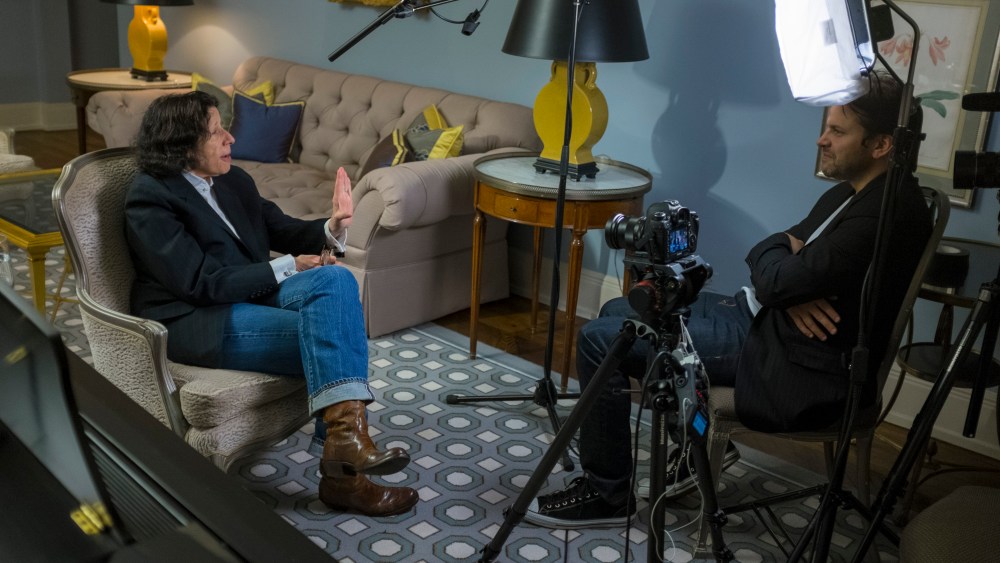
In real estate circles, location is everything — and so it was for filmmaker Matthew Miele. The impetus for his latest documentary, “Crazy About Tiffany’s,” came from time spent working across the street at another Manhattan institution, Bergdorf Goodman, while he was working on “Scatter My Ashes at Bergdorf’s” in 2011 to 2013.
In this latest film, whose title comes from a line uttered by Audrey Hepburn’s character, Holly Golightly, in the classic “Breakfast at Tiffany’s,” the director at once celebrates and exposes the venerable American jeweler.
Location also played a role in his pitch to Tiffany executives — seating location, that is. Attending a Tiffany event with his wife, “NBC Lifestyle” host Sara Gore, he switched place cards to sit next to Linda Buckley, who was vice president of public relations for the retailer at the time. His pitch that night — and a year of subsequent e-mails — green-lighted the project, which would be the first fully authorized film about the history of the 178-year-old brand. It’s slated for release Feb. 19.
Related Articles
“My focus was not so much the timeline, but rather the pop-culture aspect of the brand. I wanted the film to have a quick pace with fun celebrity storytelling, to resonate with a 21st-century audience.”
You May Also Like
Unlike the Bergdorf’s film, Miele was granted full access for “Crazy About Tiffany’s” — both parties recognized it wouldn’t work otherwise.
“They didn’t really want me relying on their marketing and creative teams, which would give it the whiff of a marketing film.”
The film uses style and culture authorities to establish Tiffany’s very safe image, but then several editors, stylists, jewelry designers and other insiders share their relationship with the famous mark, for better or worse. British Tattler editor in chief Kate Reardon extolls the branding brilliance of the blue box one minute, while the next, Decades owner Cameron Silver discusses alleged payoffs to Hollywood stars to wear brands’ jewelry on the red carpet — immediately following a segment on Jessica Biel choosing her Oscar night outfit with her stylist by her side, at Tiffany’s on Fifth Avenue. (Tiffany’s did not respond to the insinuation in the film.)
There are several instances where director Miele lets cameras roll, capturing quite candid snippets of conversation: Rachel Zoe and Katie Couric drop F-bombs; Glenda Bailey mistakes Elsa Peretti’s astrological sign, and Zoe mistakes a Van Cleef piece for Tiffany. A slew of people including Zoe, Silver and actress Jennifer Tilly stumble over the name of fabled designer Jean Schlumberger, while stylist Kate Young alludes to the cool factor of a Peretti bud vase necklace, suggesting the Studio 54-era design might have been a place to keep one’s drugs.
Keeping the unsanitized conversation was an effort to make Tiffany seem “more accessible,” said Miele. “Tiffany is an intimidating place. Hearing a celebrity or expert make a mistake makes viewers more comfortable.”
The director is drawn to institutions like Tiffany’s, “capturing the seeds that were planted over a century ago that make it such an iconic brand.”
(Next on his agenda is a film about the Carlyle Hotel, and he’ll release a documentary on photographer Harry Benson this year.)
“Crazy About Tiffany’s” offers plenty of little-known facts, a signature of Miele films. “I go in very curious and learn along the way, like the audience.”
Viewers might be surprised to learn that founder Charles Lewis Tiffany opened during the Great Blizzard of 1888 for a single 80-cent sale, or that famous sports prizes, like the Vince Lombardi Super Bowl Trophy, Major League Baseball’s World Series Trophy and U.S. Open Cups are designed by Tiffany, or that former chief executive officer Walter Hoving once told Tom Brokaw he wouldn’t open his store on a Sunday even to sell a $1.7 million emerald necklace or a $7 million diamond.
Of course, that concept would not fly in today’s 24/7 retail cycle, but Hoving, who was ceo from 1955 to 1980, did have some pretty revolutionary ideas, as well. The dose of fame that the film “Breakfast at Tiffany’s” brought to the store was a windfall of exposure — talk about product placement. The book and movie were written without Tiffany’s involvement, and transformed the Fifth Avenue jeweler into a household name. Hoving, however, wishing to capitalize on the 1961 Blake Edwards flick, arranged for Hepburn to be photographed wearing the famous Tiffany Diamond in a setting designed Schlumberger at the Manhattan flagship. The store would use the shots for publicity, and in exchange, Paramount Pictures was given access to film on location there.
Another happy coincidence for the company was the appointment of Francesca Amfitheatrof, Tiffany’s first female design director, who bears a striking resemblance to Hepburn. The film goes behind the scenes as she creates the Blue Book high-jewelry collection. The work of Gene Moore, the innovative and progressive window dresser at Tiffany & Co. who presided at the store for almost 40 years, is also featured in the film.
But the film doesn’t dwell on the past.
One criticism of the jeweler is leveled by Erica Sutton, a Cornell University student who did a research project on fashion-related materialism, in which Tiffany was a focus. Sutton says the brand is “tired” and doesn’t speak to her generation, particularly with its advertising concepts portraying a “1950s feeling” of all-white families.
That’s changing, however. Miele points to fortunate timing for producing the film, as gay marriage was being passed throughout the U.S. A recent Tiffany ad portrayed a gay engagement. This could be a sign that the brand is looking progressively ahead — or at least at a potentially huge untapped market for engagement rings. And now it’s even open Sundays.