
PARIS — The more the elegant montage of a few materials and colors, the better. That was the case for attendees grappling with reduced budgets at the recent women’s accessory trade shows held at the Who’s Next Prêt-à-Porter Paris salon.
With budgets cut by as much as one third due to effects of the debt crisis felt especially hard in southern Europe, women’s accessory buyers called for more color and original takes on classic elegance, to “reassure” and seduce customers. This was largely true at both Who’s Next, held from Jan. 21 to Jan. 24, and at the neighboring jewelry trade show, Eclat de Mode-Bijorhca, staged from Jan. 20 to Jan. 23.
Related Articles
“Before we had all that black and gray. More color gives energy,” said Bruna Casella Gozzoli, buyer and owner of Bernardelli in Italy, whose budget was cut by 30 percent.
You May Also Like
Leather handbags with a collage of knit or woven bits, and some color, were a leading example of a widespread, no-frills accessory trend. Next winter’s palettes included earthy greens, reds, cognac and honey. There were also brighter shades reminiscent of the Eighties, or reds in geometric patterns with South American folk references.
Still, some buyers complained creativity was wanting.
“I don’t find the salon very dynamic,” said Laurence Hollande, stylist for the Paris store Franck et Fils. “Everyone’s doing about the same thing…(a product) needs to make you dream, and have humor. You have to stay very creative during a crisis.”
“It’s not easy to find,” said Italian accessory store owner Simona Trombetta, searching for jewelry melding technology and design at Eclat-de-Mode. She cited one interesting brand called Peggy Bannenberg.
To help woo consumers at the jewelry show, Scooter was showcasing “out of the ordinary” pieces in materials such as painted metal, said Sandrine Reaux, the company’s commercial adviser.
A standout collection by Catherine Parra at Who’s Next attracted consistent business with rabbit fur accessories in a range of warm colors, including large-knit tube scarves. Leather bags included a collage of woven wool flannel or fur.
With prices a major concern, some buyers at Who’s Next were opting for more synthetic products that used less fabric.
“We are only selling safe stuff, at very low prices, but in new colors,” said Greek hat wholesaler Iaonnis Karachalios, who said “a depressed core” was felt among debt-ridden Greeks.
Nevertheless, daring designs on tights and socks remained a popular outlet for creativity.
At Who’s Next, several visitors said they felt lost in the salon’s new format, which merges major trade shows. Accessories were concentrated in the Premiere Classe halls, but were also spread in sections such as: “Private,” “Le Cube,” “Mess Around” (dedicated to footwear), and “Mr. Brown.”
Organizers said attendance was “positive” with 65,682 visitors, 68 percent of whom were French. The fair is hoping to raise foreign visitors attendance to 50 percent. The attendee count for Eclat de Mode-Bijorhca rose 3.5 percent to 13,584.
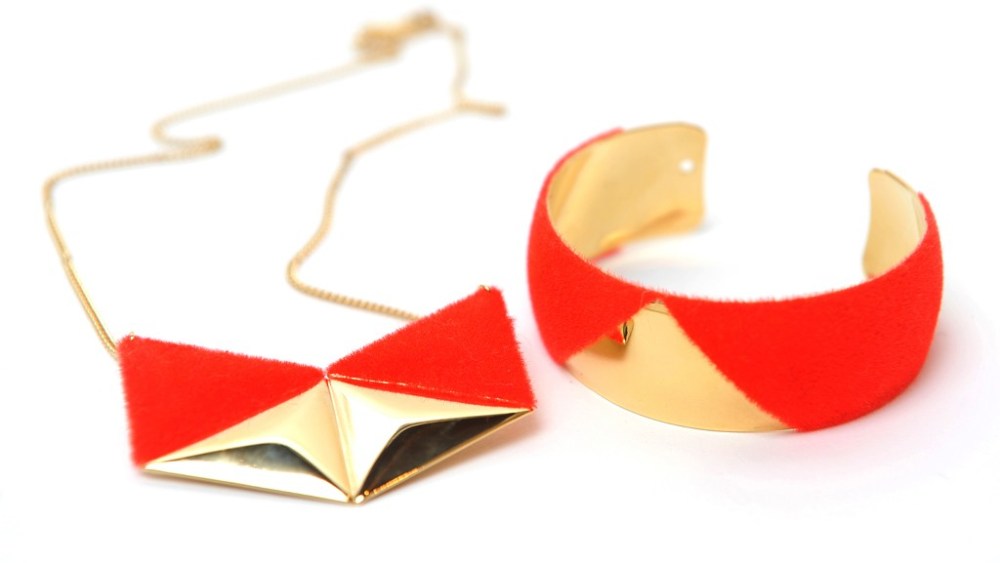
At Premiere Classe, jewelry pieces combined with different colors worn for either casual, or dressy occasions, were popular. Anne Thomas hit that nerve with her deep velvet, geometric cutouts on flat, gold-plated brass.
First-timer to Eclat de Mode, Bannenberg said rapid prototyping has now made it possible for her nylon jewelry to be reproduced well. Her pieces at present are only sold in Holland. Nearby, another premiering Dutch designer, Mecky van den Brink, displayed colorful creations made from recycled plastic for her brand, MB.