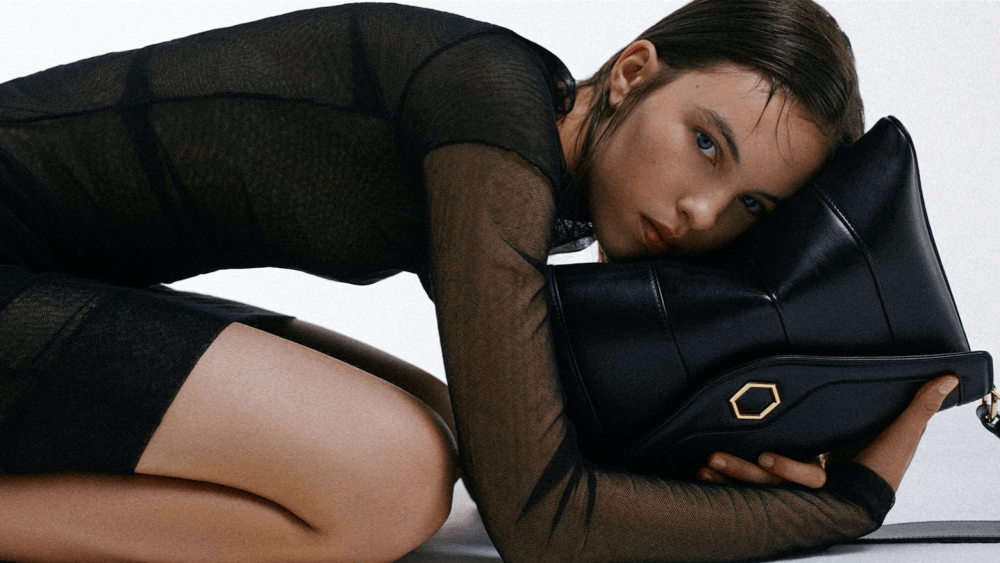
MILAN — There have been three key moments in the history of indie accessories label Hibourama.
First, when Rachele Mancini enrolled in the Accademia Koefia haute couture school of Rome and met her teacher, Maila Ferlisi, with whom she established the brand in 2011. Second, when one of the colorful handbag designs caught the attention of Daniele Provenziani, head of capital markets and venture capital at Maire Tecnimont, during a New Year’s Eve party, convincing him and a handful of other young managers specialized in venture capital to support the brand shortly after in 2019. And then, the pandemic last year, which interrupted Hibourama’s growth curve but also opened an opportunity for its reinvention.
Related Articles
Like many fashion companies, Hibourama called into question its wholesale distribution last year, which since 2015 counted key department stores in Italy and the Middle East. Founders were already eyeing a d-to-c approach before the pandemic, but COVID-19 ultimately put them in the position to take a pause and retool their business model in a bold way.
You May Also Like
The brand — a finalist in Vogue Italia’s contest “Who Is on Next?” in 2019 — has relaunched under a membership format, which enables consumers to access a range of products and services, including the opportunity to swap new styles of bags and renting special items, as well as customization, personal shopping consultancies, private sales, insurance and free shipments.
“We analyzed the subscriptions programs already offered by American companies and the fashion trends expected for the next five years, and I believe that this business model is the way we are all going to approach fashion in the future,” Provenziani said.
“Our goal is also to establish a virtuous circle of consumption,” added Ferlisi, while explaining that three types of membership programs are provided to better answer customers’ needs.
All available through either monthly or annual subscriptions, Hibourama’s programs are dubbed “Desire,” “Pleasure” and “Sin.” They offer different assortments and services, ranging from key classic styles offered via the entry level “Desire” category to the most exclusive designs that are rich in exotic leathers and embroideries, as well as limited-edition items, included in the extensive “Sin” assortment.

While price points for Hibourama’s bags usually range from approximately 400 euros to more than 1,000 euros, the subscription’s fees go from 59 euros to 99 euros per month in the case of the monthly membership, which can be canceled anytime, or from 49 euros to 89 euros per month in case of the annual subscription.
At the time of subscription, customers can select their first, favorite bag. They can then swap it with other new styles up to three times per year, picking them according to seasonal trends or their changed needs. As no time boundaries are set by the membership, clients can execute the swap whenever they want and keep each design for as long as they prefer.
As for the rental service, customers can rent special styles from the Hibourama archives up to four times per year. In this case, they can keep each design for maximum two weeks before returning them. Styles included in the archive are pre-owned items that have been reintroduced into the Hibourama circuit. In case of major damages incurred by previously wearers, styles are redirected to the brand’s laboratories, where materials and components are recycled and reused in new designs.
“We don’t want people just to throw away bags because they don’t use them anymore or are damaged,” Ferlisi said. “Also, most of the times we just buy stuff for some particular occasions, like weddings. The rental service gives a customer the opportunity to use a special, fancy piece for that event and just return it, so she doesn’t have to keep it in a dark corner of her wardrobe forever.”
If customers eventually want to commit and own an item, they can purchase it by paying the difference between the actual price of the bag and the credit they earned with the membership.
Hibourama’s current offering includes handbags crafted from leather and exotic leather, as well as made via crochet techniques and with embroidered details. All items bear the brand’s distinctive hexagonal logo and are designed at its 4,305-square-foot atelier in Rome.
In addition to betting big on this new, circular approach to business, the company is working to heighten its effort toward a greener direction also product-wise. In particular, it’s investing in research and development to find alternatives to leather, experimenting with additive manufacturing and bio-based materials to introduce in its designs.
Simultaneously, founders are planning the introduction of new categories, starting with accessories and small goods for men, as well as footwear, which Ferlisi considers “a natural extension of the brand.”
“The idea is to move gradually toward a total look offering,” Provenziani confirmed.
To support these ambitious plans, the company received a round of investment of 1.2 million euros this year by strategic players, including Maire Investments, sister company of Maire Tecnimont and currently the financial and industrial partner of the brand, and Nicola Bulgari’s investment vehicle Annabel Holding, in addition to private investors.