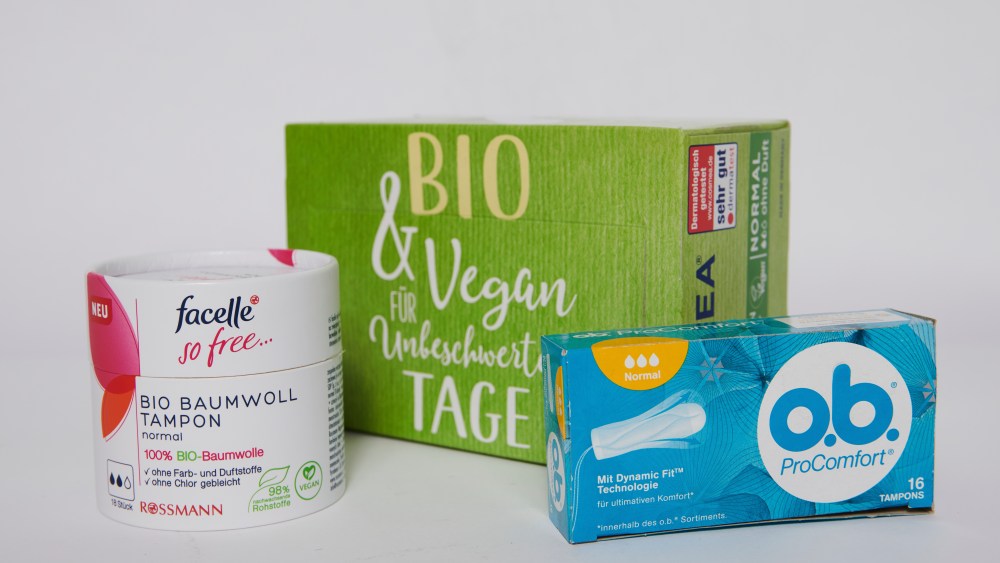
The Thinx lawsuit has many menstruaters rethinking period care.
In January, the popular period underwear maker settled a lawsuit that alleged its products contained PFAS — “forever chemicals” that the U.S. Environmental Protection Agency has linked to potential health risks including some cancers and birth defects. Thinx, which had marketed itself as a more sustainable period-care option, agreed to pay $5 million to settle the suit though they denied all allegations.
Thinx is not the only period-products company that has faced this type of lawsuit. Knix Wear and Procter & Gamble-owned tampon brands are also being accused of greenwash mislabeling or PFAS allegations in class-action lawsuits.
Related Articles
PFAS can be found in anything from drinking water to period underwear, and the EPA has said they are a research priority given scientific studies underscoring their harm to animal and human health.
You May Also Like
The recent chemical concerns in period underwear brands and lingering greenwashing allegations for tampons, wipes and the like that advertise their products as being 100 percent “organic” or PFAS-free gives a newfound intimacy to the topic of sustainable menstrual care, which has attracted consumer interest in recent years.
In the past year, there was an 86.7 percent surge in searches for the term “toxic” alongside Thinx (or 4,200 searches in January 2023), per an analysis by consumer trend research firm Spate. Spate found that while consumers aren’t searching for “sustainable” tampons, per se, they’re increasingly interested in “natural” tampons — searches for that term are up 14.7 percent year-over-year. Searches for period underwear are down 8.1 percent from the prior year.
What are PFAS?
Per- and polyfluoroalkyl substances (or PFAS) refers to an entire class of man-made chemical substances that includes perfluorooctane sulfonate (PFOS) and perfluorooctanoic acid (PFOA).
“It is a horrible acronym,” said toxicology expert and environmental scientist Linda Birnbaum, who has a doctorate in microbiology from the University of Illinois and became the director of the National Institute of Environmental Health Sciences and the National Toxicology Program in 2009. After retiring from that position in 2019, the NIH granted her emeritus status. She also is a scholar in residence at Duke University. “According to the office of the EPA, there are [1,422] of them. Many of them are intentionally produced, some are byproducts of other PFAS, some of them are from economic degradation… About 80 percent of PFAS are from polymers.”
Last week, the American Apparel and Footwear Association banned the PFAS class of chemicals in its latest edition of its Restricted Substance List (RSL). In December, 3M — well-known as the maker of Scotch tape, Command hooks and also an original manufacturer of PFAS — said it would phase them out of its supply chain by 2025.
“What’s the most important thing to understand about this whole class — whenever you have multiple fluorines on one carbon atom — that is a really hard bond to break,” added Birnbaum.
Carbon-fluorine bonds are one of the hardest bonds to break, but the shorter the chain, the shorter the breakdown time. This is sometimes as little as half a month to millions of years to breakdown, according to Birnbaum.
PFAS have been found everywhere, including in the “blood of nearly all people and at levels above what is considered safe,” per an upcoming March 2023 peer-reviewed study in Environmental Research by Duke University researcher Nadia Barbo and the Environmental Working Group. And policymakers are taking note.
Where Legislation Stands in the U.S.
From a federal level, the most recent regulatory actions have come from the U.S. Department of Defense with the Food and Drug Administration advising on PFAS risks in food and drink. States lead on efforts, and several states require disclosures of maximum contaminant levels on firefighter equipment, drinking water, or have bans in general clothing, as in the case of New York.
“The EPA was supposed to issue regulatory drinking water levels by fall of 2022. That didn’t happen,” said Birnbaum. “My understanding is that they’re working very hard to get that out.”
In an email to WWD, the EPA confirmed the goal is to issue a PFAS National Primary Drinking Water Regulation (NPDWR) in the coming weeks. The proposed rule is currently undergoing interagency review and the EPA will issue the proposed rule for public comment when it clears the Office of Management and Budget. The agency anticipates finalizing the rule by the end of 2023.
Though advocacy groups and researchers have been after carcinogens and health hazards in feminine care for years, the regulatory landscape has shifted dramatically recently.
Regulatory Gray Area

While the FDA already regulates tampons and pads as medical devices subject to the FDA’s safety review before legal sale, the agency only recommends — rather than mandates — disclosure of chemicals in those products. In 2019, New York state required disclosure of feminine hygiene product ingredients, the first such requirement of its kind in the U.S.
One Assembly member in particular found herself at the forefront of period activism.
“A lot of men and some women are still embarrassed about the word ‘period’ and discussion of menstrual equity but that’s changing,” said Manhattan Assemblymember Linda B. Rosenthal, in an interview with WWD. “When I first embarked on this, my first bill was to ax the tampon tax [in 2016]. People were sort of — silent. It’s become a much more mainstream discussion.”
Rosenthal is a leading advocate on gender and menstrual equity issues in New York state, and helped pass the aforementioned laws eliminating the tampon tax (A7555), as well as one mandating ingredients disclosures (A164-A and S2387).
As with any other legislation, Rosenthal said period access gains from clarity and common-sense appeals. “You go to the bathroom, you expect there to be toilet paper. And half the population should have access to period care [in public bathrooms].”
With PFAS a looming issue, the aspirations of sustainable period care are in question, which calls to mind broader attainment of the United Nations’ Sustainable Development Goals (or SDGs, as fashion knows them), which includes gender equity and eliminating poverty in all forms.
Tackling the chemical issue — like PFAS — is Rosenthal’s ongoing work. “As with most things, you just have to raise awareness. It’s our job — people who work in this area [of policymaking] — to educate on the issue of PFAS. There will still be that embarrassment — that stigma at first blush.”
She is backing a new ingredient-labeling bill that would mandate disclosure on all period products (applicable to products like menstrual discs but not clothing or underwear). “That would make greenwashing impossible… If you have to reveal all the nasty chemicals that were in the product, people will react by not buying them,” she added. “You see that more and more with all organic [product labeling]. Corporations then want to minimize objectionable-sounding or -looking chemical names. I’ve seen all these different brands eliminate erroneous chemicals from tampons, pads, etc.”
Another bill on the Assembly member’s docket aims to prevent the sale of products with PFAS in New York state (bill A8363A) alongside cosponsors such as Assembly member Nathalia Fernandez.
Suited Up
A handful of class-action lawsuits were filed last year against period care products. Among them were products from companies Thinx, Knix Wear and Procter & Gamble-owned tampon brands This Is L. Inc. (and its “100-percent organic tampons”) and Tampax (specifically its “pure cotton tampons”). The latter were accused of greenwash mislabeling or allegedly using PFAS.
One 12-page lawsuit claimed that despite the front-label promise that L. tampons are “100-percent organic” they contain a majority of non-organic ingredients (including polyester, glycerin, paraffin and titanium dioxide).
Spencer Sheehan of Sheehan & Associates, P.C., the lawyer representing consumers in the This Is L. lawsuit, told WWD that the case is still pending certification, and though This Is L. sought to have it dismissed, the plaintiffs will fight to oppose that.
P&G acquired This Is L. in 2019 to expand its naturals division. The manufacturer commands half of the $3 billion period care market in the U.S., per Nielsen IQ. P&G declined to comment for this story.
In another class-action lawsuit filed last April, Canadian company Knix Wear was sued by two California women because of marketing claims they allege are misleading. The underwear claims to be “PFAS free” and “designed to be both safe and effective” — despite allegedly containing PFAS, the women said in the proposed class action lawsuit filed in the U.S. District Court for the Northern District of California. The lawsuit is not yet certified.
Knix declined to comment, but directed WWD to a blog post with a lengthy public statement and Intertek lab results cited January 2020, as well as additional context. The company launched in 2013, two years after Thinx.
None of these lawsuits has made headway yet and L. tampons, for example, are still on the shelves at CVS, Target and Amazon.com.
There are a number of disc and cup innovators, including DivaCup, Flex, Cora and The Honey Pot — which promise customers they are the “future of feminine care” — though scientists are skeptical.
Benefit Corporations provide some guide rails on being less beholden to profit, though full assurance of organic cotton isn’t guaranteed. There are a number of B Corps in the menstrual market, including Diva, Cora, Saalt and Yoni, among others. Many of them specialize in menstrual discs or cups, often made with medical-grade polymers or silicone.
Diva’s chief executive officer and cofounder Carinne Chambers-Saini believes affordable and safe period care is a necessity, per an email interview with WWD, and outlined how the brand aims to provide reassurance to consumers.
“Like everyone else I have been following the stories closely,” she began. “It’s so important for women and people who menstruate to have affordable access to period products that are safe for their bodies, no matter which type of period care they choose. It’s why my mom and I created the DivaCup 20 years ago — we knew there was a better way.”
She believes materials, ingredients and nuance for period products shouldn’t be shrouded in secrecy. “People should feel empowered to ask questions and do research before investing in products.”
“The DivaCup is regulated as a medical device and is ISO-13485 certified. This means that we adhere to really strict standards with our suppliers and manufacturing process,” continued Chambers-Saini. “The raw material we use to create the DivaCup and Diva Disc is medical-grade silicone. Every time that raw material is delivered at our manufacturing facility, we receive a certificate of compliance that ensures it adheres to all of the material characteristics that we agreed upon with our suppliers, so in this case that means it’s 100-percent medical-grade silicone with no additional ingredients like fragrance or pigments we didn’t approve [in the case of the Diva Disc].” DivaCup hopes this is enough but any PFAS-proof plan is contingent on factory partners always adhering to the protocol.
Moral High Ground
Do manufacturers have a moral responsibility to the modern menstruater?
“Oh absolutely, they have a big market share when it comes to selling products,” said Rosenthal. “For every corporation, or most corporations, the bottom line is how much money we’re going to make. A product like Thinx, people were so excited about it. You want to believe it as a consumer, that the corporation is telling the truth.” Once again, Thinx denies all of the allegations made in the lawsuit and denies any wrongdoing.
Birnbaum chimed in, adding: “There’s no legal responsibility unless some of these things get banned… What I see as more effective is the market basket. So you go to the store and say ‘I’m not buying that.’ Again you have to be careful,” she said, mentioning the trajectory of BPA in baby bottles (that per a Google Trend analysis spiked in 2008). “What did [manufacturers] do? They moved to a whole litany of related chemicals,” she reiterated.
PFAS are already being substituted, according to Birnbaum.
“It’s what we call an ‘unfortunate substitution’ when you replace a bad thing with something you don’t know much about…If you can substitute chemical B for chemical A, and all you have to do is change one atom and you don’t have to change the process. Why would we think the body would behave any differently?”
Organizations like the Green Science Policy Institute suggest how chemical substitutes, such as C6 or GenX (a replacement for PFOA), still show persistent health risks, including liver and kidney damage as also acknowledged by the EPA. In the case of tampons, labels like “fluorine-free” may offer greater assurance for consumers, per mommy research blogs such as Mamavation.
From a consumer angle, Birnbaum, who is also a board member of Mamavation, said the group’s scientific advisory board found some types of period care that had low PFAS levels, and some that didn’t. “There were some that had higher levels. And to me, those are the ones to avoid.”