
MILAN — Gucci revealed it has become the first Italian luxury house to receive a certification for gender parity in Italy, as outlined in the Italian government’s National Recovery and Resilience Plan.
Gucci will release the news Monday, at the same time as its 2022 Equilibrium Impact Report. The certification was awarded to the Italian luxury brand by independent global inspection and compliance experts Bureau Veritas evaluating six key indicators: culture and strategy; governance; human resources processes; opportunities for women’s growth and inclusion; gender pay equity; support for parenting, and work-life balance.
Related Articles
“This achievement, reached ahead of European trends and as the first in the luxury industry in Italy, strongly reaffirms our commitment to a culture that values equity, inclusivity and respect,” said Marco Bizzarri, president and chief executive officer of Gucci.
You May Also Like
“Through concrete actions such as adopting innovative technologies to reduce bias in the selection process, closing the gender pay gap, implementing parental leave policies, fostering greater female representation in leadership roles, and public awareness campaigns such as Gucci Chime — our global campaign for gender equality — we support change and promote cultural transformation in the luxury and fashion industry worldwide, and we will continue to do so. Gucci’s journey toward gender equality is an ongoing commitment rooted in respect. The same respect we have for our planet and wholeheartedly embrace in our business, as highlighted in the Gucci Equilibrium Impact Report that we are unveiling today.”
The establishment of Gucci’s Global Equity Board and Gender Equality Steering Committee contributed to the Bureau Veritas verdict, as did the company’s parental-leave policies, welfare services and hybrid work model.
An action plan since 2019 focuses on increasing diversity and inclusion, particularly in managerial roles and supporting female leadership.
In 2022, Gucci’s commitment to promoting diverse talent and leadership led to the achievement of 57 percent female members in management roles and 63.1 percent female employees overall.
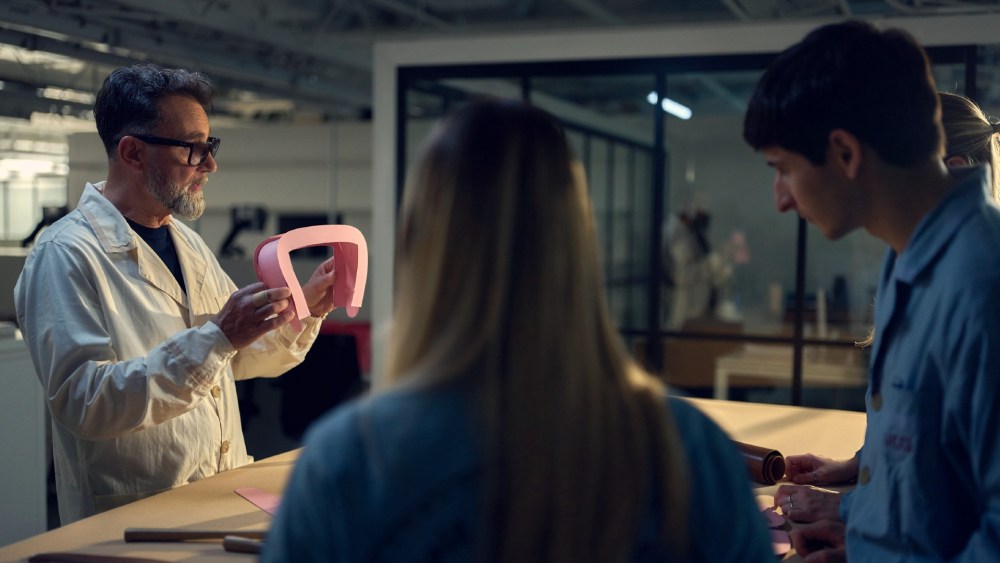
Gucci is also unveiling on its social media platforms a video series featuring partners, NGO representatives and artisans discussing some of the key areas that are highlighted in the Equilibrium Impact report. The list includes founder and CEO of accessibility consultancy Tilting the Lens Sinéad Burke, who discusses disability inclusion; global executive director of Equality Now Mona Sinha, who focuses on gender equality; Gabriela Bordabehere, farmer under the trademarked NATIV Regen program, who looks at regenerative agriculture, and the team at Gucci ArtLab, reporting on the brand’s goal to preserve craft for the future.
Among some of the positive evaluations, Gucci conducts a global analysis of gender pay equity and aims to eliminate gaps by implementing initiatives aligned with the Kering Group‘s objectives to address gender inequality by 2025. Another study will be conducted in the second half of 2023. Gucci also supports work-life balance through initiatives such as a hybrid work model and parental leave policies. Parental leave guarantees a minimum of 14 weeks with 100 percent pay for paternity, adoption or partner care. Listening sessions and coaching programs are offered to new fathers and parents to facilitate their return to work.
Throughout 2022 Gucci strengthened its corporate volunteering initiative, Gucci Changemakers, which saw the participation of more than 2,000 employees supporting more than 100 NGOs in 57 cities worldwide. At the same time, Gucci consolidated its commitment to gender equality through the global campaign Gucci Chime, which, in 2022 alone, supported 17 NGOs in 20 countries, positively impacting 3,297 women and girls.
Gucci was the first and only luxury brand named Best Places to Work For Disability Inclusion by the Disability Equality Index.
Gucci’s efforts to protect its craftsmanship and pass it on to the younger generations is reflected by the initiatives of Gucci Ecole de l’Amour. Last year, 55 graduates and unemployed young individuals between the ages of 18 and 26 received technical training through the factory school, while an additional 22 attended courses at the craftsmanship school hosted at Gucci ArtLab Firenze.
In addition to collaborating with experts and organizations, including the Ellen MacArthur Foundation, on the consolidation of upcycling programs such as Gucci-Up and processes like Gucci Scrap-less, the brand increased its commitment to traceability of raw materials, achieving an overall traceability of 97 percent.
The quantity of organic or recycled cotton has risen to 74 percent from 61 percent the year before, while use of organic, recycled or responsibly sourced wool and cashmere has increased to 60 percent from 47 percent since 2021.
Gucci has incorporated more metal or chrome-free leather, accounting for 49 percent of the total leather in the house’s collections.
Gucci achieved a significant reduction of 68 percent in its Absolute GHG emissions in Scopes 1 and 2 of the Greenhouse Gas Protocol. Additionally, the company reduced its GHG emissions related to intensity in Scope 3 by 55 percent (baseline 2015).