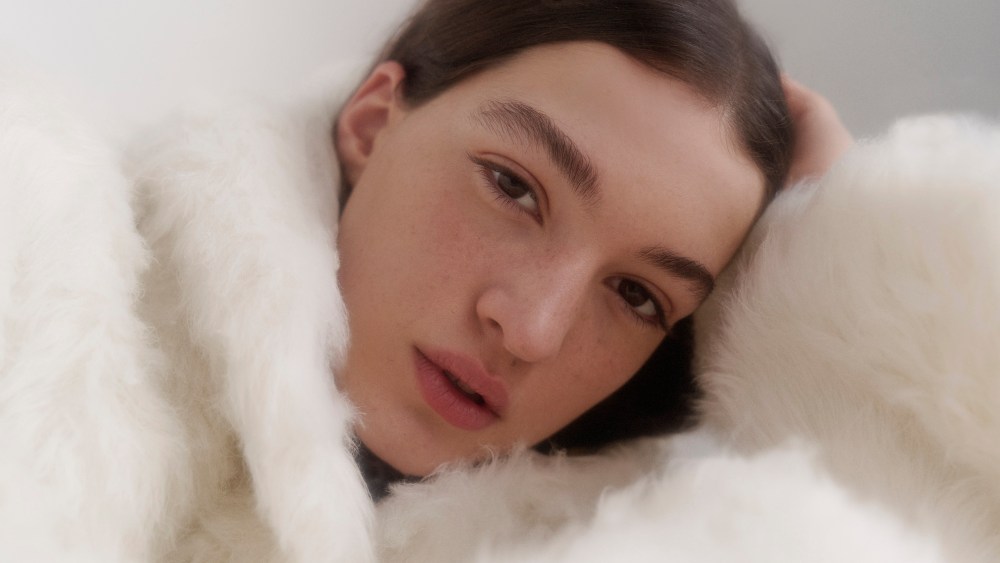
The fur debate reached its most recent peak in pre-pandemic years when luxury brands either officially halted or cut back significantly on the use of the material.
Among them: Diane von Furstenberg, Calvin Klein, Tommy Hilfiger, Hugo Boss, Chanel, Versace, Valentino and Gucci, just to name a few.
Although the conversation has since started to wane — despite PETA and other animal welfare advocates continuing their lobbying activity — a new question has come to the fore: whether faux fur, embraced by many brands in the aftermath of the fur-free stance, can really be a sustainable alternative.
Related Articles
Fur associations have been going on the offensive since the start, proponents of the idea that real fur wins out over fake in the biodegradability stakes and lack of petrol-derived compounds. Yet high fashion seems to have made its choice, perhaps looking at the broader picture — from the carbon footprint created by the animals farmed for their fur through to the tanning processes that make real fur no longer “natural.”
You May Also Like
Overall, many industry observers believe faux fur is not really sustainable — save for the animal welfare component — given its man-made origin, while others insist that the industry can do better and come up with eco-minded solutions.
To be sure, a range of suppliers and textile makers have been at the forefront of that transformation, taking to industrial-scale innovative faux fur products poised to finally overcome that tradeoff.
Biofluff
Founded in 2021, biomaterials company Biofluff is incubated at Paris-based La Maison des Startups LVMH and recently closed a $2.5 million seed fund round led by Astanor Ventures, which specializes in agrifood tech impact investing.
It was also one of the companies brought to COP28 by Stella McCartney as part of her “sustainable market concept” to showcase textile innovations the brand utilizes.
The Biofluff fur is different from other alternatives because it is a fully plant-based material that is extracted from agricultural byproducts using enzymes also derived from plant matter, using proprietary technology.
Fiber sourcing is done in Europe, with two tons secured in 2023, and the company said it can produce more than 1,000 square meters a week.
It has gone to market with Savian, targeted at the luxury industry, a material that can be customized down to the color, texture, curliness and length of the fur.
Available in rolls of 1.2 and 1.5 meters in width, the brand’s current offering includes between six and eight references of fur-, shearling- and fleece-like fabrics. Naturally nutmeg brown, the material can be bleached to an ivory white or dyed using natural or mineral pigments.
Ecopel
French faux fur company Ecopel started creating animal alternatives two decades ago and is an established giant in the industry. To step up its sustainability efforts, it launched the partially corn-based material Koba in 2019, developed with Dupont’s Sorona fiber in partnership with Stella McCartney.
It’s since built a world of alternatives to the traditional animal pelt. The company produces a “teddy” wool alternative, and also launched Gacha, its compostable fur made of a biodegradable polyester, last year.
The company partnered with DyeCoo to create a waterless and chemical-free dyeing process, and aims to be entirely virgin fossil fuel-free by 2025.

The privately held company reported turnover crossed the 100-million-euros-a-year threshold in 2022 and has used its strong financial position to acquire factories in France and Spain, closer to its luxury clients.
Ecopel now works with more than 300 brands, including Vanessa Bruno, Balmain and Kering’s stable of luxury houses. In an effort to reach younger designers and smaller houses, it just launched its House of Faux Fur platform to offer low-cost access to its stable of animal-free textiles.
In February, the company will launch its first 100 percent plant-based and bio-manufactured product that will also use plant-based dyes. It will be available to brands in the first half of the year for fashion houses to use in their collections.
Redaelli 1893
Velvet fur is serious business at Redaelli 1893, the storied velvetmaker part of Marzotto Lab, a division of the Marzotto Group.
Crafted from wool, mohair, alpaca and FSC-certified viscose using the same technique reserved to standard velvet, these eco-alternatives, free of any petrol derivate, are turned into short-hair furry textiles thanks to cutting-edge technology that the Como, Italy-based textile specialist has implemented.
The company’s integrated manufacturing process allows it to offer numerous variants, differentiated through printing, brushing, sponging and embossing techniques, resulting in garments mimicking lapin or astrakhan fur, for example, sometimes bearing wild-animal motif patterns.
Redaelli 1893 is primarily known for its finishing techniques including textile corrosion and 3D printing, and imprimè to develop chevron patterns, among others, and for boasting 19th-century looms, one among the few velvet producers in the high-end and luxury space.
The company says velvet fur requires long manufacturing processes, up to one hour for just 2 meters of textile. This ensures some of the key features of the product, including its softness, gleam and hair density.