
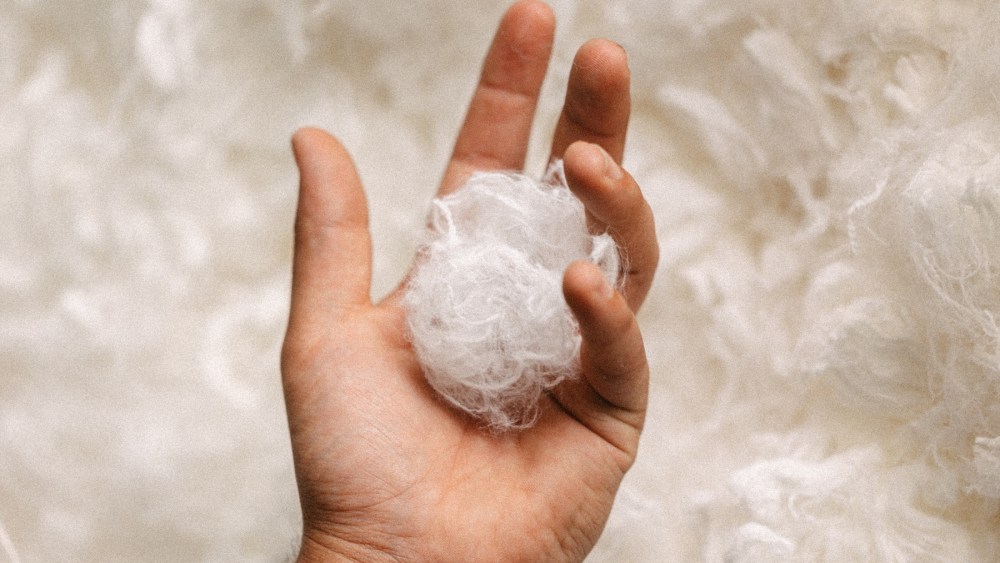
The global fashion industry generates an estimated 20 billion pounds of pre-consumer protein waste each year, largely from food, agriculture and industrial processing. Despite mounting pressure to reduce environmental impact, most of that material remains difficult to reuse at scale, in part because biological waste streams are inherently inconsistent. For luxury textile manufacturing — where even slight variations in fiber performance can disqualify a material — that unpredictability has long been a barrier to adoption.
New York-based materials start-up Everbloom is working to connect those two realities.
You May Also Like
Related Articles
Backed by climate-focused investors linked to Bill Gates, the company has developed Braid.AI, a proprietary artificial intelligence platform designed to turn inconsistent protein waste streams into predictable, luxury-grade textile fibers.
Developed in-house over two years, the platform combines thermoplastic protein engineering with statistical modeling to map how discarded proteins behave across a range of environmental and manufacturing variables. By analyzing those inputs, the system can predict key performance attributes — including softness, strength, texture and dyeability — before the material enters production.
Everbloom said predictive control enables it to transform inconsistent waste streams into repeatable, high-performance fibers that rival traditional cashmere and wool — a technical hurdle that has historically limited the use of recycled materials in luxury applications.
That same control underpins the company’s environmental claims. Everbloom reports that its fibers deliver up to a 99 percent reduction in water and land use and approximately 80 percent lower greenhouse gas emissions compared with conventional animal-based fibers, based on internal assessments.
“AI isn’t solving the unpredictability of fashion waste — it’s defining its predictability,” said Richard Freundlich, chief technology officer of Everbloom. “By analyzing years of experimental data, our platform optimizes fiber composition and production parameters before manufacturing begins, turning inconsistent waste streams into reliable, high-performance materials.”
The system was developed under the guidance of polymer scientist and cofounder Michael Jaffe and relies on statistical modeling rather than generative AI. According to the company, the approach allows Everbloom to digitally optimize fiber formulations before entering the production phase — reducing development timelines from roughly two months to about two weeks.
Simardev Gulati, cofounder and chief executive officer of Everbloom, said the accelerated timeline enables the company to bring circular materials to market faster without sacrificing performance as brands face tightening emissions targets and regulatory pressure.
“At a time when the fashion industry is drowning in underutilized but valuable waste, this marks a critical leap forward,” Gulati said. “We’re not just using AI to discover materials — we’re using it to manufacture them.”