Material World is a weekly roundup of innovations and ideas within the materials sector, covering news from emerging biomaterials and alternative leathers to sustainable substitutes and future-proof fibers.
National University of Singapore

Inspired by how spiders spin silk to make webs, researchers from the National University of Singapore’s (NUS) College of Design and Engineering materials science and engineering department have developed a new smart textile fiber technology.
Related Stories
“Technologies for fabricating soft fibers should be simple, efficient and sustainable to meet the high demand for smart textile electronics,” Ching told the university. Possible applications include “strain-sensing glove for gaming purposes” or a smart face mask to monitor sleep apnea, Ching said.
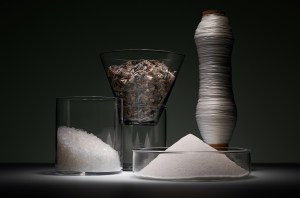
Researchers created an imitation spider silk that’s mechanically stretchable and capable of conducting electricity.
“We were inspired by Spider-Man and hope that one day, we can create a Spider-Man suit that can spin out silk that has high strength and even conductivity,” Ching told Sourcing Journal. “[The silk] will benefit the fashion industry by creating a textile that is able to communicate with our smartphones and even home appliances.”
Rheon Labs
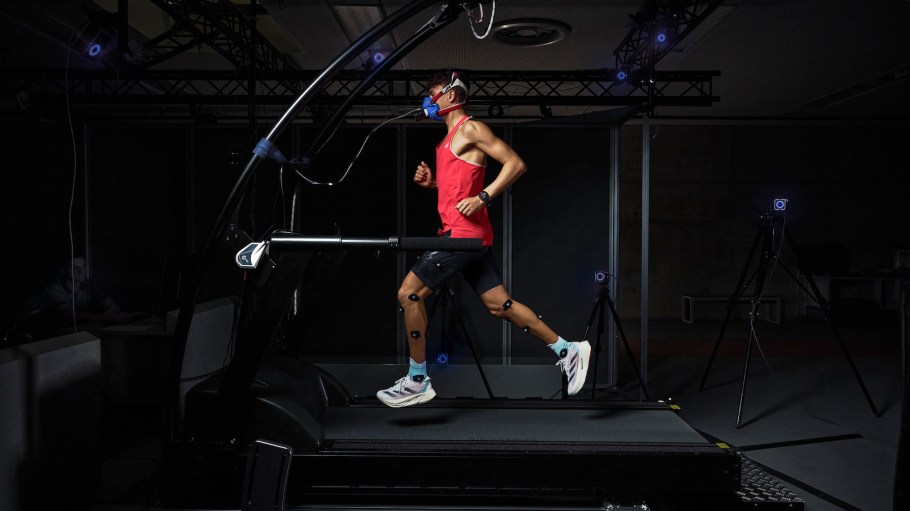
Adidas has launched its second apparel collection featuring Rheon Labs’ technology, dubbed the Adizero Control running collection. The apparel pieces feature the Rheon patented reactive super polymer, which provides energy control to help athletes improve their performance.
“In a world of elite sport, incremental gains can be the difference between the podium and last place,” Simon Huntsman, commercial director and head of Reactivewear of Rheon Labs, said. “Until now, athletes have been losing energy—and therefore performance—through unwanted muscle movement or ‘shearing.’ But apparel featuring Rheon works like a reactive exoskeleton, reducing muscle inefficiencies and those small fractional losses of performance.”
Rheon is strategically positioned across major muscles. The strands are strain-rate sensitive, meaning the material is soft and flexible but becomes rigid when the wearer performs high-intensity movement. Adizero Control apparel with Rheon offers all-around support during activity without being overly restrictive or compressive.
“The Rheon material ensures that this energy is not lost by positioning muscles into the most efficient position, so more energy is directed into performance, helping athletes to unlock those few extra percentage points when performing at their limits,” Huntsman said. “Rheon is highly strain-rate sensitive. Like running on wet sand, it is naturally soft and flexible but stiffens up the faster it is stretched. In activewear, this unlocks a new world of performance apparel that is barely noticeable during everyday use, yet highly supportive in high-intensity movements.”
Those strands are designed using proprietary “geometries” by Rheon Labs. Each piece’s shape, size and placement is ergonomically designed using computer modeling to offer optimal support for key muscle groups during exercise. The Rheon Labs and Adidas teams worked with tier-one manufacturers to ensure that the application of the panels works within existing manufacturing processes for lamination, using settings that preserve the material’s energy absorption qualities.
The London-based lab first joined forces with Adidas to create the TechFit Control collection in March after first getting in touch years ago.
Huntsman quickly realized the company “could do something really interesting if our materials were really thin and we laminated it to textiles,” looking at how the technology could make sports bras perform better. “We had our findings independently verified and then presented those findings to [Adidas], so that was sort of the germination of the partnership,” Huntsman said.
Rheon Labs is working with university experts to test and verify the performance gains its material offers athletes. Early in-house testing results indicate that the material has the potential to control four times more energy than conventional elastane-based textiles, which could significantly increase support during high-intensity movements, according to the company.