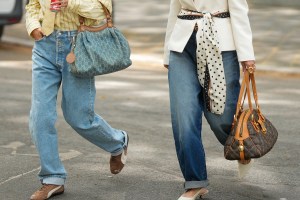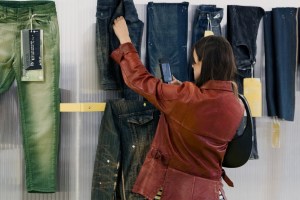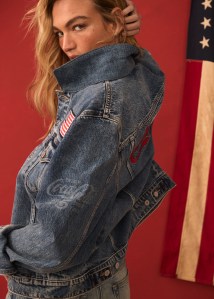
From its resurgence as a celebrity-driven Western trend to the growing popularity of ‘denim dressing’ and the expanding range of fits consumers are embracing, a lot has been said about denim’s new cycle.
However, the idea that denim’s resurgence is purely cyclical may be overstated, according to a recent UBS note on U.S. softlines retail. While current trends are shaping denim’s future, their eventual decline doesn’t necessarily mean denim will disappear from the spotlight.
Related Stories
“We think the market misinterprets the end of the premium denim trend around 2015 as industry cyclicality and thus expects a slowdown because of continuous weakness at these price points. We believe the current structure of the industry and key market players’ strategies point towards stability,” UBS states.
It’s more likely that denim’s slowdown in the 2010s was a consequence of the athleisure boom. During this period UBS said athleisure capitalized on casualization and comfort trends much sooner than denim brands did. “However, we think denim brands have caught on and are now benefiting from this trend as well. As such, both categories’ growth rates appear more aligned with each other in recent years,” UBS states.
In general, the U.S. denim market closely follows overall apparel growth. UBS reports that the U.S. denim market increased 2 percent CAGR from 2019 to 2024. The market is expected to maintain that momentum and grow 2 percent over the next five years, with faster growth in international markets at 4 percent, resulting in a mid-3 percent global growth rate.
Emerging markets are accelerating the international denim market. UBS reports that the Middle East and Africa region has seen the “fastest denim sales growth” in the past five to 15 years. Latin America is also growing stronger and is already receiving more attention from brands like Diesel and Levi’s.
“We anticipate population in these regions to increasingly spend discretionary income on apparel, which should benefit denim demand,” UBS states.
From a price standpoint, UBS said value (below $25) and standard ($25-$75) denim price points have fared better in the U.S. Excluding premium price points, industry growth has been steadier. UBS said the shares of premium/super premium price points have drastically dropped to 15 percent of the industry as of 2024, from 29 percent in 2009.
Denim is unique in that its strength lies in brands. UBS said it sees “solid growth potential” from denim-focused companies like Levi’s, Kontoor Brands (Wrangler and Lee) and American Eagle, which have opportunities to gain market share and expand categories. Specifically, UBS noted Kontoor’s value-oriented focus and wholesale partnerships giant retailers like Walmart and Target, Levi’s premiumization strategy, DTC investments and strength in international markets and American Eagle’s connection with young consumers are main drivers.
The note highlights how the denim market is fragmented as the top 25 players make up less than 25 percent of the total market size. UBS pointed out how many of the top players like Zara, Uniqlo and H&M are not particularly focused on the category as many have a more diverse apparel offering. Dominant players could continue taking share from other brands less focused on the category.
Still, brands should not underestimate the impact that private label players are having on the market. UBS said the U.S. stands out with significantly higher denim private label penetration of 13 percent as of CY 2024 verses 2.5 percent in Western Europe and 1 percent in APAC.
“This trend suggests private labels are likely taking share from brands as consumers resort to value. We see this as a continuous threat for industry players,” UBS states.