Excessive working hours. Wage theft. Poverty pay. Little to no access to social security benefits.
For the vast majority of garment workers who make jeans and denim clothing for high-street heavyweights such as C&A, Bestseller, Gap Inc., H&M Group, Levi Strauss & Co., Primark, Zara owner Inditex and Wrangler parent Kontoor Brands, this is the excruciating reality, according to a new report from Advocating Rights in South Asia, the Dutch nonprofit better known by its acronym ARISA.
Related Stories
Despite being home to 10,000 garment manufacturers, Pakistan’s production conditions receive less scrutiny than those of Bangladesh and India, its neighbors to the east. But its significance to the industry is growing. In the first eight months of the current fiscal year, it exported a record-breaking $6.2 billion worth of goods, 19 percent more than it did the year before. More than 60 percent of this comprised textiles and apparel destined for markets such as the United States, Germany, the United Kingdom—as well as the Netherlands.
“In the past decade, exports from Pakistan to the Netherlands have quadrupled,” said Ms. Theuws, program officer of business and human rights at ARISA. “And then we also noticed that there is relatively less information available about labor rights issues in Pakistan,” where civil rights are increasingly throttled, the unionization rate is less than 1 percent and the discriminatory caste system still makes up an important part of the social fabric.
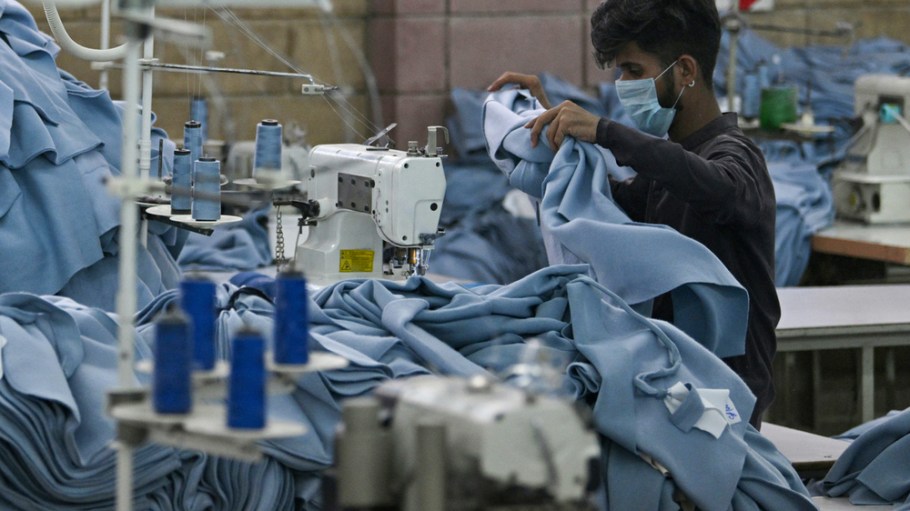
What interviews and focus groups with 126 workers from eight garment factories in the cities of Karachi and Lahore suggested, however, was that despite years of activist campaigning and a bevy of promises from major brands to work toward living wages, Pakistan’s 2.2-million-strong garment sector—unusually, dominated by men—still has little to show for it.
A striking 86 percent of those polled, for instance, said they experienced wage theft, which the report characterizes as not being compensated for all the hours worked, including overtime. The withheld amount could sometimes be as much as one-third to half of the worker’s monthly income, pushing those who come up short to take on additional jobs or deepening debt to afford their bills. Nearly all of them—99 percent—earned less than a living wage that would allow them to meet their basic needs. Another seven workers reported being paid below the monthly minimum wage of 37,000 Pakistani rupees, or $130, that they’re entitled to by law.
“It is difficult to make ends meet because of high inflation,” one worker said. “We have to make sacrifices in some areas. Sometimes we do not eat full meals.”
Overtime is also often mandatory and unpaid, the report said. Workers who refused extra hours found themselves on the receiving end of threats, wage cuts or dismissal. Pakistan’s Factories Act 1934 limits regular working hours to 48 hours per week, spread over six days. While overtime is permitted, the total number of hours worked in a day has to stay under 12, including breaks for lunch, rest and prayer. Few factories appeared to adhere to those rules.
“If you refuse overtime, you will be told that you are no longer needed,” one respondent said.
Social security precarity is another status quo for Pakistan’s garment workforce. Of those polled by ARISA, 80 percent lacked access to health insurance and pension schemes despite the law requiring employers to register their workers with the Employees’ Old-Age Benefits Institution and the Employees’ Social Security Institution, two programs that require contributions from both the employer and employee. Instead, workers said, their employers were increasingly turning to private health insurance whose costs are fully deducted from their wages and provide fewer benefits.
Of the 11 brands that ARISA reached out to, only Gap did not respond. Some disputed the status of suppliers with which they had indirect or terminated relationships. Others said they would be following up with investigations of their own or with corrective action plans. All said that they took the allegations extremely seriously and pointed to their voluntary codes of conduct.
Brands may not own the factories, but they have a critical role to play, especially with educating suppliers, said Khalid Mahmood, director of the Labour Education Foundation, a workers’ rights group in Punjab. He cited the Pakistan Accord, an offshoot of the International Accord for Health and Safety in the Textile and Garment Industry, as a “commendable example” of progress in this area, but more examples are needed. All of the companies that ARISA engaged with, with the exception of Kontoor Brands, are signatories of the binding agreement.
“It is vital for brands to work closely with suppliers and workers. In cases where genuine worker representation is lacking within factories, brands can collaborate with organizations like ours to support workers in securing their rights,” he said. “We urge brands to adopt mechanisms that ensure they receive accurate information and engage with independent voices to develop solutions.”