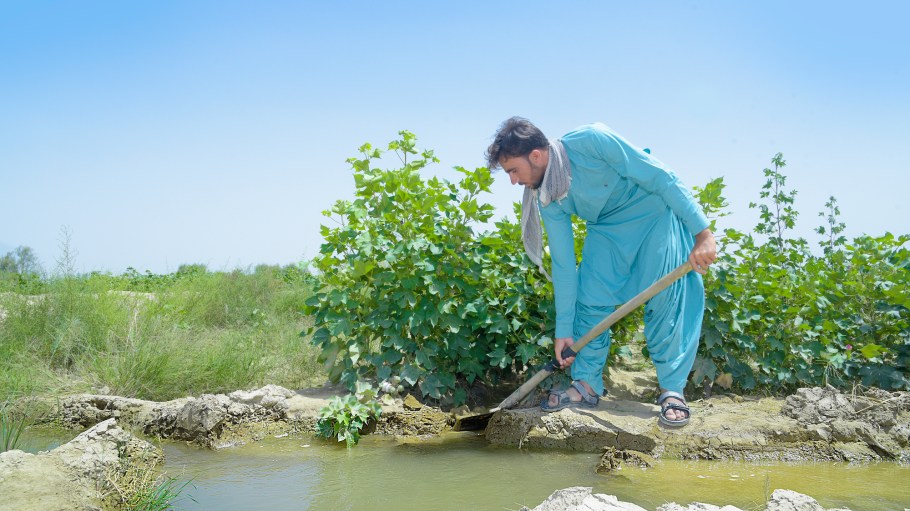
A new initiative by the Organic Cotton Accelerator (OCA) provides the best possible guidance on organic agronomic practices in Pakistan.
The publicly available “Organic Cotton Training Curriculum for Pakistan” provides standardized “training of trainers” curriculum tailored to the agriculture in the region. The web-based course includes 12 modules and an activity guide to work alongside existing training methods. It is available in English and Urdu.
Modules focus on training methods for farm extensions, an introduction to organic agriculture and different cotton species. It covers land preparation and field management, soil fertility and crop nutrition, pest and water management, crop diversification, and best practices for harvest and post-harvest.
Related Stories
Farmers also learn business planning strategies, certification processes and how to manage the crop calendar throughout different stages of the cotton season.
The curriculum is an adaptation of the material that was previously launched by the OCA for India in 2022. The training initiative was developed in collaboration with the Centre for Agriculture and Bioscience International and with the participation of Pakistan’s Ministry for Food Security, the Pakistan Central Cotton Committee, Laudes Foundation and WWF-Pakistan.
“At the heart of OCA’s mission are the farmers, and this curriculum is a testament to our commitment to empower and support in-conversion and organic cotton farmers,” said Asif Mehmood, senior program manager, Pakistan at OCA. “The ‘training of trainers’ approach incorporated in the curriculum ensures a robust knowledge transfer system that will benefit Pakistani organic cotton farmers at large.”
OCA says the curriculum arrives at “a crucial juncture for Pakistan’s cotton sector as the country grows as a producer of organic cotton in the global market.”
The multi-stakeholder accelerator launched its fieldwork in Pakistan in 2022 when devastating floods affected over one million hectares of agricultural land. Crop damages stemming from flash floods and monsoon rains affected 36 percent of the available sowing area, according to a report by the Policy Research Institute of Market Economy (PRIME).
In the first year, OCA reported that it has onboarded more than 1,200 farmers for its Farm Programme designed to build capacity and foster access to non-genetically modified seeds and bio-pesticides and financial incentives.
“Training or guidance material has always been a significant component of capacity building and motivation,” said Hafiz Muhammad Bux, manager of WWF-Pakistan, which has partnered Pakistani denim producers like Artistic Fabric Mills, Artistic Milliners and Soorty to support local farmers transition to organic cotton.
“Besides OCA’s contributions in developing a conducive environment of organic cotton cultivation in Pakistan, its passionate efforts to develop the Organic Cotton Training Curriculum (OCTC) will add value to the existing supports. This will help develop a team of professionals with hands-on knowledge on mandatory procedures and practices of organic cotton cultivation to better guide farmers and other stakeholders,” he added.