Only 18 percent of surveyed fashion executives considered sustainability as a top-three risk for growth last year, according to the Business of Fashion and McKinsey’s 2025 State of Fashion; the duo’s 2026 edition saw “stronger sustainability and ethical practices” as the least enticing factor (ranked seventh) that could “encourage high-net-worth individuals to buy more from a luxury brand in 2026,” per the report’s “Luxury Recalibrated” chapter.
“While much has been said recently about sustainability receiving less focus across some sectors, this is not the case at Primark,” interim chief executive Eoin Tonge said in the Dublin-based retailer’s annual Sustainability and Ethics Progress report—and its first without former, 15-year-tenured CEO Paul Marchant at the helm.
Related Stories
“We’ve committed that all of our clothes will be made from recycled or more sustainably sourced materials by 2030—and we’ve been making real progress,” said Natalie Cox, sustainability product manager at Primark. Covering the 2024-25 reporting year, the Associated British Foods-owned company shared that 74 percent of clothing units sold contained recycled or more sustainably sourced fibers. That’s up a 12 percent from 2023—which was 66 percent, accounting for both recycled and more-sustainably-sourced fibers.
Of that 74 percent, nearly four in 10 (aka 39 percent) of Primark clothing now features recycled fibers, though the comparison against the previous period’s percent is unclear.
“I don’t seek praise for our progress, but I believe it’s important that we are transparent, and it is understood, as many inaccurate perceptions about Primark remain,” Tonge said. “Perhaps as a brand most famous for value, we must work harder than others to demonstrate that low prices do not mean low standards.”

To note: the Primark Cares strategy debuted in September 2021, while its more principled program, Ethical Trade, launched 15 years ago, after the company joined the Ethical Trading Initiative (ETI) in 2006. Within the latest report, all product-based statistics are based on clothing items sold in (at?) Primark, the Rita Ora collaborator clarified.
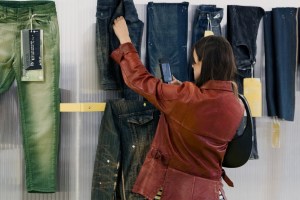
On the circularity front, one in 20 items (5 percent) of items are now circular by design—meaning that it’s now “easier to recycle at end-of-life”, per the “In Denim We Can” campaigner. That includes 20 percent of Jersey and 8 percent of denim.
“Most importantly, the product looks great and is affordable,” said Claire Scanlon, solutions manager for circular and sustainable design at Primark. “For us, circularity is about designing and making clothes fit for the future.”
Last August, Primark teamed with the Circular Textiles Foundation (CTF) to provide an “advanced training program” to its design and product teams. That training is now required for all product teams and new colleagues, accessible as needed via the company’s digital learning platform. Per its first circular design training program in 2023, this education covered advanced circular design principles focused on recyclability in support of Primark’s commitment to “making more of its clothes recyclable by design” by 2027.
“Over three quarters of our denim has passed our highest level of 45 washes—meaning they look better and last longer for our customers,” said Vicki Swain, product longevity lead at Primark. “We’re now scaling this work by developing an AI-powered data tool to support product improvement and prepare for future legislation.”
Primark achieved an overall 5.7 percent reduction in total greenhouse gas emissions (GHG) compared to the 2019 baseline—including a 71 percent reduction in Scope 1 and Scope 2 (market-based) emissions as well as a 4 percent decrease in Scope 3 emissions. For the 2022-23 reporting year, Primark’s total emissions (meaning Scope 1, 2 and 3) across the value chain increased by 11 percent; Primark attributed the increase as, expectedly, due to a higher volume of materials used to produce the larger number of products sold.
Nearly one-fifth (19 percent) of Primark’s ocean freight was transported using a biofuel blend—presumptuously from long-time shipping partner Maersk’s “Eco Delivery Ocean” biofuel that’s made with used cooking oil—with 98 percent of journeys from ports to depots made using low-carbon fuel.
Primark’s resource efficiency program onboarded 97 factories across Bangladesh, China and India. The PREP program works to help suppliers reduce energy, water and chemical use as well as GHG emissions and costs, per Primark.
Fifty-seven percent of its clothing contained cotton that was either organic, recycled or sourced from the Primark Cotton Project, while over 90 percent of farmers in the training program for cotton farmers within Primark’s supply chain adopted at least two or more regenerative agricultural practices on at least 30 percent of their farmland.
“People come to Primark for great value fashion and everyday essentials that are made to last,” said Lynne Walker, director of Primark Cares. “Four years on, we’ve shown that you don’t have to choose between sustainability and value. Our sustainability commitments belong to all of us at Primark and we continue to use our scale for good to help drive change both within Primark and outside it.”
Primark implemented its first program measuring its supplier factories to help tackle heat stress, with four initiatives focused on supporting supply chain workers’ physical and mental health and wellbeing implemented across 300-plus suppliers’ factories. The company also provided several mechanisms and channels for colleagues (see: employees) and workers in the supply chain to raise grievances, while some 1,4000 “colleagues” were trained on modules relating to responsible purchasing practices.
In collaboration with Vision Spring, 35,000 vision tests were conducted in 16 of Primark’s suppliers’ factories. Roughly 13,000 workers were given glasses. Which means that 37 percent of the examined workforce had (some form of) impaired vision; 90 percent were first-time wearers, the retailer reported.
“We know we have a huge responsibility as a global retailer and there is always more to be done but this year’s report shows that our efforts—and those of our suppliers and partners—are starting to bring about meaningful change,” Walker said. “We continue to learn as we gather insights and data and further collaboration across the industry, both crucial to help us achieve our ambitions in this space.”