A new coffee table book chronicles how American workers made workwear one of denim’s most enduring styles.
Written and art directed by denim historian Graham Marsh, “Denim: The Fabric That Built America 1935-1944” threads denim and workwear’s history across 250 images sourced from the archive of the Farm Security Administration and Office of War Information. In the book, Marsh places the photographs in their historical context and discusses the clothing with an obsessive attention to detail that denim heads will enjoy.
Related Stories
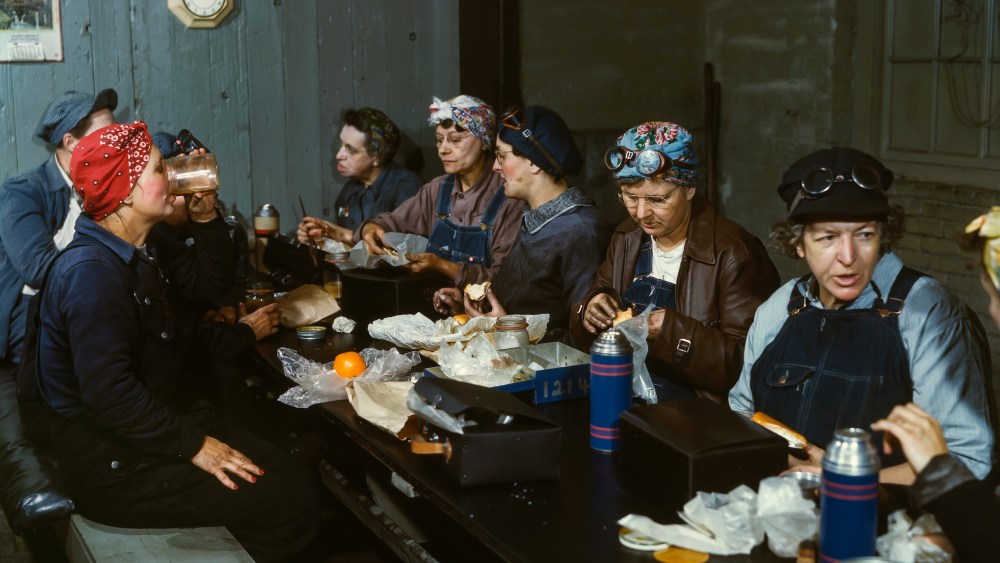
Tony Nourmand edited the tome’s trove of photos. The photographs, many previously unseen, capture ordinary hard-working Americans of every race, age and gender in denim from the Great Depression into the post-War years. The photos demonstrate how the durable utility fabric became a standard uniform and how brands like Levi’s, Lee, OshKosh and Carhartt commercialized the timeless style.

Additionally, the book includes a list of retailers and brands carrying on denim’s workwear traditions, including Denham, G-Star Raw, Beyond Retro, Self Edge and more.
Here, Marsh delves furthers into his concept for the book and why he’s drawn to denim.
Rivet: Why did you choose to focus on denim workwear?
Graham Marsh: It was important to tell this story as a kind of vintage denim visual history. The book shows throughout the archive images of serious, authentic denim workwear worn with determination and grace by the people that lived and worked through this decade, 1935-1944.
Rivet: How long did it take you to complete the book?
GM: It took approximately four months to complete the book. This was possible because co-author, Tony Nourmand, owns ReelArt Press, so content decisions were instant. No editorial meetings incurred or were indeed needed. The only challenge we came across was editing down the wealth of outstanding photographic images to be used in a realistic working book.
Rivet: Which workwear garment do you find the most interesting?
GM: An international garment for many years has been the chore coat. From the French manual laborers ‘Le bleu de travail’ to the iconic, Levi’s, Wrangler and Lee denim versions which fade to perfection after years of wear and tear.
Rivet: What can someone working in the current denim industry learn from this book?
GM: Hickory stripe dungarees, shirts and jackets—it’s a good look. Also many members of the denim fraternity complain that the length of jeans should be longer in order to have deeper turn-ups.
Rivet: Why do you think denim has endured for all the years?
GM: Denim is now a universal fabric which looks good on both sexes. So it’s a solid cold stone certainty that designers and fashion outfits latched on to the message that wearing our denim makes you a contender in the cool, sexy stakes. This precept would, I am sure, bring a smile or indeed a grimace to the folk in our book. Denim also looks good on both presidents, hipsters [and] saints alike—denim is not going away any time soon.
Rivet: What are your most worn jeans?
GM: My most worn jeans are Levi’s 501, Levi’s 505 and Levi’s 519 Bedford cord ‘white Levi’s’ Californians which are the same as those worn in the 1960s.