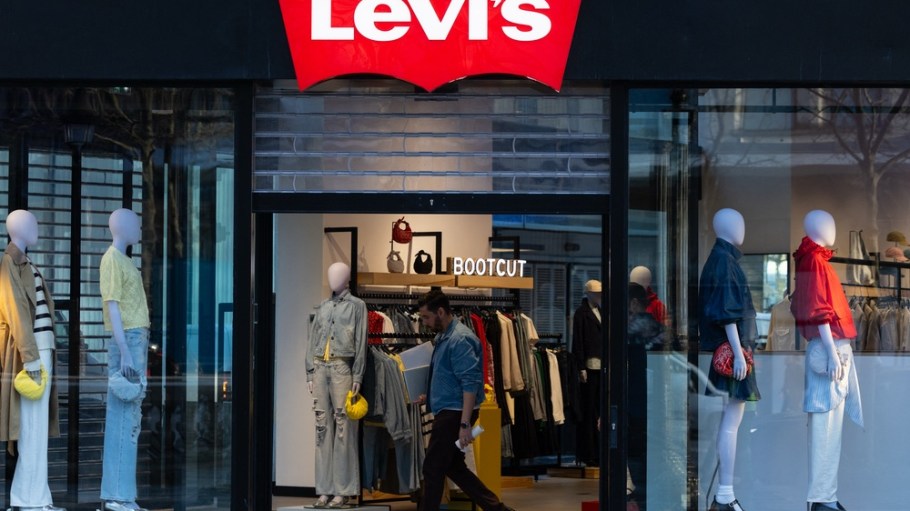
As Levi Strauss & Co. gears up for its annual meeting Wednesday, America’s favorite denim purveyor faces pressure from opposite poles of the ideological spectrum.
On one side, the garment industry’s largest consortium of trade unions and civil society groups is suing Levi’s for misleading Dutch consumers about labor conditions in its supply chain. On the other, a conservative shareholder group wants the company to axe climate goals it deems a hoax despite widespread scientific consensus.
Related Stories
The Clean Clothes Campaign opened the legal front Tuesday in Amsterdam, filing what it calls a “groundbreaking” lawsuit with four consumers who say they bought Levi’s products based on the Bay Area jean giant’s claims about responsible production and workers’ rights, including the right to freely join a trade union. Those statements, the group said, led them to believe they were buying from an ethical brand.
But those same consumers later became aware those claims were misleading, CCC said, after it launched a campaign in 2024 highlighting allegations of severe worker repression at Özak Tekstil, a Turkish manufacturer whose Şanlıurfa Province location produced exclusively for Levi’s. The reported abuses included verbal and physical intimidation, union-busting, mass firings and wage and severance theft.
Funda Bakiş, who worked at Özak Tekstil for four years, said that she and her colleagues from the new union were laid off after being denied their right to choose a union other than the factory’s established one.
“At home, I live with seven siblings,” she said. “At some point, we could not even meet our most basic needs. We went through very difficult times with my family. We asked Levi’s for help, but they did not hear our voice.”
An investigation by the Worker Rights Consortium, a Washington-based watchdog, found that Özak Tekstil breached not only Turkish law and international labor standards but also Levi’s code of conduct when the supplier dismissed most of the nearly 500 workers who had protested for months.
Levi’s, which did not respond to a request for comment for this story, pushed back on the WRC’s report at the time, saying it contained “several mischaracterizations and omits a number of relevant details.” The company added that it has a longstanding commitment to supporting safe, productive workplaces and takes any allegations of attempts to undermine freedom of association “extremely seriously.”
Özak Tekstil later embarked on a corrective action plan to improve working conditions at its factory, after which the Red Tab maker agreed to resume active orders. While none of the terminated members of the new union have been reinstated, the supplier maintains that it never tried to interfere with its employees’ choice of union.
Even so, CCC insists that Levi’s “broke its promise” to use its leverage to reinstate the “unlawfully terminated” workers—and if that wasn’t possible, to withdraw its orders.
Patrick van Klink, one of the consumers in the lawsuit, said he felt the same way.
“Levi’s gave me the impression that they care about social responsibility. Knowing what happened in Türkiye, I feel misled and don’t feel proud of my purchase anymore,” he said, using the country’s official name. “Levi’s should stay true to its promises.”
The filing is a way to use Dutch consumer protection laws to hold big businesses accountable, said Emma Vogt, a campaigner at CCC.
“Dutch law protects consumers against misleading claims,” she said. “In this case there’s a clear contrast between Levi’s statements and its response to a concrete violation of their own code of conduct and international labour standards. From our perspective, Levi’s remedying the situation for the workers in Türkiye is the best way to rectify their false advertising.”
CCC is now awaiting a first court hearing date.
Back home in the United States, shareholders are getting ready to vote on a proposal to create an audit committee overseeing sustainability commitments—one that the National Center for Public Policy Research’s Free Enterprise Project wants to annually assess “the extent to which the corporation’s sustainability initiatives have been authorized and maintained on the basis of expected value and return-on-investment calculations.”
The proposal argues Levi’s 2050 net-zero goal is “more than just a lie”—one that has pushed the jean retailer to purchase renewable energy, which it dismisses as “pointlessly expensive and unreliable.”
“The grand irony of all this is that even if management insists on believing in the climate hoax, Levi Strauss could stop using energy today and forever, and the amount of greenhouse gas emissions avoided would make absolutely no difference to climate or weather. The math is exceedingly simple,” FEP executive director Steve Milloy will tell shareholders Wednesday. “Our company pays more money for energy because of arrogance and ignorance. It propagates material falsehoods about sustainability to shareholders, regulators, employees, customers and the public.”
Levi’s board, however, recommends shareholders vote against the proposal, calling it inappropriate because it “attempts to prescribe a specific method” that would hamper the board’s ability to exercise its own judgment and discretion. In any case, the board said, it has already delegated responsibility for certain sustainability initiatives to the Nominating, Governance and Corporate Citizenship Committee and the Audit Committee.
Levi’s board also contends that many initiatives in the proposal are crucial to its long-term strategy: a climate transition plan to mitigate supply chain disruptions from extreme weather; water use targets to counter diminishing resources; and a supplier code of conduct and “historical” sustainability commitment to attract customers and protect its reputation and business.
“Value creation can take many forms, and we view sustainability and responsible business practices as one of the keys to our long-term success,” it added. “Our sustainability strategy is focused on three pillars that have direct impact on our business: climate, consumption and community. This provides a framework for us to consider sustainability within our broader business operations, thereby identifying opportunities and mitigating risks important to our business.”