The denim industry is increasingly recognizing the benefits of incorporating artificial intelligence into its processes.
On Monday, Jeanologia unveiled Billy AI, an artificial intelligence platform capable of extracting precise laser designs directly from a garment photograph. The system has been trained on a large database of more than 5,000 laser designs collected from Jeanologia’s archive, together with synthetic datasets generated with the firm’s design software, eDesigner.
Related Stories
The technology was developed specifically for the denim industry. By analyzing a single image, Billy AI identifies the wear patterns of a garment and converts them into a laser-ready design in minutes. From uploaded photos, Billy reads contrasts, shadows, textures and subtle tonal variations that indicate natural wear patterns such as whiskers, fades and abrasion areas.
A high-quality quality photo taken with a standard smartphone, where the garment is flat, fully visible, and captured from a perpendicular angle, is all that is required.
Behind the process, Carmen Silla, Jeanologia’s global marketing director, said two AI systems work together. “One generates the laser design from the image, while the other evaluates whether the result is accurate and realistic. This constant comparison allows the system to refine the output until it becomes a precise, laser ready design,” she said.
“In essence, Billy translates what the human eye sees on a garment into digital instructions that laser technology can execute, recreating the authentic character of vintage denim from a single photograph,” she added.

The textile technology company says the system “represents a major step forward in the digitalization of denim product development, connecting inspiration, design and production with greater speed and accuracy.” Billy AI eliminates the need for manual retouching, which Jeanologia said would traditionally required hours of work from expert designers.
“For decades, recreating the character of a vintage garment for laser finishing required hours, sometimes even a full day, of work by highly skilled designers,” Silla said. “They had to manually analyze the garment and recreate every detail, whiskers, fades, contrasts and abrasion areas, translating them into a digital file that the laser could read and execute.”
Even with that expertise, Silla said the result was not always perfect once the garment reached production. To achieve the desired vintage look, many laundries still had to manually retouch the garment, combining laser with traditional techniques such as hand scraping to refine the effect.
“Billy changes this process completely. In just minutes, the system analyzes a target garment image and generates a precise laser ready design that captures the natural wear patterns and authentic character of vintage denim,” she said, adding that the result is a high-quality laser file and a marking accuracy that matches brands’ expectations.
A key advantage for brands is consistency. Silla said the system can reproduce the same level of accuracy across different garments and production environments without the variability that often occurs with manual processes.
Adoption can be immediate because Billy operates in the digital design stage, not in the production equipment itself. The AI system works within the eDesigner platform mainly used by designers and product development teams. Billy can also be implemented as an independent license for companies that specifically want to extract laser designs from garment images.
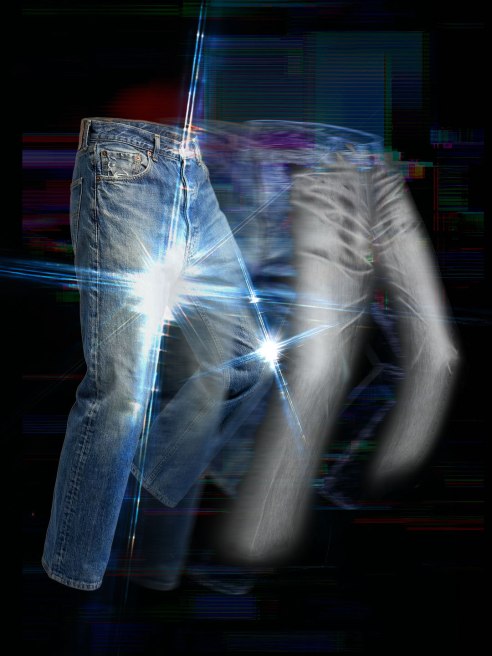
Billy AI gets its name from a pair of jeans in Jeanologia archive. The jeans date back to World War II and is believed to have belonged to a U.S. soldier named Billy. The jean served as a prototype in the development of Billy AI and was recreated by Jeanologia using the technology.
While the AI system addresses the industry’s need for extracting precise laser designs from a reference garment, Silla said this is only the beginning. Billy has been developed as a continuously evolving system. New modules will be introduced over time, expanding its capabilities and allowing the platform to work with different types of inputs.
Silla said Billy AI improves over time through a “controlled update process.” As Jeanologia’s needs and use cases evolve, the company will expand and refine that dataset and use it to train new versions of the system.
“The vision is to build a living system that continues growing,” she said. “Billy will progressively incorporate multimodal capabilities and interaction through natural language, opening new ways for designers and laundries to work.”