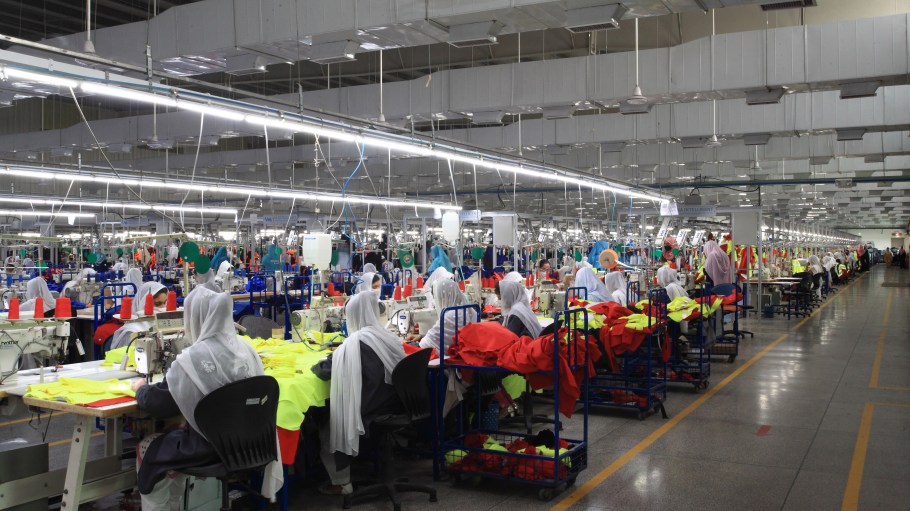
Sapphire Mills, part of the Sapphire Group, has long stood at the forefront of sustainable textile production, known for its high-quality woven, dyed and printed fabrics and its deep-rooted commitment to “People, Planet and Prosperity.” Guided by this vision, Sapphire Mills embraces a cleaner, greener future where every innovation moves the company—and the industry—closer to a world of environmental responsibility and social impact.
Here, Raffay Bin Rauf, head of sustainability at Sapphire Mills, discusses how the Pakistan-based mill is blending innovative technology with local solutions to reduce water usage and phase out coal dependency.
Related Stories
RIVET: How did Sapphire Mills significantly reduce Scope 1 and 2 emissions compared to its 2022 baseline?
Raffay Bin Rauf: We set out with a clear purpose—to reduce our emissions footprint while creating meaningful benefits for the community around us. Sapphire Mills has achieved a 54.7 percent reduction in Scope 1 and 2 emissions. Our dual-purpose co-generation plant was one of the biggest game-changers. It produces both electricity and steam, relying on natural fuels to power our processes. We source these fuels directly from farms and store them in our own bio-mass collection centers, gathering agricultural crop by-products like rice husk, brassica straw and wheat stalks.
This transition doesn’t just benefit Sapphire—it also supports local farmers by offering a sustainable solution to agricultural waste, keeping the environment cleaner by reducing open burning. The results from extensive trials have been inspiring, as we’ve dramatically decreased our coal usage, making coal-related emissions nearly obsolete. Plus, our 1.07 megawatt (MW) solar system now powers 70 percent of our garment unit’s operations, further shrinking our carbon footprint. As we move forward, scaling up biomass collection and renewable energy initiatives will remain our focus.
What technologies does Sapphire Mills use to reduce water consumption in its manufacturing processes?
R.B.R.: In our region, water is invaluable, and we believe conserving it is one of the most meaningful contributions we can make. Our sustainability journey led us to pioneer a range of water-saving technologies that allow us to significantly reduce consumption without compromising quality. For example, our Core System enables us to cut water usage by up to 96 percent compared to traditional washing methods. Technologies like SMART foam transform liquid chemicals into foam, allowing us to optimize both chemical and water use. With the Up System, we’ve managed to slash water and energy consumption by 50 percent in our dyeing and washing processes.
Our journey extends beyond technology; thoughtful production planning helps us prevent water waste, while we actively recycle non-contact cooling water within fabric processing. Additionally, we implemented heat and water recovery systems that help conserve resources. Soon, we’ll be launching a wastewater recycling project to further our water conservation efforts. This journey reflects Sapphire Mills’ dedication to protecting the planet for future generations.
What is your top sustainability prediction for the denim industry as we head into 2025?
R.B.R.: By 2025, I foresee a denim and woven industry that has significantly reduced both its carbon and water footprints. Integrating digital tracking systems will allow manufacturers to assess and fine-tune energy-intensive processes with greater precision, transforming insights into impactful improvements. Technologies like life cycle assessments (LCAs) and digital product passports (DPPs) will guide data-driven decisions, helping us be more transparent and environmentally conscious. Ultimately, this industry-wide commitment means we’ll see more sustainable production practices and a stronger connection between brands and conscious consumers.
To learn more about Sapphire Mills, click here.