When DL1961 was founded by Faisal and Maliha Ahmed in 2008, they weren’t just thinking about denim—they were thinking about the future. Backed by decades of expertise in fabric development from Artistic Denim Mills, the family’s mill in Karachi, Pakistan, the New York City-based women’s, men’s and children’s premium brand was uniquely positioned to rethink how jeans could be designed, produced and worn.
At the helm of the brand is Sarah Ahmed, DL1961 CEO and the daughter of Faisal and Maliha. Through innovative waterless treatments, circular fibers and a growing range of elevated, non-denim essentials, Ahmed—with the continued support of her family—is shaping a future where cutting-edge sustainability meets modern design.
Related Stories
In this conversation, Ahmed speaks with SJ Denim about how DL1961’s vertical integration and multi-generational insight contribute to a business that is as transparent and responsible as it is agile and trendsetting.
Take us back to 2008. What inspired the launch of DL1961, and what gap in the denim market were you aiming to fill?
Sarah Ahmed: When we launched in 2008, the denim market was crowded, but most brands were relying on outdated, unsustainable manufacturing practices and producing jeans that either looked great but weren’t comfortable or were comfortable but didn’t hold their shape. We saw a clear opportunity to create premium denim that combined fashion and function—using innovation in fiber and fabric technology to design jeans that fit well, feel incredible, and are made responsibly.
How has your vision for the brand evolved since its launch?
SA: In the beginning, our focus was on making technically advanced jeans that solved fit issues. Over time, that vision has expanded to building a sustainable, vertically integrated essentials brand that challenges the fashion industry’s broken systems. Today, DL1961 is not just about great-fitting denim—it’s about creating a more responsible model for how clothes are made, from fiber to finished garment, while continuing to innovate in design and category expansion.

Can you walk us through what vertical integration looks like at DL1961—from raw fiber to finished product?
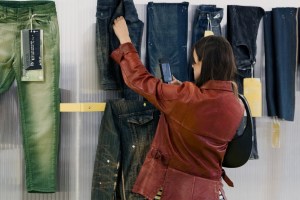
SA: All of our denim—from fiber to finished garment—is manufactured in our family-owned factory. We own and operate every step of the process, starting with spinning certified sustainable fibers into yarn, weaving them into fabrics, and cutting and sewing the final garments. Along the way, we use advanced water recycling systems, solar-powered facilities, and state-of-the-art finishing technologies that dramatically reduce water chemical use.
By overseeing the full supply chain, we’re able to prioritize traceable, scalable practices that minimize environmental impact without ever compromising on quality. Vertical integration also allows us to continually invest in new sustainable technologies and audit at each stage for accountability. And as we’ve expanded beyond denim, we’ve built a network of like-minded, highly vetted partners to produce the industry-leading knits and wovens that round out our wardrobe essentials.
How does DL1961’s vertical setup benefit the business?
SA: It gives us stability, agility and sustainability. Because we manage our own supply chain, we can better control costs, avoid many of the disruptions that impact brands reliant on third parties, and protect our margins even in volatile markets. It also allows us to scale innovations quickly—for example, implementing water recycling across facilities or developing proprietary fabric blends. And most importantly, it lets us stay true to our sustainability commitments because we aren’t outsourcing critical processes.
Have recent tariff policies impacted your sourcing or pricing strategy, and how has vertical integration helped buffer those effects?
SA: Tariff shifts always impact the industry, and we are no exception, but our vertical model does help insulate us to a degree.
DL1961 continues to expand into new categories. What’s your strategy for product expansion? Which are proving to be successful?
SA: Our expansion strategy is driven by our customers—they look to us for high-quality, versatile wardrobe staples for every stage of life, so we’re building out adjacent categories that complement denim, like tailored separates, shirting, outerwear, and kidswear. Denim remains the core, but categories like jackets and elevated everyday essentials have been especially successful, since they align with how people are dressing today.
When working outside your vertical denim setup, what specific qualities do you look for in suppliers and factories?
SA: We look for partners that share our values around sustainability, transparency and innovation. And beyond that, they have to deliver the quality that our customer expects from us. We have an amazing team who sources and explores partnership with different factories. It takes lots of trial and error to find an optimal partner.
What are some consumer trends that are shaping the future of denim right now?
SA: We’re seeing two major shifts. First, consumers expect jeans to feel effortless. Comfort, all-day wear and versatility are non-negotiables—and they also want to know how their clothes are made. Traceability and responsibility have moved from “nice-to-have” to essential.
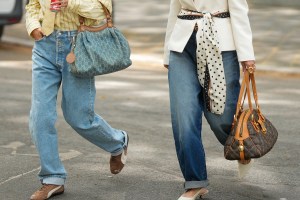
On the style front, the market is broadening in exciting ways. Relaxed and baggier fits continue to resonate, but for Fall ’25 we’re also seeing a strong return to tailored wide-leg silhouettes with clean, elongating lines that balance ease with refinement. Barrel and curved shapes are gaining traction as well, offering a sculptural, fashion-forward update that still works for everyday wear. And interestingly, after several seasons of looser fits dominating, there’s renewed appetite for refined skinnies—sleek and streamlined styles that pair perfectly with staples like knee-high boots, structured outerwear, and oversized knits.
Over the years, DL1961 has worked with notable influencers and models, partnered with Frieze London and collaborated with other brands. What is the brand’s current marketing strategy? And what is proving to be the most effective way to connect with consumers?
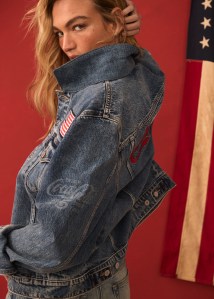
SA: Our most effective strategy has always been rooted in authentic storytelling. Whether that’s through collaborations, cultural partnerships or digital campaigns, we focus on highlighting the innovation and intention behind each product. We’ve found that consumers connect most when they understand the “why” behind our collections—why a fit was designed the way it was, or why a certain sustainability initiative matters. For the upcoming year, we’re focusing on partnering with talent that resonates with our audience and with collaborators that bring something fresh to our assortment, while still speaking to our core customer. We have a well-rounded mix of marketing efforts lined up for the next year and we can’t wait for everyone to see them roll out.
What’s one piece of advice you’d give to someone looking to build a fashion brand today?
SA: Start with your values and build around them. The market is too saturated to succeed with product alone—you need a clear purpose that resonates with consumers and guides your decision-making as you scale. And never underestimate the importance of supply chain—how you make something is just as important as what you make.
Where do you see DL1961 in the next five to 10 years?
SA: We’ll continue to push the boundaries of what sustainable fashion can look like. That means expanding globally, growing our lifestyle categories, and investing in new technologies that make production even more efficient and responsible. Ultimately, my vision is for DL1961 to be a leader not just in denim, but in reimagining how the entire fashion ecosystem operates. Beyond that, we’re excited to see DL1961 continue to evolve as a lifestyle brand, entering new categories that fulfill a need for our customer.
Do you have a favorite pair of DL1961 jeans—and what makes them special to you?
SA: Right now, I’m living in our Kaylen High Rise wide-leg. It’s polished enough to dress up, relaxed enough for every day, and really captures the balance we always strive for: timeless style, modern comfort, and sustainable design. When I’m looking for something a little more polished and elevated, I reach for our Kristy High Rise.
What’s the story behind DL1961’s name?
SA: “DL” stands for Denim Limited, and “1961” is the year my father was born. We’re a family business through and through, and there’s always a funny story behind every decision. My mom came up with the idea for Denim Limited, then when my dad went to register the name, he added 1961. Plus, it adds up to 8 in numerology, which means infinity. Very apt for a sustainable company aiming for circularity.
In what ways is DL1961 still a family business?
SA: DL1961 is very much a family business, and that spirit of family is embedded in everything we do. Over the years, we’ve expanded and brought in other company leaders, but my parents and I still work together every day to run the company.
I have two siblings who are involved in the business as well, so there really isn’t much of a separation between our family life and our professional lives. My father built the foundation of our manufacturing business more than three decades ago, specializing in innovative denim fabrics made with state-of-the-art, sustainable processes. Today, I lead DL1961 along with my mother, and we continue to make decisions together with the same long-term, values-driven approach.
That heritage allows us to combine decades of technical expertise with a forward-looking mindset—delivering jeans that embody the perfect fabric, fi t, and function while using significantly less water, dyes, and energy than traditional denim. For us, it’s never been about building for the next season—it’s about building for the next generation.
This article was published in SJ Denim’s fall issue. Click here to read more.