Denim fashion is shaped by both the past and the trends emerging from the street. Long before a pair of jeans reaches the store, however, it is influenced by mill-level decision makers who must weigh global economic conditions, raw material availability, and a range of unpredictable forces.
As denim manufacturers apply the lessons learned from 2025—a year marred by shifting trade policies and slowing economies—to future products, consumers can expect to see these decisions in the type of fibers used in jeans, their fits and the number of styles that brands decide to introduce to the market.
Related Stories
“Economically, this is not the time for inflated SKUs or micro-trends that die in six weeks,” said Ana Paula Alves de Oliveira, strategic director at Be Disobedient. “It is the time for strategic capsule creation, cross-industry collaboration, and commercial clarity. The more specialists collaborate on small, high-impact capsules, the stronger the brand’s dialogue with its user and the more defensible the business becomes.”
Aggressive new trade strategies and ongoing economic uncertainty are reshaping buying behavior across the entire value chain—from sourcing directors placing mill orders to consumers making in-store purchase decisions, according to Tilmann Wrobel, creative director of Monsieur-T and the denim brand Handz.
“It will affect certain countries more than others,” he added, noting how the price of value denim in the U.S. will be impacted by tariffs on China, while mid- to upper-tier denim made in or close to Europe may fare better. “But then again, we don’t know where the macro trade and energy pressure between the U.S., Europe, Russia and China will be.”
For mills, this uncertainty has made it increasingly difficult to persuade brands to commit to sustainability investments and products.
“All I hear about from the mill side presenting fabrics to brands is that cost is the only deciding factor that brands are asking for. Meanwhile suppliers are expected to provide innovation, sustainability stories and new fiber blends,” said Amy Leverton, Denim Dudes founder.
This imbalance is making it difficult for fabric producers to spearhead innovation, but Leverton is encouraged by the mills are that pushing through with new ideas in the competitive market. “My only hope is that the fixation on margins in favor of creativity we’re hearing from the brand side, starts to lift. The industry can’t innovate if the brands don’t invest in those innovations. Come on brands,” she said.
Incorporating new fibers and fabrics is challenging for brands focused on competitive pricing,” according to Julieta Mercerat, the PV Fashion Team’s denim project manager, and Desolina Suter, head of fashion at Première Vision.
“Pricing strategies are becoming more aggressive, and companies need to operate with greater efficiency. Incorporating new fibers and fabrics is challenging for brands focused on competitive pricing,” they said.
However, there is a silver lining. Mercerat and Suter said the mid-market, which handles larger volumes, will likely drive this shift and enable lower-volume brands to adopt these innovations. The market is also increasingly seeking responsible and traceable cotton, prompting the development of stronger strategies for cotton sourcing.
Consumers are ready for it. Alves de Oliveira said they will be looking for transparent sustainability metrics that stand up to scrutiny in 2026.
All hope is not lost for sustainable denim in 2026. Despite mounting external cost pressures, executives at several denim mills remain optimistic, pointing to continued demand for sustainability and responsible manufacturing.
Lizzie Kroeze, AGI Denin’s director of product development and marketing for Europe, said brands are prioritizing traceable raw materials as well as mechanically and chemically recycled content to align with new regulatory requirements.
Specifically, she said they’re committing to traceable BCI cotton, Cotton Made in Africa (CMiA), organic cotton, regenerative cotton, post-consumer- and post-industrial waste cotton, and textile-to-textile recycled fibers like Circulose’s Re-Visco, Circ lyocell, and Tex2Tex polyester.
Cristina Cerdeira, marketing manager of Tejidos Royo, is adamant that regenerated fibers are the future of denim fashion. The Spanish mill While designs will focus on comfort such as wide-leg fits, she said denim trends will be driven by sustainability, with recycled cotto and Regenagri fabrics becoming standard.
Beyond fiber, Turkish mill Bossa is seeing demand for clean looks that call for understated finishes, refined washes or no wash at all. “There’s a stronger focus on responsible effects, including low-impact wash aesthetics and reduced water and chemical usage,” said Onur Duru, Bossa’s general manager.
Timeless silhouettes with modern functionality and responsible materials and transparent production stories are a winning combination for Calik Denim. This attention to making more purposeful and functional purchases will also be reflected in denim that offers high-comfort performance, breathability and longevity.
“Consumers will gravitate toward denim that supports movement, longevity and conscious choices, blending innovation with emotional connection,” said Ibrahim Ethem Buyukpepe, Calik Denim’s acting general manager.
Artistic Milliners taps into this demand for emotional denim with fabrics that feel like pajamas—be it through peached finishing techniques that give hard-wearing denim a velvet-like touch or zero-growth stretch technology that prevents knee-bagging while offering extreme comfort.

Similarly, Alves de Oliveira sees consumers shifting their attention away from viral trends to prioritize quiet, durable core products that act as an anchor in their wardrobes.
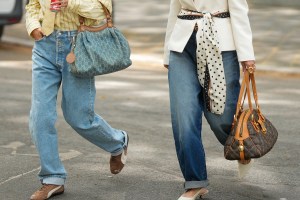
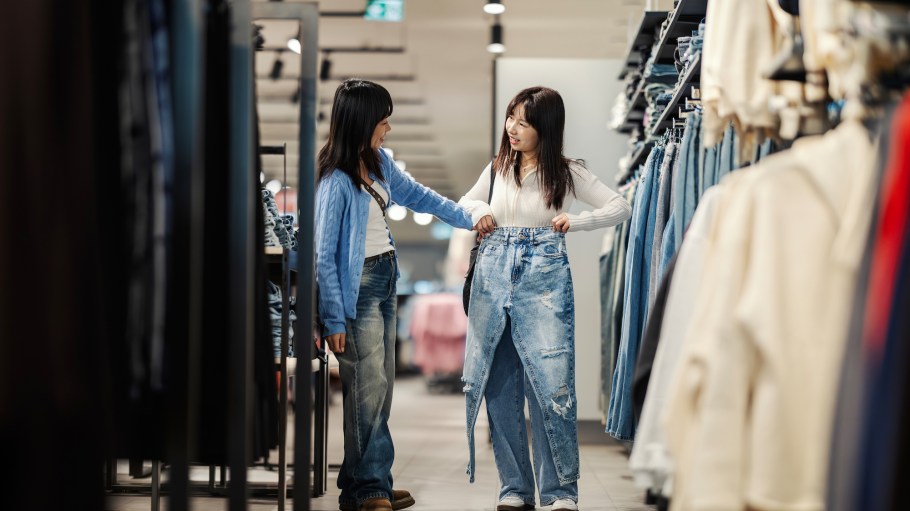
For AGI, this translates to baggy and wide-leg silhouettes for women to achieve 2026’s relaxed attitude and baggy, barrel and more structural, 3D bowlegged styles for men. Kroeze added that pleats, trouser styling, and clean washes are finding their way into premium men’s denim assortments.
“We also see some new denim textures coming to stores—most notably softer, drapier denim fabrics that look and feel luxurious, but still lend themselves to traditional denim washes and fits,” she said.
Cost is on everyone’s mind, but Alves de Oliveira anticipates that consumers will splurge on “accessible premium” products, which she describes as jeans made with elevated ingredients that justify their price without becoming intangible (i.e. silk and wool) and high-value hero pieces from collections that demonstrate strong storytelling or visible craft. This is where brands can tempt consumers with limited runs.
As a designer mainly for mid-priced and luxury denim, Wrobel said he tries to lean into expertise: making denim as relevant and desirable as possible so that economic climate will affect it in the least possible way. “In many ways, today I believe even more in [denim with] wow effects, strong storytelling and desirability beyond overinflated pricing,” he said.