The year was full of business moves in the denim industry. Many decisions came down to what will make a leaner yet more efficient business.
Michelle Gass took over the helm at Levi Strauss & Co. as CEO in January after serving as president for a year.
Her impact was felt immediately with the roll out of Project Fuel, a plan to spark long-term profitable growth by focusing on being brand-led and DTC first. It also requires a tighter team. The first step in the two-year plan included a 10 to 15 percent reduction in the company’s global corporate workforce, or roughly 500 to 750 people will be impacted by the job cuts.
Related Stories
By October, Gass was feel good about the “underlying fundamentals of the business,” particularly the inroads Levi’s made in the women’s category. The women’s business grew by 11 percent in Q3 and was stronger in the DTC business.
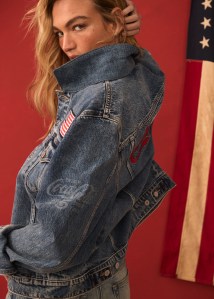
A global campaign starring Beyoncé was the icing on the cake. “For me, the headline is our strategy is working, being at the center of culture [with] the likes of Beyoncé and others, our women’s business is working, denim lifestyle, the strength of our U.S. market,” she said in an interview with WWD.

Kontoor Brands celebrated its fifth anniversary after being spun off from VF Corporation, though all eyes were on the next five years.
In an interview with Rivet, Scott Baxter, Kontoor Brands president, CEO and chairman of the board, said the company has a “maniacal focus on North America, Europe and China” markets and ambitions to grow its outdoor and workwear businesses. The goal, he added, is to become a broader consumer lifestyle company than what the company done in the past.
In November, the Wrangler and Lee parent company introduced its own program to transform its global operating model and to enhance and optimize its supply chain. Called Project Jeanius, the benefits of the three-year plan are expected to materialize in the second half of 2025 as its supply chain initiatives “begin to scale.”
Global direct-to-consumer and U.S. wholesale growth helped Kontoor Brands best Wall Street’s Q3 consensus expectations. The gains were enough for Kontoor to raise its full-year outlook.
Wrangler continued to grow its market share. In the bottoms and shorts business, Circana reported that Wrangler gained 90 basis points of market share in the U.S. in Q3—the brand’s 10th consecutive quarter of market share gains in its largest market. The brand was riding high after the launch of its collaboration with Grammy Award-winning country artist Lainey Wilson and the roll out of successful new programs such as Bespoke for women and the men’s Cliffside utility pant and outdoor chino.
In 2023, Guess Inc. CEO Carlos Alberini said one way the company could leverage its core competencies is through the “potential acquisition of both brands and businesses.” The company made good on that idea a year later when it teamed with brand management firm WHP Global to buy premium denim brand Rag & Bone.
In February, Guess announced it would buy all the operating assets of the New York-based jeans brand. Separately, a 50-50 joint venture controlled by Guess and WHP acquired the brand’s intellectual property. Andrew Rosen, who has been with Rag & Bone since 2006, was named the brand’s executive chair.
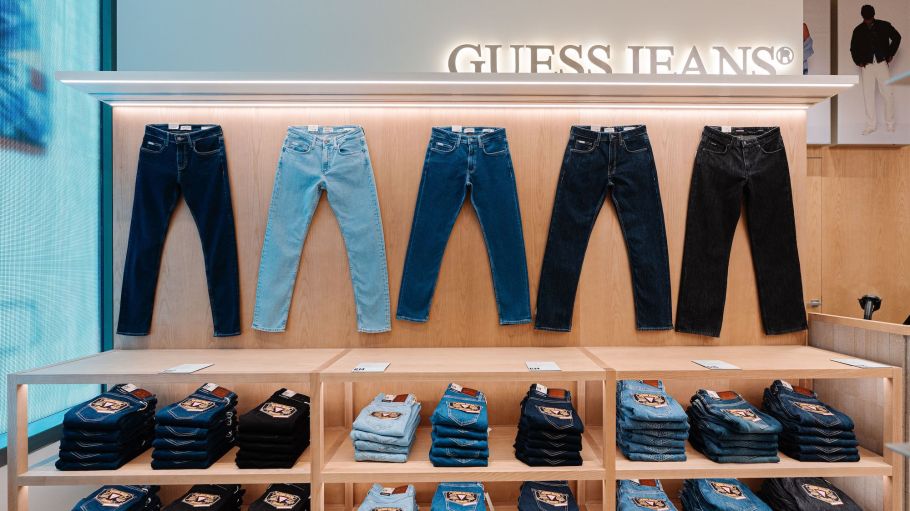
As Rag & Bone settled into the Guess family, Guess Jeans, the new Gen Z-focused brand led by Nicolai Marciano hit stores. In addition to opening brand stores in Amsterdam and Berlin, Guess Jeans hosted popups at Galeries Lafayette in Paris and La Rinascente in Milan to demonstrate Guess Airwash technology, a sustainable finishing process developed with Jeanologia.
“Supporting our wholesale partners has been a big focus for us since launching the brand. With the line being so new it’s been important for us to show up where we can, to help drive brand awareness around the Guess Jeans story,” Marciano told Rivet.
While Guess Inc.’s Q2 earnings could have been better, the company sees opportunity ahead for growth. “Guess has big opportunities in multiple product categories and in multiple markets,” Alberini said, noting that he’s optimistic about India and the Middle East.
Antwerp-based HNST found a new home with Claes Retail Group, the owner of JBC, one of the largest clothing chain stores in Belgium. In November, the circular brand, which recently underwent a premium rebranding, announced the sale and reaffirmed its commitment to sustainability.
“Our commitment to being circular is stronger than ever. Thanks to this new chapter, we can continue to grow and have more people wear our sustainable alternative to conventional denim. We want you to keep wearing and loving your jeans for as long as possible,” the brand stated.
In February, Detroit Denim Co. shut down after 14 years of making jeans in Motor City. Forced to close its physical storefront during the pandemic, it proved to be too challenging for the custom jean maker to operate solely online.
Business moves were made on the supply side of business as well.
In August, Artistic Milliners (AM) announced it was adding another link to its business in the Western hemisphere.
The Pakistani denim manufacturer acquired VF’s Dickies de Parras S. de RL de CV facility in Parras, Mexico. AM is in the process of upgrading the 10-acre complex consisting of two buildings to rapidly build out its Mexico operations.
In November 2023, just weeks after Renewcell announced it expanded its Circulose Supplier Network supplier network to 116 companies, the Swedish textile recycler announced a strategic review and plans to secure new funding to address its challenging financial situation.
By February, the Stockholm-based company filed for bankruptcy. After months of uncertainty, Altor, a private equity firm in Stockholm, acquired Renewcell’s remaining assets in June. The sale included a commercial-scale plant in Sundsvall and the technology behind its flagship product, Circulose dissolving pulp. The company was subsequently renamed Circulose.
In November, former H&M Group CEO Helena Helmersson was named the company’s chairman of the board and McKinsey & Company veteran Jonatan Janmark its new CEO.
While it has a new name and leadership, many of the same challenges remain including geopolitical uncertainties, economic pressures and the large buy-in material innovations require. A report from forest conservation nonprofit Canopy in May suggested that Renewcell could have benefitted from a diversification of clientele beyond the apparel space.