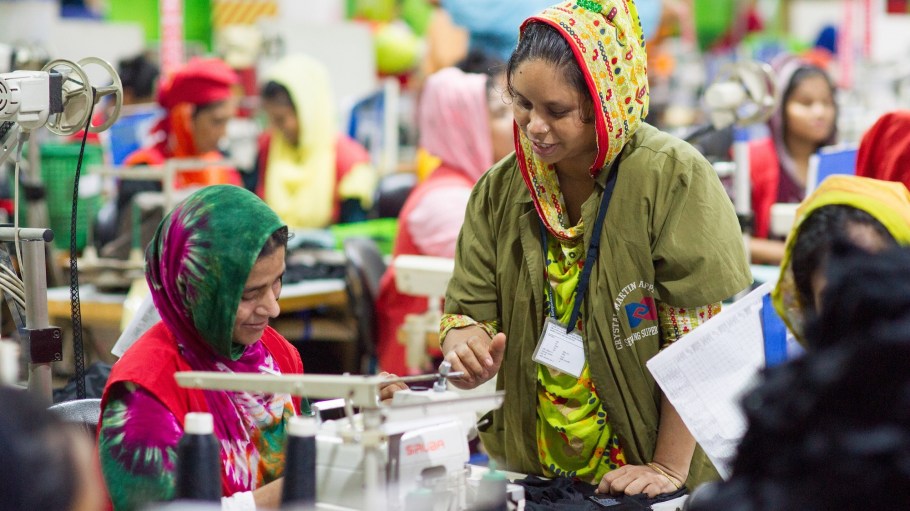
Crystal International Group Limited released its 2024 sustainability report outlining the apparel manufacturer’s sustainability vision, strategies, key initiatives, achievements, and performance.
The Hong Kong-based company produces denim, lifestyle apparel, sportswear and outdoor apparel, intimates, knits and fabrics across its production facilities in Vietnam, China, Cambodia, Bangladesh, and Sri Lanka.
In the report, CEO Andrew Lo described 2024 as a year of gradual recovery amidst geopolitical and macroeconomic challenges. Despite this, the company’s efforts to reduce its environmental impact progressed.
Related Stories
In 2024, Crystal’s net zero target was validated by the Science Based Targets initiative. The company’s long-term target is to reduce absolute Scope 1, 2, and 3 greenhouse gas emissions by 90 percent by 2050, based on a 2022 baseline.
As Crystal’s production scale gradually increases, the denim factory in Vietnam has expanded its existing wastewater treatment plant by adding a new treatment unit. Currently, the factory is using up to 60 percent recycled water in its production processes.
Using sustainable inputs continues to be a priority. In 2024, 40 percent of Crystal’s sportswear fabrics incorporated recycled polyester, while around 85 percent of its denim was BCI cotton. In Vietnam, 55 percent of the raw materials were certified with GRS or Recycled Claim Standard certification. In 2024, 80 percent of Crystal’s chemicals conformed to the highest level 3 of the ZDHC MRSL.
The report also gives insight into Crystal’s investments in new technologies.
Crystal’s Digital Product Creation Center, which was established in 2022, is meeting the increasing demand for 3D virtual sampling. The number of physical samples shipped by Crystal’s denim division to customers in 2024 decreased by more than 50 percent compared to 2018.
The company is scaling smart manufacturing for denim to prepare for increased capacity, which is aimed at nearly doubling by 2029 compared to 2023.
Crystal’s denim factory in Vietnam is currently being transitioned to smart manufacturing. The overhaul includes a smart warehouse management system, a smart AGV system, a smart cutting system and smart production lines.
Additionally, RFID technology is being utilized to identify and track the movement of semi-finished and finished products along the production process. Crystal said this advancement helps streamline inventory management, reduces the risk of loss or misplacement and enhances quality control by identifying issues swiftly.
The overhaul is expected to be completed in mid-2026. Crystal said the denim team will continue to explore the application of artificial intelligence in the production processes, ensuring that we remain at the forefront of innovation in the industry.
The newly extended drying hanger system at Crystal’s denim factory in Cambodia enhanced the capacity of the pre-drying process, reducing the dryer’s operation time by 20 minutes on average. Stretching 5,640 feet, it is the longest drying hanger track among Crystal’s denim factories. The report states that it saved approximately 22 percent of steam and 3 percent of electricity consumption, resulting in an annual reduction of around 350 tonnes of carbon emissions.
Crystal is planning to expand its FLAP model (short Finishing Center, Logistics Center, Assembly Center and Parts Manufacturing Center), which serves as a blueprint for automating its knits division. The model is being piloted at one of Crystal’s lifestyle apparel factories in China. Colleagues from sister factories participating in months-long, in-depth training sessions at the factory to equip them with the knowledge and experience needed to implement FLAP at their factories.
In general, Crystal is expediting its factories’ transition to automation. Over 300 automated machines and robots in Crystal’s knits factories in Vietnam, Cambodia, and Bangladesh since 2023. The technologies have reduced the amount of time it takes to produce a basic T-shirt by 34 percent compared to 2020.