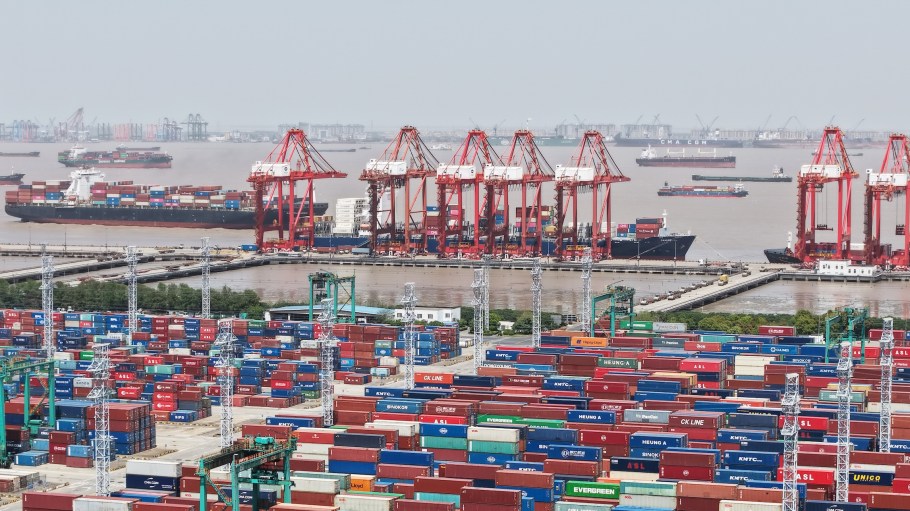
The global sourcing landscape was jolted earlier this month as new U.S. tariffs on some Chinese imports surged to 245 percent—an unprecedented jump that left sourcing teams reeling. While most other nations saw tariffs hold at 10 percent for a 90-day period, the message was clear: Nothing is off the table in today’s trade environment.
For brands and retailers, the response has been swift. Many are shifting production from China to countries like Vietnam, Bangladesh and Indonesia—regions that remain under the 10 percent threshold for now. Others are looking closer to home, exploring nearshoring opportunities in Mexico and Central America, where tariff exposure is lower and shipping timelines are more predictable.
Related Stories
But in the scramble to reduce costs and reroute production, some companies are taking their eye off the bigger picture. The real risk? That processes built for stability—quality control, compliance and supplier oversight—begin to fray under the weight of reactive strategy.
Navigating uncertainty
Tariffs may have been the catalyst, but the real challenge is one of operational agility. As companies diversify their supplier base and pivot to new geographies, the complexities compound: Onboarding unfamiliar factories, aligning them to product specifications and ensuring every item still meets safety and regulatory standards.
Countries like Turkey and India are being tapped for their production capacity, but increased demand has left many factories stretched thin. Lead times are lengthening, ports are congested and in many cases, infrastructure is not yet ready to support the volume of orders shifting their way.
Meanwhile, onboarding new suppliers is no small feat. It requires knowledge transfer, compliance training and often, additional investment in inspections and testing. Rushing this process—or skipping steps altogether—opens the door to costly mistakes.
This is where supply chains start to crack. Quality failures rise. Production timelines slip. Non-compliance issues surface at customs. And ironically, the very savings sought through tariff avoidance may be eroded by delays, defects and damaged trust.
Strategic diversification
To manage the transition without compromising control, brands must act fast—but strategically. This means more than just moving production. It means redesigning operations to work across a more fragmented network.
The most resilient brands are taking proactive steps to navigate supply chain challenges. They are conducting rapid risk assessments to identify overexposed suppliers and distributing production across multiple low-tariff countries to avoid overdependence on any single region.
To ensure consistency and speed, they are standardizing onboarding protocols so new factories can ramp up quickly. At the same time, they are expanding quality control efforts through more frequent inspections and real-time reporting. Additionally, these brands are investing in import checks to catch potential issues before products reach store shelves.
Rather than overcorrecting with single-country pivots, these companies are designing for continuity—embedding agility into every tier of the supply chain.
Why visibility and structure matter
In times of volatility, visibility is not optional—it’s foundational. Without real-time insight into production, companies are flying blind. They risk late-stage surprises, costly reworks or worse, failed compliance checks that damage brand reputation.
Technology is playing a critical role in this transition. Platforms that unify sourcing, quality control and compliance workflows are enabling faster adaptation—without sacrificing standards. With the right tools, teams can track production status, audit suppliers, inspect shipments and collaborate across borders—all within a centralized system.
This isn’t about surviving tariffs—it’s about building a sourcing strategy that can flex with any disruption.
Looking ahead
The 245 percent tariff surge is unlikely to be the last shock to hit supply chains this year. Geopolitical instability, climate volatility and regulatory reform are all reshaping global trade. For brands that treat tariffs as an isolated issue, there’s a risk of missing the bigger lesson: Resilience isn’t reactive—it’s engineered. To lead in this new landscape, companies must future-proof their operations. That means diversifying wisely, onboarding rigorously, monitoring continuously and never letting cost-cutting come at the expense of control.
Tariffs may have set the fire, but long-term success will come down to how well brands balance speed with structure.
This article was written by Leigh Recrio, content marketing manager at Inspectorio.
Inspectorio’s connected platform enables fast, compliant supplier transitions with built-in visibility, onboarding and quality assurance tools—so companies can respond quickly without compromising performance. Click here to learn more about Inspectorio.