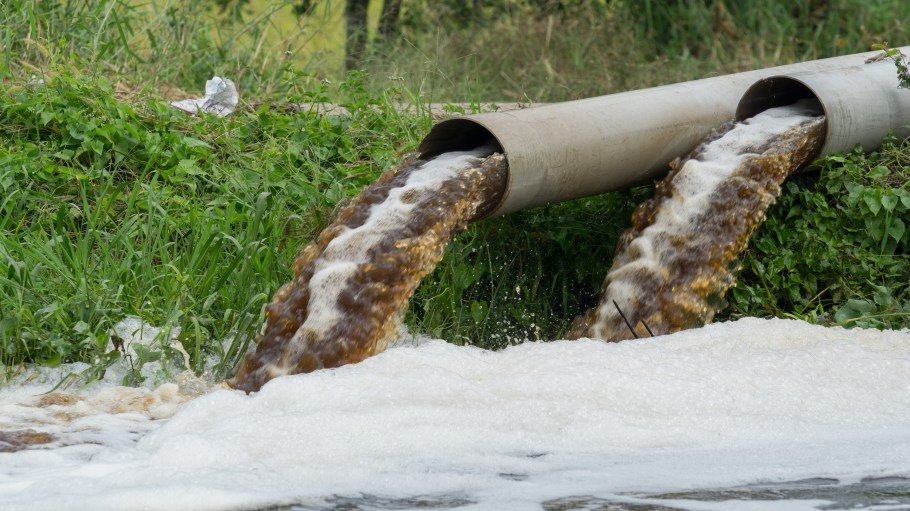
Water risk is fast becoming an existential threat to the apparel industry. As manufacturing consumes limited water supplies and pollutes key production regions, disruptions to supply chains become more frequent and costly. Brands that fail to address water use and pollution may soon find themselves unable to deliver products, regardless of how efficient or low-cost their supply chains may be. Water scarcity and pollution are no longer just environmental challenges—they are operational, financial, and reputational liabilities that the industry can’t afford to ignore.
Related Stories
From raw material cultivation to textile finishing, nearly every stage of production relies on manufacturers’ access to vast quantities of clean, affordable water. The scale of the challenge is monumental: in India, just growing one kilogram of raw cotton consumes on average 22,500 liters of water, while a survey of wet processes in Bangladesh found that conventional water-based dyeing consumes on average 164 liters of groundwater to dye one kilogram of textiles. This heavy reliance on water exposes supply chains to disruption. According to research by the Carbon Disclosure Project in 2024, one in five companies reported significant supply chain water threats, with 35% of apparel companies at-risk. Critically, companies that integrated their suppliers into risk assessments were seven times more likely to uncover these hidden vulnerabilities, showing how water dependency is embedded across the product lifecycle.
The pressure on apparel supply chains isn’t just coming from water availability, but from growing regulatory and consumer scrutiny. Brands are increasingly held accountable for their sourcing, governments are acting decisively to restrict industrial water use, and communities are demanding accountability for polluted waterways. In China, national-level water regulations introduced in 2024 enforce quotas, efficiency, and oversight to guarantee water security and ecological protections. In December 2024, Vietnamese regulations came into effect requiring industrial facilities classified as high water-flow—including textile facilities that meet discharge thresholds—to install costly systems for automatic, continuous wastewater monitoring.
Beyond operational and reputational risks, water limitations lead to missed business opportunities. Emerging textile markets like Jordan are positioning themselves as apparel hubs, leveraging labor availability, government initiatives, and favorable trade agreements. However, the Middle East and North Africa are among the most water-stressed areas globally, with 83% of the population exposed to extreme water stress. Jordan is among the world’s most water-scarce countries, with renewable water resources meeting only ~50% of the country’s water consumption, further limiting its ability to scale water-intensive manufacturing.
To stay competitive as water stress deepens across traditional and emerging production regions, the industry must decouple manufacturing from water use. As dyeing and finishing are the most water-intensive steps in the textile supply chain, waterless dyeing solutions are particularly critical. One promising technology is CO₂ dyeing, which eliminates water use entirely for dyeing certain fabrics like polyester. These commercially proven systems use pressurized carbon dioxide to dissolve dyes and infuse color into textiles without generating wastewater. They not only remove the need for water but also reduce energy consumption, eliminate chemicals, shorten production times, and improve production consistency. Companies are researching how to adapt the technology for natural fibers, and in the meantime, digital pigment printing and foam dyeing offer low-water solutions for fabrics like cotton.
Far from being a costly premium, waterless technologies like CO₂ dyeing deliver immediate, measurable operational value. Waterless dyeing can lower production costs by up to 45% by slashing water and energy bills, reducing waste treatment requirements, and accelerating processing time. For manufacturers in water-stressed regions, the operational savings and risk mitigation alone justify the investment. For brands, early adoption sends a credible signal of sustainability leadership to consumers and investors while securing long-term supply chain resilience.
The environmental stakes, too, are immense. Textile dyeing and finishing is estimated to be responsible for up to 20% of global industrial water pollution. Massive volumes of wastewater contaminated with dyes, chemicals, and heavy metals are discharged daily into communities worldwide. In Bangladesh, rivers near garment factories have been found to contain alarming levels of PFAS, known as “forever chemicals,” which exceed EU and U.S. regulatory limits. These practices pose serious health risks to local communities, degrade ecosystems, and fuel a loop of regulatory opposition, community discontent, and reputational backlash. Reducing or eliminating water use is one of the most direct, high-impact ways to mitigate the industry’s footprint.
Every year that the industry delays investment in water-efficient technology, the risks (and costs) grow. For a sector already under pressure from rising raw material prices, labor costs, climate-related supply disruptions, and political and trade volatility, water inaction could become a defining liability. While there are examples of companies taking tangible steps to address water issues, action remains scattered and insufficient. Kering’s newly announced water-positive strategy is a step in the right direction and signals what corporate water stewardship can look like. Companies that adopt water-efficient technologies early will be better positioned to comply with regulations, maintain credibility with consumers, and secure access to reliable, resilient supply chains.
Ken Katz is Managing Director and Head of Asia Investments at TAU Investment Management LLC, where he brings more than two decades of global private equity investment experience. Based in the region for 25 years, Katz focuses extensively on Asia’s emerging markets, and has led investments and held senior operating roles in companies spanning the supply chain, energy, infrastructure, water treatment, healthcare and retail industries.