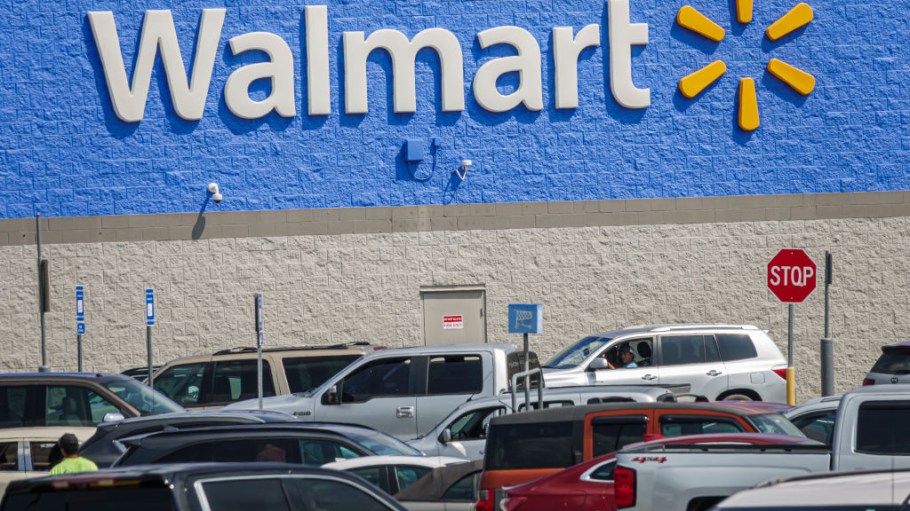
Walmart, the biggest retailer in the U.S. and the world, is back to growth mode as it invests in America.
Walmart U.S. president and CEO John Furner said on Wednesday that the mass discounter will “build or convert more than 150 stores” over the next five years, while at the same time continue with its program to remodel existing stores. The initiative represents “millions of dollars in capital investment of labor, supplies and tax revenue, which benefit their respective communities,” he said in a company blog post, adding that the moves will “help us reach and serve even more customers.”
Related Stories
On the remodeling front, the plan over the next 12 months is to remodel 650 doors across 47 states and Puerto Rico. That would create “tens of thousands of jobs” supporting these projects on top of the “hundreds of jobs we’ll bring to a community each time we open a new store,” he said. Furner said Walmart U.S. directly employs about “1.6 million people in this country and support many more jobs beyond that.”
The first two new stores under the initiative are set to open this Spring in Santa Rosa Beach, Fla., and in Atlanta, Ga., he said. Both locations are Neighborhood Market doors. “We’re also finalizing construction plans on 12 new projects we intend to start this year, along with converting one of our smaller locations to a Walmart Supercenter,” Furner said.
Jefferies retail analyst Corey Tarlowe noted that Walmart hasn’t opened a new Supercenter in about two years. He added that since the end of Fiscal Year 2020, the discounter has shuttered 140 locations, including 101 stores in Fiscal year 2023 through the end of the third quarter. Recent closures were in urban areas of Chicago and Portland. According to Tarlowe, the “opening of new stores will help Walmart’s growth prospects ahead, while the company also invests in profit-generating efficiencies across the enterprise.”
Historically, the discounter has gone through periods where it has accelerated store openings, such as from 1999-2001 and 2012-2015, and years when it has not, particularly from 2004-2007 and 2016-2017. Tarlowe described the current plans as a “net positive.”
On Tuesday, Walmart revealed its stock will split 3-for-1, with shares to be issued after the market closes on Feb. 24. The last stock split was a 2-for-1 in March 1999. Talowe said Walmart’s outstanding shares will grow from 2.7 billion to 8.1 billion. Separately, in addition to the stock split, Walmart also said that store managers will be eligible for up to $20,000 of stock grants annually.
Both the new and remodeled stores will reflect the discounter’s Store of the Future concept. That means the locations will have improved layouts, expanded product selections and innovative technology to help store associates better assist customers. “Customers love this concept in the places we’ve already rolled it out, and we’re excited to transition more and more of our fleet,” Furner said. In addition, the new stores will be designed with sustainability in mind, such as more energy-efficient equipment and lighting. And locations are expected to include electric vehicle fast-charging stations for the convenience of shoppers and store employees.
“These new and remodeled stores will better enable us to meet and exceed customer expectations whether in a store, online at Walmart.com, or through one of our mobile apps,” Furner added.
A research note from Tarlowe last August indicated that the new remodel of a Supercenter he toured included digital displays, wider aisles, mannequins and updated fixtures. Remodeled stores also include additional curbside capacity.

Separately, Walmart has been looking at other ways to make shopping more convenient for customers. In its third-quarter earnings report, the retailer said it was able to cut “store-to-home” delivery costs by 15 percent, a move that helps it with margins. It also partnered with supply chain management firm Bamboo Rose to develop and implement an enterprise sourcing platform to improve how the discounter does business with tens of thousands of suppliers around the world, with a single platform expected to enable buyers to make more informed decisions based on volume and cost. And, in an example on its big bets on fulfillment, it installed in 40 stores in-store parcel stations—turning stores into mini post offices—to expedite last-mile delivery just in time for the holiday season.