America has entered a new era of booming domestic manufacturing. As we emerged from the pandemic, frequent supply chain disruptions, a combination of policy changes, shifting macroeconomic trends and private-sector investments have resulted in a dynamic manufacturing environment, creating hundreds of thousands of job opportunities for Americans. If getting the boom started was a huge swing, keeping it going is the follow-through.
Continuing the growth of American manufacturing and filling the many manufacturing job opportunities that will arise in the coming years will require sustained investment from businesses across the country—including Walmart. It’s on us to make the most of this opportunity for America’s workers, economy and environment.
Related Stories
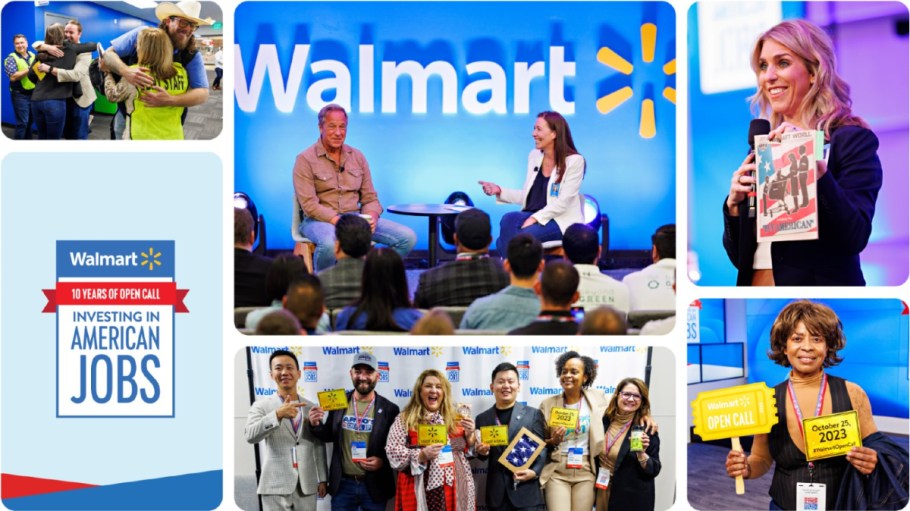
For our part, Walmart has committed $350 billion to purchasing goods made, grown or assembled in the U.S. through 2030, which is expected to support over 750,000 U.S. jobs. Some of these jobs are a result of Open Call, Walmart’s annual pitch competition for small and medium businesses with U.S.-made products. At last week’s Open Call—Walmart’s tenth—, Walmart awarded 180 “golden tickets” to small and medium businesses, representing deals for suppliers to sell their products on Walmart or Sam’s Club shelves or online at Walmart.com. In total, 700 businesses from all 50 states had the opportunity to pitch their product for the chance to become Walmart suppliers, expand their U.S. manufacturing and hire more workers.
America’s manufacturing sector is experiencing a remarkable resurgence, generating an impressive surge in job opportunities. An August estimate by Goldman Sachs forecasts the addition of approximately 250,000 new manufacturing jobs in the United States over the next two years. Remarkably, manufacturing employment has now reached its highest levels in nearly 15 years, marking the first full recovery from a recession since the 1970s, according to the New York Times.
Since the end of 2021, spending on construction for manufacturing facilities has doubled. And from August 2022 to the present, 100 new clean energy manufacturing facilities or factory expansions were announced in the U.S., according to CleanPower. The trend of bringing supply chains back home through U.S. manufacturing not only bolsters the nation’s economy but can also contribute to a reduction in emissions, minimizing the environmental impact resulting from long-distance shipping and production processes. America’s manufacturing boom is a pivotal step toward a greener and more sustainable future.
However, American manufacturers grapple with critical challenges, such as skills gaps in the workforce and the need to keep up with evolving technologies.
Despite the substantial increase in construction spending for U.S. manufacturing, many manufacturers struggle to find the right talent to fill manufacturing job opportunities. A 2021 analysis from Deloitte and the Manufacturing Institute found 2.1 million manufacturing jobs could go unfilled by 2030 due to the unmet need for high-tech manufacturing skills in the workforce. The same analysis found that 77 percent of manufacturers expect difficulties in attracting and retaining workers going forward.
Additionally, to stay competitive and address supply chain disruptions, U.S. manufacturers must invest in advanced technologies like machine learning, 5G, artificial intelligence and digitization, which are scaling up around the globe. They must also prepare their workers to use these technologies. McKinsey’s research points to growing demand for technological and cognitive skills in the manufacturing workforce and finds that companies will need to upskill or reskill their existing employees or risk falling behind.
Meeting these challenges will require a sustained commitment to U.S. manufacturing, or else the manufacturing boom could fizzle out.
As part of our U.S. Manufacturing initiative, Walmart has partnered with large organizations like the National Association of Manufacturers (NAM) and regional ones like the Russell Innovation Center for Entrepreneurs (RICE). Walmart and NAM collaborated to support manufacturing skills training for veterans and introduce students to careers in manufacturing. And Walmart just announced a grant to help RICE support diverse entrepreneurs in Atlanta.
Walmart is also committed to training its associates and providing them with pathways into in-demand jobs that come with greater responsibility and higher pay. Part-time and full-time associates are eligible for our Live Better U education benefit on their first day of employment, giving them cost-free access to college degrees, short-form certificates and high school completion or ESL classes, which in turn helps drive retention and promotion. Employers everywhere—especially manufacturers—should invest in upskilling to meet their businesses’ unique needs.
Bringing manufacturing back home to the U.S. creates good jobs, shortens supply chains and gets customers the products they want. To overcome the challenges we may face and make the most of this opportunity, businesses must continue to invest in U.S. manufacturing.
Jason Fremstad is the senior vice president of supplier development, sourcing, Walmart International.