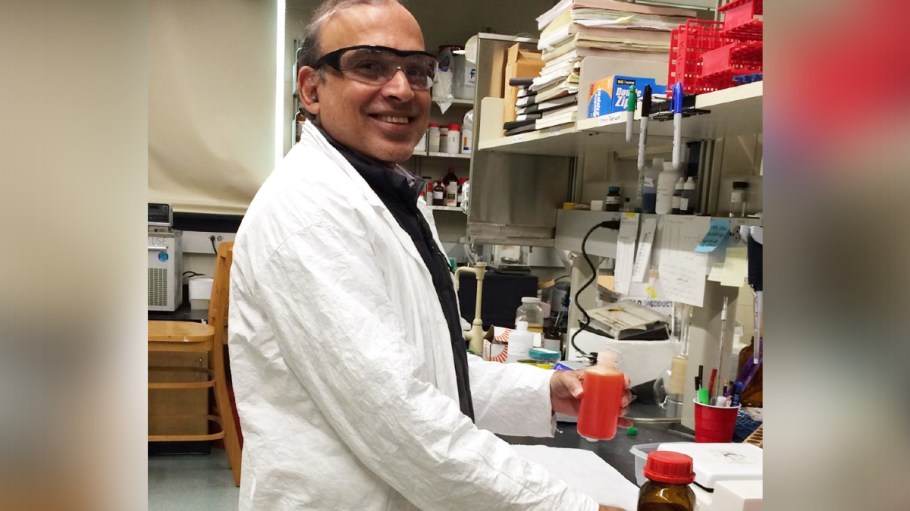
A chemistry professor has developed two processes using proteins and textiles respectively to create new materials.
As a first experiment of two, Charles Kumar, professor emeritus of chemistry at the University of Connecticut (UConn), worked with naturally occurring proteins that turn into plastic-like materials and developed a chemical link to bind protein molecules together.
The second experiment used proteins reinforced with natural fibers such as cotton.
Related Stories
The first experiment involves a joining process that creates a dimer, or a molecule composed of two proteins. That dimer is joined with another dimer to create tetramer which multiplies until it becomes a large 3D molecule. It is the 3D molecule that makes it unique; most synthetic polymers are linear chains.
Kumar’s material can biodegrade because it is made of proteins and a bio-linking chemical, just like plant and animal proteins. The links are amide bonds, which Kumar had in the first phase of the two-part trial.
“Nature degrades proteins by ripping apart the amide bonds in them,” Kumar told a UConn writer this month.
He added, “We have the same amide linkages in our materials, so the enzymes that work in biology should also work on the material and biodegrade it naturally.”
The material can be tailored via chemistry to be applied to a variety of specific applications. The novel 3D structure enables the polymer to behave like a plastic, and like the proteins it’s made of it can stretch, change shape and fold.
The material degraded in the space of a few days when dipped in acidic solution. Research is underway to find out what happens to the material when it is buried in the ground, like many post-consumer plastics.
Researchers discovered that the protein-based materials can be used in place of a variety of potentially degradable products like coffee cup lids and transparent films. It can also be used to make fire-resistant roof tiles or more sophisticated products like car doors, rocket cone tips or heart valves. Next steps involve testing other properties like strength or flexibility, and toxicity.
“We cannot put materials into the environment that are toxic,” Kumar says. “We have to stop doing that, and we cannot use materials derived from fossil fuels, either.”
The second phase of the experiment used a similar principle but instead of just proteins, it used proteins reinforced with natural fibers like cotton. A doctoral student working in the lab, Adekeye Damilola, developed a number of items using protein-fabric combinations whose textile fibers serve as the linking agent with the proteins instead of the cross-linking chemical Kumar used for the protein-based plastics. He expects these kinds of composites to biodegrade without producing toxic waste.
Kumar said that would make it a great fit with the fast-fashion industry, which is responsible for a big chunk of the 92 million tons of textile waste generated annually. There are approximately 400 million tons of plastic waste generated worldwide annually, and between about 19 and 23 million tons that make its way into aquatic ecosystems, according to UConn.
“We are creating a lot of textile waste each year due to the fast-changing fashion industry,” Kumar told the UConn reporter. “So why not use that waste to create useful materials—convert waste to wealth.”
Kumar’s team has only worked with cotton so far, but will begin to experiment with other fibers like jute or hemp because of shared chemical properties with cotton. UConn’s Technology Commercialization Services (TCS) has filed provisional patents for both new technologies. Kumar hopes to find industry players who can help bring this breakthrough to market.