“Changing clothes. Changing conventional wisdom. Change the world.”
That’s Uniqlo’s mission statement: Going beyond past conventions and creating clothing that never before existed.
The brand held “The Art of Science and LifeWear” at the Museum of Modern Art (MoMA) Monday night to showcase the global retailer’s mission and workflow through a series of exhibits and displays. Held in hopes of furthering public awareness for LifeWear, the one-night-only event also marked Uniqlo’s 20th anniversary of operating in the United States.
Related Stories
“It’s also my literal, to-the-second, very last event as director of the Museum of Modern Art,” said Glenn Lowry, MoMA’s sixth director. He joined in 1995 and resigned last month, effective Sept. 15. But some 10 years earlier, he set out to broaden MoMA’s reach by finding a corporate partner that could translate the museum’s core work into public-facing programs; Uniqlo fit that role.
“When I think about what makes MoMA great and what makes Uniqlo remarkable, it comes down to a handful of values,” said Lowry. He boiled those values down to: a willingness to take risks, a belief that art and culture matter, an uncompromising drive for quality, the courage to work outside comfort zones and a generosity of spirit that seeks the largest possible public audience.
Their Art for All program drew over three million people to the museum for free Uniqlo Friday Nights, while the MoMA x Uniqlo UT collaborative T-shirts expanded access to modern art by way of the closet.
“From that moment on,” Lowry said, “it has been a thrill to work with you; our friends across the street.”

It was an equally special day across the street, Fast Retailing’s chairman, president and CEO Tadashi Yanai shared. The brand’s first stateside brick-and-mortar opened on Broadway in 2005. Its success led to a second flagship, opened 2011, on 5th Avenue—mere steps away from MoMA, a Uniqlo partner for over a decade.
Now, Uniqlo operates 108 stores in North America, with 76 stores in the United States alone; the group has established a network of some 3,600 stores across 27 countries and global regions. Yanai projected revenues to reach 3.4 trillion yen—the equivalent of $23.18 billion—for the fiscal year ending last month. Uniqlo also operates a digital platform with some 180 million global subscribers. Its e-commerce site is accessed more than five billion times annually.
“It’s no exaggeration, then, to say that the growth we have achieved to date began with our success here in New York,” Yanai said before clearing up one of Uniqlo’s unfavorably pervasive public perceptions: that it’s fast fashion.
“We do not make throwaway clothes,” he said. “We make clothes that transcend the times and can be worn year after year…that are timeless.”
The concept resonates deeply with consumers—not excluding Cate Blanchett, Uniqlo’s newly-named global brand ambassador.
“You build a wardrobe over time,” Blanchett said during her first public appearance in her new role. “I grew up with a Depression-era grandmother, so the idea of waste has always been an anathema to me. Waste is actually the enemy of creativity.”
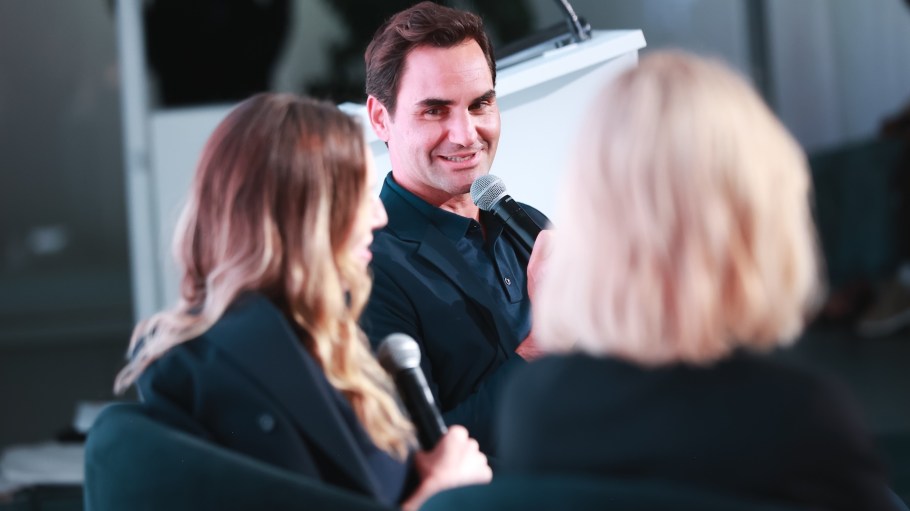
The Academy Award, BAFTA and Golden Globe-winning actress joined the likes of longtime supporter Roger Federer, as the tennis legend has been associated with the Tokyo retailer since 2018, to work with Uniqlo on the LifeWear collection, supporting humanitarian efforts worldwide.
“As a tennis player, you always chase perfection, but never really achieve it—it’s fluid. I see a lot of innovation in Uniqlo LifeWear,” Federer said. “Like me, they keep adjusting to new situations, and I have the feeling they have a ‘winner gene’ in them.”
For Blanchett, clothing should be enduring rather than disposable—an approach rooted in the Australian producer’s upbringing, carried into how she views style today.
“What I really loved about visiting the [Uniqlo] mothership in Tokyo, and the work Uniqlo is doing, is that you have classic staples that let you build a personal sense of style,” she continued. “And if you don’t want them anymore, you pass them on. There’s a classical nature to it.”
She sees LifeWear as a foundation of timeless essentials: pieces designed to stay in circulation, either in one’s own wardrobe or someone else’s.
“Clothes are receptacles of memory,” said Blanchett. “What you put close to your skin has an emotional impact. I still wear a denim jacket my parents gave me for my 15th birthday; it holds massive memories for me.”
Durability is more than just a practical solution, she continued, as the clothing also carries emotional weight, rendering garments as markers of one’s personal history.
“It shouldn’t be a luxury to have good, well-made clothes. Quality should be available to all,” she added.
On that note, when Uniqlo’s SoHo store opened, it introduced Fast Retailing’s LifeWear concept to the American market. And if Uniqlo’s mission is to better society through clothing, its LifeWear effort is the embodiment of said mission.
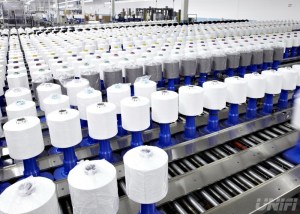
“Transcending such preconceived notions—nationality, age, vocation, gender—our clothes are created for everyone, everywhere. LifeWear is everyday clothing thought through with life’s needs in mind, and always evolving,” Yanai said, noting it was developed on the firm foundation of its partnership with Toray. “Wherever you look, these clothes are underpinned by Toray technology.”
It’s an essential time for Toray Industries, too, as the Tokyo-based technology and advanced materials manufacturer celebrates its centennial in 2026. The Japanese chemist celebrates 20 years of strategic work with Uniqlo as well, though the two have done business together since 1999. That long-term innovation partnership, according to Yanai, has produced a plethora of products that transcend the “conventional wisdom of clothing.”
“While our two companies operate in disparate lines of business, we share a mutual knowledge base and embrace a common commitment to creating clothing that transcends conventions,” said Yanai. “In so doing, we work as one across the entire process: from materials development, manufacturing, and distribution, to marketing, product improvement and refinement.”
Among the dividends of this collaboration is Heattech: a “runaway hit product” that’s sold more than 1.5 billion pieces since its introduction in 2003, per Yanai. Another is Airism, an inner-wear material engineered to keep people comfortable year-round. But the real homerun is LifeWear — aka Uniqlo’s long-running clothing line that embodies the Japanese values of simplicity, quality and longevity, the Fast Retailing-owned brand said, ultimately to make everyone’s lives better.
“It’s the attention to detail, the deep love of craft,” Blanchett said of her time in Japan. “Sashiko—that idea of a flaw in something meant to be beautiful, which actually deepens its meaning. It’s not about seeking perfection, it’s about working with what’s in front of you to create something beautiful.”
As a final surprise, Uniqlo tapped longtime collaboration partner Kaws to serve as the brand’s inaugural Artist in Residence. The concept, intended to be complementary to its global brand ambassadors effort, will see the pop culture artist work with the retailer on developing LifeWear products—starting with Uniqlo’s fall 2025 collection.